
Yoga Retreat vs Yoga Teacher Training

You’ve got two browser tabs open. One says, “yoga retreat Nepal.” The other says “200-hour yoga teacher training.” Both pages show roughly the same kind of photo: someone folded forward against a mountain backdrop, soft morning light, total stillness. And now you’re stuck, because you’re not entirely sure what separates the two, or which one is actually going to give you what you came here looking for.

You’re not the only one confused by this. The two terms get thrown around almost interchangeably online, and a lot of yoga schools don’t go out of their way to explain the difference, mostly because both options work in their favor either way. But a yoga retreat vs yoga teacher training are two genuinely different things to be researched by people with two genuinely different goals, and picking the wrong one can leave you bored in a classroom you didn’t really want, or out of your depth in an intensive course you weren’t ready for.

This guide walks you through what each option entails, who it’s best suited for, what you can expect to pay, and how to decide which makes the most sense. You’ll also learn what these treatments look like in Nepal.

What exactly is a yoga retreat?

A yoga retreat is a chance to step away from the pace of everyday life and spend a few days focusing on your well-being. Instead of rushing from one tourist attraction to another, your time is centered around yoga, good food, rest, and quiet moments. Everything from the daily schedule to the meals and accommodation is usually taken care of, so you can show up and be present.

You may choose from a variety of yoga retreats, including immersive two-week programs and weekend escapes. It’s usually best to remain for five to 10 days if it’s your first retreat. Without spending too much time away from work or everyday life, you have enough time to get into the rhythm, improve your practice, and completely relax.

You will start your day with a gentle yoga session or meditation. After the session, you will eat your nourishing breakfast. After that, you’ll often have free time to spend however you like. You might read a book, go for a nature walk, enjoy a massage, explore the local area, or relax and do nothing at all.

In the afternoon, you’ll all come together for another yoga class, and the evening often ends with a calming practice such as restorative yoga, meditation, or chanting. Many retreats also include workshops on yoga philosophy. This way, they provide introductions to Ayurvedic nutrition and wellness or guided visits to nearby temples and cultural landmarks.

You are not required to attend every session, although most retreats have a daily schedule. It’s totally acceptable to miss an activity if you’re exhausted or need some alone time. The goal is to give yourself time and space to relax, re-establish a connection with yourself, and savor the experience at your own pace, rather than trying to fill every hour of your day.

What you walk away with is rest, perspective, and usually a noticeably calmer nervous system, not a certificate, not new teaching skills, and not a technical understanding of how a posture works in someone else’s body. A retreat is an experience you have. It isn’t a qualification you earn.

What exactly is yoga teacher training?

Yoga teacher training, often shortened to YTT, is a structured course that takes you from being a practitioner to someone who genuinely understands how yoga works well enough to teach it safely to others. The most common entry point is the 200-hour course, which is the minimum Yoga Alliance requires for a Registered Yoga Teacher (RYT) credential. However, most established schools, ours included, also offer 100-hour foundation courses, 300-hour advanced trainings, and a combined 500-hour YTT track for people who want to go all the way.

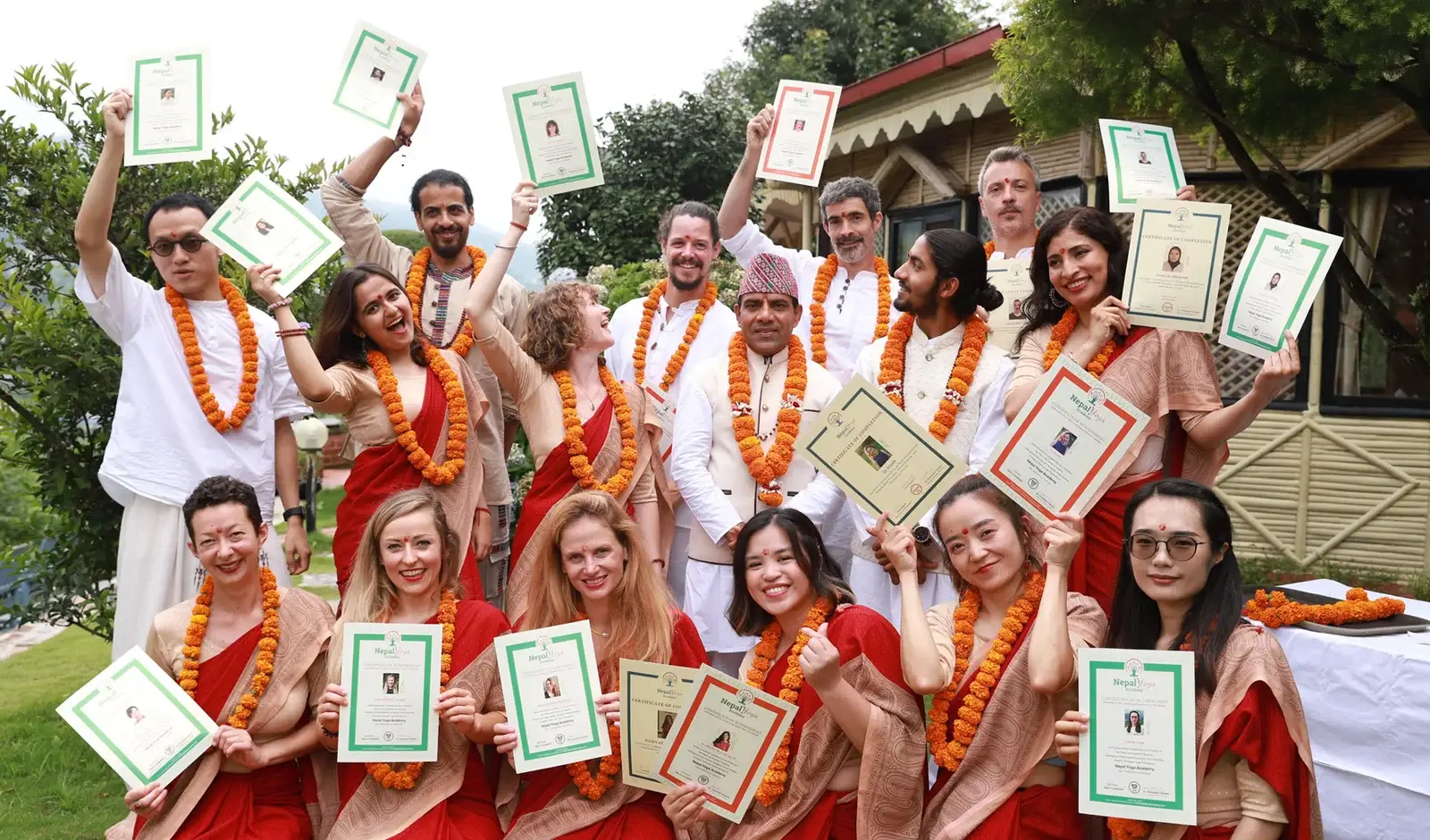
A 200-hour YTT typically runs around three to four weeks, with your days built around actual coursework rather than free time. At Nepal Yoga Academy, for instance, the 200-hour program runs 25 days and begins on the 15th of every month, which is fairly typical for established schools. In addition to daily asana practice, you can expect anatomy classes that explain what happens in the hip joint during a pigeon pose.

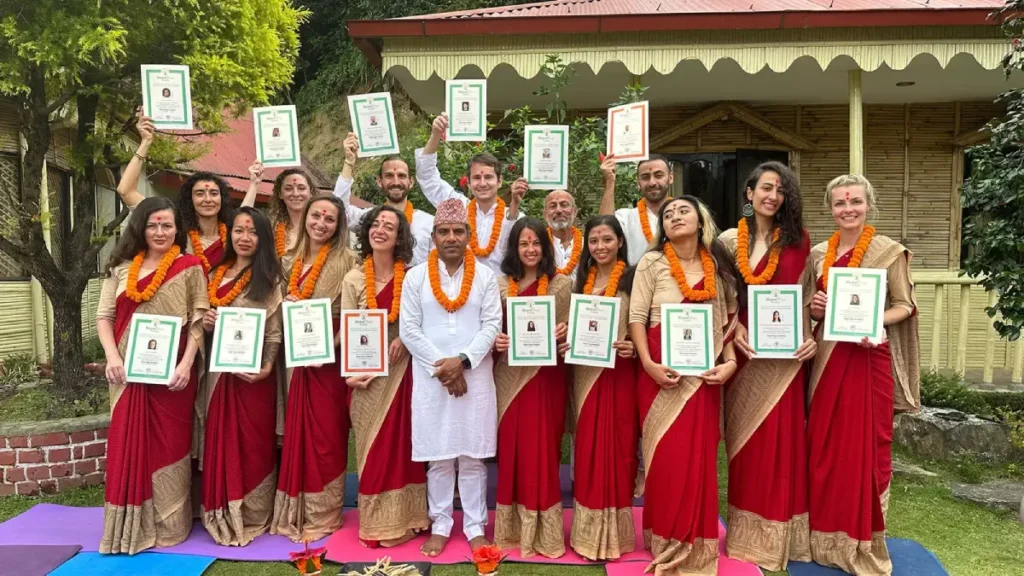
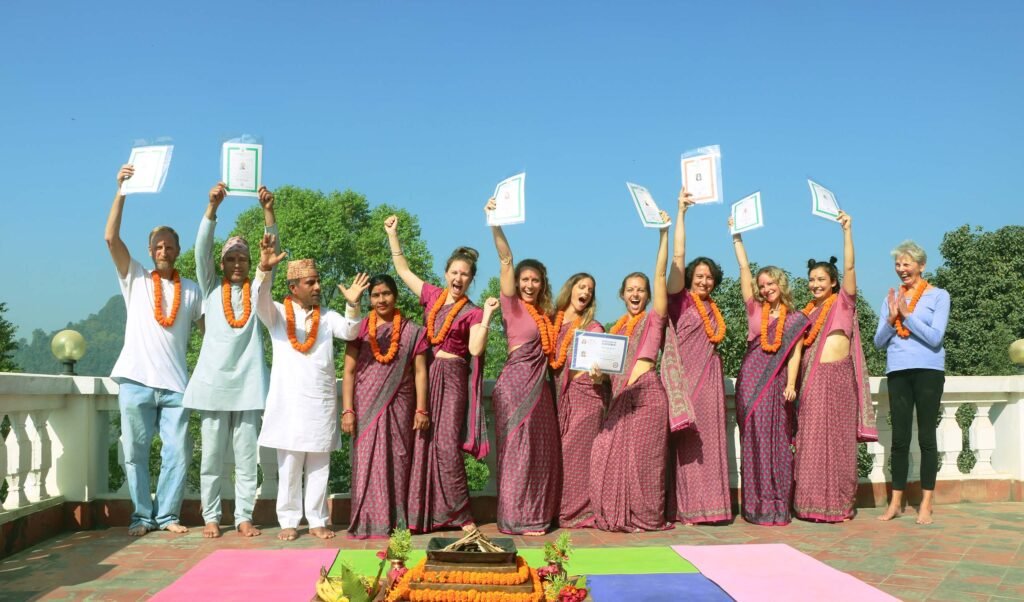
These philosophy sessions go through texts like the Yoga Sutras, lessons on how to organize a class from warm-up to savasana, training in pranayama and meditation, and practice teaching, which involves leading a class in front of your peers while your trainers observe and provide feedback. There are usually written assignments, a final teaching assessment, and, at a properly accredited school, a certificate at the end that lets you register with Yoga Alliance and teach professionally almost anywhere in the world.

Yoga is not a part of this trip. For the duration of the course, practice, lectures, and study time often take 10 to 12 hours each day, 6 days a week. YTT requires something different from you than a retreat: discipline, consistency, and a willingness to be a complete beginner again on the technical side of something you may already be physically good at. But people expect a retreat with extra homework, and they usually struggle the most with it.

Yoga Retreat vs Yoga Teacher Training: The Key Differences

Once you see the two side by side, the differences become pretty obvious. Here’s how they actually compare:

FactorYoga RetreatYoga Teacher Training
Main goalRest, relaxation, and reconnecting with your practiceBuilding real skills and earning a teaching certification
Typical length1 day to 2 weeks25 days to several months (100-hr to 500-hr)
Start datesFlexible, almost any dayFixed monthly start (e.g., 200-hr begins the 15th)
Daily scheduleFlexible; sessions are optionalFixed; usually 8–12 hours a day
IntensityGentle to moderatePhysically and mentally demanding
What you studyAsana, relaxation, light philosophyAnatomy, philosophy, sequencing, and practice teaching
ResultRest, clarity, renewed motivationYoga Alliance certification (RYT)
HomeworkNone requiredReadings, written work, teaching practice
Typical cost (Nepal)Roughly $140 to $2,000, depending on length and comfort200-hr course starts around $1,400
Best suited forAnyone wanting a break, any experience levelPractitioners ready to commit and go deeper

If you only take one distinction away from that table, make it this one: a retreat is built around how you feel, while a teacher training is built around what you understand and can pass on to someone else. That single difference shapes almost everything else: the schedule, the workload, the intensity, even the kind of person who genuinely tends to thrive in each one.

The benefits of going on a yoga retreat

The most significant advantage of a retreat is also the most straightforward: it makes you pause. The majority of us struggle to relax on our own terms. Even though we promise to unwind over the weekend, we end up spending Saturday doing laundry and surreptitiously checking our email. That possibility is eliminated with a retreat. There’s no laundry to do, no email that needs to be answered, and a timetable created by someone else that gradually nudges you toward relaxation regardless of your level of commitment.

Apart from that, a retreat usually helps you develop your physical practice in a manner that a single weekly studio session seldom does. You may truly feel changes when you practice every day for a week with teachers who have time to focus on your alignment, since the group is small. Examples of these improvements include tight hamstrings finally letting go, a shaky tree pose suddenly becoming solid, and breath that stops catching halfway through a sun salutation. Additionally, you are exposed to instructors and teaching philosophies that you may not encounter at home, which can completely change how you feel about the practice.

Additionally, there is a social aspect that surprises many. Arriving alone or with a companion, you wind up dining, going for walks, and having lengthy talks with individuals who, by day four, no longer seem like strangers. Many individuals return from retreats with friendships that endure longer than the trip itself, as well as a level of mental clarity that is difficult to achieve back home amid the typical commotion and responsibilities.

The benefits of doing a yoga teacher training

The most obvious benefit of YTT is the certification itself. This credential lets you teach yoga credibly, get hired by a studio, lead your own classes, or build a following as an instructor. But ask people what they actually got out of it once they’ve finished, and the certificate is rarely the first thing they mention.

How much YTT alters your relationship with your own body is typically the first thing that comes up. For the first time, you spend weeks studying anatomy in a way that makes every posture make sense. You learn why certain signals work, and others don’t, why your knee complains in a particular twist, and why your shoulder feels different from your training partner’s in the same shape. You become more than just a better teacher with that knowledge. Whether on or off a mat in front of students, it makes you a safer and more competent practitioner for the rest of your life.

There’s also an emotional side that tends to surprise people the most. Living inside yoga philosophy for several weeks straight, actually sitting with texts like the Yoga Sutras instead of skimming a quote on social media, has a way of shifting how you see stress, ego, and your own habits. Plenty of people who never planned to teach professionally still sign up for a 200-hour course purely for this reason, and leave with more self-awareness than they expected from what they assumed was mainly a fitness course.

And then there’s the confidence. Standing in front of a room and leading a class is uncomfortable the first few times, for almost everyone. By the end of a proper YTT, you’ve done it enough times, with feedback after each attempt, that the fear mostly drains out of it, which matters whether you go on to teach forty students a week or want to confidently guide your own family through a Sunday flow at home.

Who should choose a yoga retreat?

If your sincere objective is to relax, rejuvenate, or incorporate more yoga into your week than your typical schedule permits, then attending a retreat makes sense. If you’re exhausted from work and need a real break instead of just another to-do list, it’s a great fit. It also works well if you’re new to yoga and want an intensive experience before committing to something more significant, or if you practice often and would want a few days of deeper, more supportive practice than you can do on your own.

It’s worth considering, too, if you’re traveling anyway and want to build a meaningful, restorative stretch into a bigger trip. Pairing a retreat with sightseeing in Kathmandu or a trek through the Annapurna region is a genuinely popular combination for visitors to Nepal. You don’t need flexibility, prior experience, or any intention of ever teaching a class. You really need the willingness to slow down for a few days, which, for many people, is the hardest part of the whole thing.

Who should choose yoga teacher training?

YTT fits a wider range of people than the name suggests. Obviously, it suits anyone who wants to teach professionally, whether that’s leading classes at a studio, eventually running their own retreats, or building a private client base. But it also makes sense for people with zero interest in ever teaching, who want to go deeper: practitioners who’ve hit a plateau and want to actually understand the mechanics and philosophy behind what they’ve been doing for years, instead of just following cues from the front of the room.

It’s a strong fit if you genuinely enjoy structure and discipline rather than finding it draining, since the schedule on a proper course doesn’t bend much. And it’s worth committing to if you can clear real time off. Most people need three to four weeks for a 200-hour course, plus travel, and arrive with at least a baseline comfort with regular asana practice, even if you’re far from advanced. You don’t need to be flexible or strong already. You do need patience for repetition, comfort with being a beginner again at the academic side of yoga, and a willingness to be corrected, sometimes daily, in front of other people.

Can you do both, yoga retreat and teacher training?

Yes, and this happens more often than people expect. Many people don’t choose one and leave it there; the two experiences often lead naturally into each other.

Some travel to Nepal for a retreat, take in the fast-paced lifestyle, connect with the practice, and then opt to return for teacher training once they are certain it’s what they really want.

Some take the opposite approach. To give themselves time to assimilate what they’ve learned without the stress of courses, assignments, or tests, students first complete a 200-hour course before staying a little longer for a more sedate retreat experience.

There’s no fixed order. For many people, one experience is enough to help them understand what they want next.

There’s also a genuine middle path worth knowing about. At Nepal Yoga Academy, our Yoga Teacher Training with Retreat program blends roughly 80 to 90 contact hours of real training material, anatomy, philosophy, sequencing, the same building blocks you’d cover on a full course, with the slower pace, smaller groups, and wellness extras you’d normally associate with a retreat rather than a classroom. It’s a good option if you want a genuine head start on certification, but the thought of a rigid, twelve-hour classroom day doesn’t appeal to you.

If your schedule and budget allow it, pairing a short retreat with a full YTT, either right before or right after, is one of the better combinations available. The retreat gives you a soft landing into the place and the practice, or a proper way to decompress once the intensity of training is behind you.

How to choose a yoga retreat or teacher training?

Before choosing, it helps to forget the promises and ask yourself what you actually want from the experience.

Are you looking to change how you feel, or are you looking for a qualification? If you want time to slow down, clear your mind, and reconnect with yourself, a retreat might be the better fit. If you’re interested in learning yoga in depth and possibly teaching it one day, then a YTT could be the right path.

Here, be truthful with yourself. Many people decide to pursue teacher training because it seems like a greater accomplishment, but they eventually discover that their true goals were relaxation, tranquility, and a change of pace.

Another item to consider is time. While a YTT often requires several weeks where you can completely devote yourself, a retreat can work with a shorter vacation. It’s not just the lessons; it’s the practice, the daily schedule, and allowing yourself to participate in the experience.

Additionally, consider the type of surroundings you like. Generally speaking, a retreat offers you more space to unwind and go at your own speed. Because consistency is a component of the learning process, teacher training is more regimented and requires you to adhere to a timetable.

Your experience with yoga doesn’t have to decide everything. Beginners can join both, but if you’re completely new to yoga, a retreat can be a gentler way to begin. Jumping straight into a 200-hour training can feel intense, especially with daily practice, philosophy, and anatomy lessons.

And then there’s Nepal itself. If you’re coming for the mountains, the culture, and a chance to step away from everyday life, a retreat may be what you’re searching for. If you feel drawn to studying yoga deeply and understanding the tradition behind it, teacher training may be the reason you’re making the journey.

What to look for when choosing a retreat or YTT in Nepal?

Nepal has dozens of schools offering both retreats and teacher trainings, and the quality gap between them is wider than most people expect upon arrival. A few things genuinely matter when you’re comparing options.

If you’re choosing a yoga teacher training (YTT) course, accreditation should be one of the first things you check. Look for a school registered with Yoga Alliance, as yoga studios and training providers worldwide widely recognize its certification.

Once you’ve confirmed the accreditation,

  • Take a closer look at how the course is taught.
  • Find out how many hours you’ll spend studying on your own compared with teachers.
  • Inquire about the class size as well.

If a class has more than 20 to 25 students for each teacher, you’ll probably get less personal attention and fewer chances to receive feedback on your practice.

It’s also a good idea to find out who will be teaching you. Look at their training, experience, and teaching style, rather than focusing only on their title. Finally, check how long the course lasts. A standard 200-hour YTT usually takes three to four weeks to complete. If a course is much shorter, ask how those 200 hours are covered to make sure you’re getting the full training.

If you’re booking a yoga retreat, focus on the practical details. Check what’s included in the price, such as meals, accommodation, airport transfers, and activities, as these aren’t always included. Find out how many people will be attending, what the rooms are really like beyond the photos, and whether the schedule gives you enough free time to relax. A good retreat should leave room to rest; not keep you busy from sunrise to sunset.

For both, read recent, independent reviews rather than just the testimonials on a school’s own site, and don’t be shy about emailing or messaging a school directly with questions before you book. A school that takes a day or two to give you a thoughtful, specific answer is usually a better sign than one that fires back a generic sales pitch within thirty seconds.

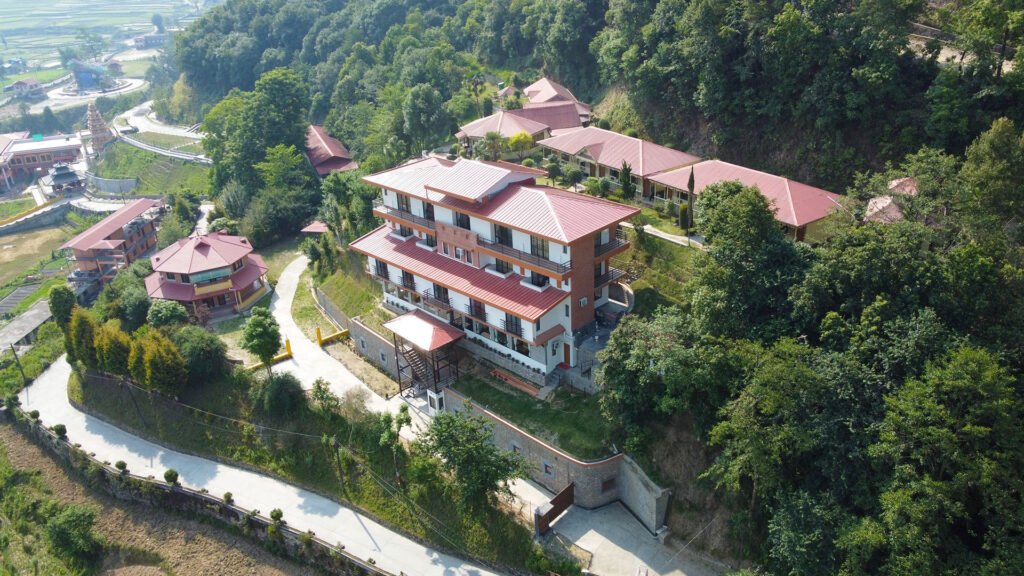
At Nepal Yoga Academy, this is the standard we hold ourselves to. We teach from the hills above Changu Narayan Temple in the Kathmandu Valley, led by Dr. Chintamani Gautam, who brings more than 25 years of studying and teaching yoga across Nepal and India, along with a PhD in yoga and master’s degrees in yogic science and Sanskrit literature. Our 100-, 200-, 300-, and 500-hour trainings are all Yoga Alliance certified, and our retreats range from a single rejuvenating day to detox longer, Ayurveda, and heritage programs, depending on what you actually need. Groups stay small enough for genuine hands-on correction, the food is freshly prepared and vegetarian, and the campus sits close enough to Kathmandu to be convenient, far enough into the hills, actually, to feel like you’ve left the city behind.

Why does Nepal work so well for yoga retreat or teacher training?

You could do a retreat or a teacher training in dozens of countries, including Bali, Costa Rica, India, and, increasingly, even your own city. Nepal earns its reputation for a reason that applies to both options equally. This is a place where yoga has never needed to be marketed as something new or trendy, because it’s been woven into ordinary life here for longer than most countries have existed in their current form. Temples sit a short walk from where you’ll practice. The philosophy you study in a YTT classroom isn’t important; it’s the same framework that’s shaped how people in this region have thought about the mind and body for centuries.

For people attending a retreat, this creates something difficult to replicate: learning from teachers who have spent years developing their practice, in a setting that naturally supports the experience. The Himalayan foothills, quiet farmland, and prayer flags moving between the trees all add to the atmosphere, creating a sense of calm before the first yoga pose is even introduced.

For trainees, it goes a step further. Studying anatomy and philosophy, in a place where yoga is a living, breathing local tradition rather than an imported fitness trend, tends to change how seriously the material lands. You’re not learning about the Yoga Sutras from a textbook written an ocean away from where the ideas originated. You’re a short walk from temples where similar ideas have been practiced daily for generations.

There’s also a practical reality worth being honest about: Nepal remains considerably more affordable than most other major retreat and YTT destinations, which means your budget tends to stretch further here, a longer course, a few extra days, a private room you might not have been able to justify somewhere else.

Frequently Asked Questions

Do I need to be flexible to join a yoga retreat or teacher training?

No. In fact, this is one of the main reasons many people hesitate to join a yoga retreat. You don’t need to be flexible to start yoga, but flexibility comes with practice over time.

Most retreats welcome people at all levels, from complete beginners to experienced practitioners. Teachers usually offer different variations and adjustments so everyone can practice comfortably.

Even yoga teacher training doesn’t expect you to walk in already doing advanced poses. It’s more about showing up, being willing to learn, and staying committed to the process. Your current flexibility matters far less than your mindset.

Can a complete beginner really join a 200-hour yoga teacher training?

Yes, most schools accept beginners as long as you’ve been practicing for at least a few months before arriving, simply so the physical side of the course doesn’t overwhelm you on top of everything else you’re learning. If you’re brand-new to yoga, it’s worth doing a short retreat or a few months of regular classes first, then coming back for the full training once your body has some familiarity with the basic postures.

How much does a yoga retreat or teacher training in Nepal usually cost?

It varies significantly based on the length and contents. For seven to ten days, a mid-range guided retreat with nicer accommodations and more structure usually costs between $600 and $1,200, while premium choices with a private room can cost up to $2,000. A week-long budget retreat can start at $140. The cost of a 200-hour yoga teacher training program, which is the standard certification course, often starts at $1,400 for the full 25-day program at a reputable Nepali institution. This price usually includes lodging and food; the exact amount will depend on the room type and the inclusions.

Is a yoga teacher training certificate from Nepal recognized internationally?

Yes, as long as the school is registered with Yoga Alliance, the main global standard for yoga teacher credentials. A Yoga Alliance-certified 200-hour course lets you register as an RYT (Registered Yoga Teacher) and teach in studios, gyms, and your own classes in most countries. It’s always worth double-checking a school’s accreditation directly with Yoga Alliance before you book, rather than just trusting a logo on a website.

When’s the best time of year to do a retreat or YTT in Nepal?

Spring (roughly March through May) and autumn (September through November) are generally considered the best windows, with clear skies, comfortable temperatures, and the best mountain views. Monsoon season (June to August) brings heavier rain and humidity, which can still work fine for an indoor-focused training, but isn’t ideal if mountain views and outdoor time are a big part of why you’re coming. Winter (December to February) is cooler, sometimes cold in the early mornings, but still very doable, and tends to be quieter and slightly less expensive.

Is it safe for solo travelers, including women, to join these programs?

Generally, yes. Established yoga schools in Nepal host solo travelers, including solo women, regularly, and most arrange airport pickup and a structured daily routine that takes much of the usual solo-travel uncertainty out of the equation. As with traveling anywhere, it’s still worth doing your own research on the specific school, reading recent reviews, and trusting your gut before you commit.

Final thoughts

Neither option is better than the other; they serve different purposes. A retreat is for the time when you need to slow down, step away from daily life, and reconnect with yourself. Teacher training is for when you’re ready to explore yoga in greater depth, understand the practice more fully, and possibly share it with others.

For some people, a retreat becomes the first step before eventually moving into teacher training. For others, completing a 200-hour course reveals that what they truly needed was the space and simplicity of a retreat. There’s no right or wrong choice. Both can be meaningful reasons to make the journey to Kathmandu.

If you’re still not sure which is right for you, that’s a completely normal place to be, and it’s worth reaching out and talking it through with a real person at whichever school you’re considering, rather than guessing from a website alone. At Nepal Yoga Academy, we hear some version of this question from almost everyone who writes to us, and we’d genuinely rather point you toward the right program than the more expensive one.

Whether that ends up being a few restorative days in the Himalayan foothills or a full 200-hour certification that changes how you see the practice for good, we’re glad you’re thinking it through carefully before you book.

Yoga Retreat in Nepal: Benefits, Costs, and What to Expect

So, you’ve been looking at photos of yogis sitting cross-legged with snow-capped mountains behind them, and some part of you has started wondering what that would actually feel like. Maybe you’ve been juggling work stress for too long. Maybe your regular yoga class just isn’t cutting it anymore, and you want to go deeper. Or maybe you’ve heard that Nepal does something to people that other destinations don’t, and you want to find out for yourself.

Whatever brought you here, you’re probably also asking the more grounded questions:

  • What does this actually cost?
  • What will my days look like? Is it safe to go alone?
  • Do I need to be flexible or experienced already?

This guide answers all of that, in plain language, without the usual fluff you find on travel blogs.

We put this together at Nepal Yoga Academy after years of watching people arrive nervous and unsure, and leave looking like a different version of themselves. Some of what follows comes from that experience, and some comes from looking at what retreats across the country currently charge and offer, so you have realistic numbers rather than guesses.

Why Nepal, specifically?

Yoga retreats exist all over the world. Bali has them. Costa Rica has them. So does southern Spain. So why do so many people choose Nepal over all of those?

Part of the answer is geography. Yoga and meditation didn’t arrive in Nepal as imported wellness trends; they grew from the same soil as Hinduism and Buddhism, two traditions that have shaped this region for thousands of years. When you practice in Kathmandu, Pokhara, or Lumbini, you’re not doing yoga in a country that recently discovered its marketability. You’re doing it where a version of these practices has existed for a very long time, often a few hundred meters from temples and monasteries still in daily use.

The other part of the answer is simpler: the mountains. There’s something about practicing a sun salutation while actual sunlight is hitting actual snow on an actual Himalayan peak in front of you that a yoga studio with a mural of mountains can’t replicate. Pokhara in particular has built its reputation on this, with the Annapurna range reflected across Phewa Lake every morning.

Additionally, the cost-to-experience ratio is extremely difficult to surpass. A long weekend at a Western health resort is sometimes more expensive than a week in Nepal that includes daily yoga, three meals, lodging, and a few excursions. That does not imply being inexpensive and of poor quality. This implies that your money is worth more here than it is in Bali, Costa Rica, or any other part of Europe.

What You’ll Actually Get Out of It

It’s easy to be skeptical of claims like “this retreat will change your life.” So, let’s talk about the more concrete, measurable benefits instead, the kind you’ll notice in the first few days and the kind that tend to stick around once you’re back home.

Your body will feel different, and not just from the yoga.

Daily yoga practice for a week or more does things that an occasional studio class can’t. Your joints loosen up. Tight hips and shoulders, the kind built up from years at a desk, start to release. But it’s not only the asana. Most retreats serve fresh, simple, vegetarian meals cooked with local vegetables, lentils, and rice, three times a day, with none of the processed food most of us eat without thinking.

Many visitors notice improved sleep within the first couple of days, often linked to a more regular daily routine, consistent meals, and morning physical activity instead of screen-based habits.

Your nervous system gets an actual break.

People talk about this advantage the most after they leave and undervalue it the most when they enter. You can escape alerts, deadlines, and decision fatigue by going on a retreat. The timetable makes all the decisions for you, including what to eat, where to go, and what to do next.

Instead of just asking your mind to “relax,” which seldom works on command, meditation sessions, led by instructors who have been doing this for decades, provide your mind with a structured technique to calm down.

You learn things you can actually take home.

A good retreat doesn’t just give you a nice week and send you back to your old life unchanged. It teaches you breathing techniques (pranayama) you can use during a stressful meeting. It teaches you modifications for poses your body actually needs, rather than the ones you see on Instagram.

Many people leave with a short home practice they can realistically keep up, ten or fifteen minutes a day, because it was built around their real life rather than around an idealized one.

You get to be around people doing the same thing.

There’s a particular kind of bonding that happens when you’re meditating in silence next to someone in the morning and sharing dal bhat with them by dinner. Many retreat-goers say the friendships were as valuable as the yoga itself. If you’re traveling solo, this matters even more, since you’re rarely “alone” for long once the group sessions start.

The Different Styles of Yoga You’ll Encounter in Nepal

One thing that surprises many first-time visitors is just how many styles of yoga are taught at Nepal’s retreats and ashrams. “Yoga” isn’t a single practice. Still, it’s an umbrella term for several distinct approaches, and knowing the basic differences will help you pick a retreat and a daily schedule that actually match what you’re looking for.

Hatha yoga

Hatha is the core of most retreats in Nepal and the slower, fundamental technique most beginners start with. The practice emphasizes holding postures (asanas) in conjunction with regulated breathing (pranayama), and the name derives from a Sanskrit root meaning “force” or “effort.” Instead of merely hurrying through a sequence, classes proceed more slowly than you may anticipate, spending more time on alignment and teaching you how a position should feel.

Ashtanga Yoga

Ashtanga translates as “eight limbs,” which refers to the eightfold path set out by the sage Patanjali, in which physical postures are just one component.

In practice, Ashtanga yoga is a structured, energetic style that moves through a set sequence of poses coordinated with the breath, making it more physically intense than Hatha yoga.

The sequence itself stays the same every time, which builds mastery through repetition rather than novelty. If you want a retreat that will genuinely challenge you physically and mentally, look for one that emphasizes Ashtanga.

Vinyasa Yoga

Vinyasa is a breath-linked, flowing technique that many individuals are already familiar with from their home yoga studios. Instead of being held one at a time, poses are sequenced into continuous movement, which increases strength, cardiovascular fitness, and body temperature.

Vinyasa is particularly popular at several retreats in the Pokhara area because it pairs well with early-morning practice as the sun rises over the Annapurna range. According to most reports, performing the identical sequence under fluorescent lights is quite different from performing sun salutations when the sun actually rises over real mountains.

Kundalini Yoga

Kundalini yoga is a practice built around breath, movement, and meditation. It often includes chanting and repeating specific sequences of movement called kriyas. One common technique is “breath of fire,” a quick, steady breathing pattern used during practice.

Instead of focusing solely on stretching or physical fitness, it leans more toward the internal experience. The emphasis on attention, emotion, and awareness is why it tends to appeal to people interested in the quieter, more reflective side of yoga.

Yin Yoga

Yin is the subdued opposite of everything said before. Instead of strengthening muscles, these passive poses, which are maintained for many minutes at a time, target the deep connective tissue surrounding joints. Since it supports the body’s recovery after a demanding day on the trail, it is often scheduled for the evening, especially on retreats that include yoga and hiking.

Sanatan yoga

Sanatan, meaning “eternal” or “timeless” in Sanskrit, is considered one of the oldest forms of yoga and takes a deliberately holistic approach, weaving together elements of Hatha, Ashtanga, and Kundalini rather than treating them as separate disciplines.

Many Sanatan teaching centers view yoga as a lifelong path rather than an exercise, and also give equal importance to philosophy, breathing practices, and postures. It’s worth asking about a retreat’s teaching style, as it shapes the overall experience, from how the day is structured to how much time is spent in discussion versus practice.

Most retreats don’t lock you into a single style for the duration of your stay. It’s common to do something more dynamic like Vinyasa or Ashtanga in the morning and a slower Hatha or Yin session in the evening, so you leave with a well-rounded experience rather than just one flavor of yoga repeated every day.

How Much Does It Actually Cost?

Let’s get specific, because vague answers like “it depends” don’t help anyone planning a trip. This is a fair breakdown based on what retreats are charging now, while prices in Nepal vary by area, length of stay, and level of comfort.

Retreat typeTypical lengthPrice range (USD)
Budget ashram-style retreat7 days$140 – $400
Mid-range guided retreat7–10 days$600 – $1,200
Premium retreat with private room7–10 days$1,200 – $2,000
Holistic wellness / Ayurveda retreat4–7 days$400 – $900
Yoga + trekking combination10–15 days$750 – $1,700


A few things worth knowing about these numbers: first, longer stays almost always lower the daily cost. A 10-day yoga and trekking package at roughly $1,200 works out to around $120 a day, all-inclusive, which compares well against a single night at most Western wellness resorts.

Second, location has a greater impact on price than you may think. Even if the program is almost the same, retreats in the heart of Kathmandu or directly on Phewa Lake in Pokhara typically cost more than those nestled in the hills outside of town.

Third, and this is surprising to many, the listed price seldom covers travel insurance, your airfare, or your visa costs. Make a separate budget for these. The cost of an international round-trip ticket to Kathmandu can vary from $700 to $1,800, depending on your departure location and how far in advance you purchase.

What’s usually included, and what isn’t

Usually includedUsually NOT included
Accommodation (shared or private room)International flights to Nepal
Daily yoga and meditation sessionsNepal visa fee (paid on arrival)
Vegetarian meals, often three a dayTravel insurance
Airport pickup and drop-offMassages, spa add-ons, or extra excursions
Basic excursions (a temple visit, a walk to a viewpoint)Tips for teachers and staff
Yoga mats and props at the venueAlcohol and bottled drinks beyond meals


If a retreat’s website doesn’t clearly spell out what’s included, ask before you book. This single question prevents almost every budgeting surprise people encounter once they’ve arrived.

Getting There: Visas, Flights, and Entry

Nepal makes this part easier than most countries. Most travelers, including citizens of the US, UK, Canada, Australia, and the EU, can get a Tourist Visa on Arrival at Tribhuvan International Airport in Kathmandu, which is almost certainly where you’ll be flying into. You don’t need to apply for anything in advance unless you want to.

Visa lengthCost (cash, USD)Good for
15 days$30A short, focused retreat with little extra travel
30 days$50A standard retreat plus a few days of sightseeing or trekking
90 days$125An extended stay, multiple retreats, or a longer Nepal trip overall


A few practical notes. You’ll need a passport valid for at least six months from your arrival date, one passport-sized photo, and the visa fee in cash, preferably clean, newer USD notes, since some counters are picky about worn or old bills. Filling out the online arrival form before your flight can save you significant time at the airport, especially during the busier travel seasons of spring (March to May) and autumn (September to November).

If you decide partway through your trip that you want to stay longer, extensions are simple. Your visa can be extended at the Immigration Office in Pokhara or Kathmandu. A total of 150 days may be added to your visa over the course of a year. Because of this flexibility, many individuals who had planned a 10-day retreat end up staying for a month.

A friend told me she’d planned ten days. She extended her visa twice and stayed for six weeks. I believed her the moment I landed.

The Different Types of Yoga Retreats You Can Choose From

Yoga retreat” is a bit of a catch-all term, and once you start looking, you’ll find the offerings in Nepal split into fairly distinct categories. Picking the right type matters more than picking the right town, since two retreats in the same valley can deliver completely different experiences depending on what they’re actually built around.

Here’s a rundown of the main types you’ll come across, including a few drawn from the programs we run at Nepal Yoga Academy.

Short rejuvenation breaks (1 to 2 days)

A trip and a week off work are not necessary for every retreat. A few yoga sessions, a sauna or steam bath, guided meditation, and an Ayurvedic oil massage are frequently included in short, 1 day yoga retreat packages designed especially for those seeking a reset without the greater commitment.

These are ideal if you’re a resident who needs a weekend break from routine or if you’re already traveling through Nepal for other purposes and want to fit in a good recharge.

Classic multi-day yoga and meditation retreats

Most people envision this kind of retreat, which consists of 5 to 10 days of daily guided Hatha and Ashtanga classes, along with meditation practices focused on emotional equilibrium and mental clarity.

It’s the most adaptable category, appropriate for both total novices and seasoned practitioners, and typically the most accessible in nearly every price range.

Detox and cleansing retreats

Detox retreats build their entire schedule around a natural approach to cleansing the body and mind, grounded in ancient yogic and Ayurvedic tradition rather than any extreme fasting regimen. Expect a lighter, more deliberate diet, herbal teas, and yoga sequences specifically chosen to support digestion and circulation—these suit people who feel generally run-down or sluggish rather than those chasing a specific physical transformation.

Holistic healing and wellness retreats

Holistic healing and wellness retreats offer a more comprehensive approach to well-being by extending the focus beyond the yoga mat.

Programs frequently incorporate Ayurvedic treatments, massage therapy, meditation, dietary counseling, and sound-healing sessions with Tibetan singing bowls, in addition to yoga courses. The general focus is on rest, self-care, and holistic wellbeing, even though proponents of these therapies sometimes characterize them as promoting balance and relaxation.

These retreats are popular with tourists seeking a more comprehensive wellness experience, as they foster physical, mental, and emotional well-being rather than focusing solely on asana practice.

Ayurveda-focused pamper packages

Ayurveda Pamper Package retreats, which usually last three to four days, are a step further into therapeutic terrain and largely rely on Ayurvedic treatments, herbal therapies, and traditional massage in addition to daily yoga and meditation. They are a terrific fit if you’re coming exhausted, anxious, or just in need of a few days’ care, since they focus more on true physical rehabilitation than pushing your practice farther.

Yoga and heritage retreats

Yoga and Heritage Retreats pair daily practice with guided visits to Nepal’s UNESCO World Heritage Sites, blending the physical and spiritual side of yoga with the country’s temples, stupas, and centuries-old architecture. If part of your motivation for choosing Nepal specifically is the cultural and historical depth on offer, rather than just the mountains, this category makes sure that doesn’t get sidelined in favor of an all-mat, all-the-time schedule.

Post-trek recovery retreats

Designed for people who’ve just come off a trekking route, post treak retreats focus on unwinding tired muscles and re-attuning the body after days on the trail, usually over three to four days, with a gentler, more restorative style of yoga than you’d find elsewhere. If your trip already includes serious trekking, booking a few recovery days immediately afterward, rather than flying home directly, makes a noticeable difference in how your body feels in the following weeks.

Affordable and budget retreats

Affordable yoga retreats simplify the experience to its most basic: good food, comfortable lodging, and regular yoga, without the extra treatments or excursions that drive up the cost elsewhere. They are designed for folks who want a real vacation without breaking the bank. They serve as evidence that a meaningful retreat in Nepal need not be expensive.

Most retreat centers, including Nepal Yoga Academy, run several of these categories side by side, so it’s entirely possible to combine elements, a few days of classic practice followed by a shorter Ayurveda add-on, for instance, if you’re not sure a single category covers everything you want from the trip.

Combining Yoga with Trekking, Culture, and the Rest of Nepal

One advantage Nepal has over almost every other yoga retreat destination is that you’re not just choosing between “retreat” and “nothing else to do.” The country itself is one of the most rewarding places on earth to explore, and many retreats are built with this in mind.

Yoga and trekking together

Many programs combine a few days of yoga and meditation with a guided hike. Some of the programs are attached to popular Annapurna vistas like Poon Hill or to longer routes leading to base camps at higher altitudes.

Once you experience it, the reasoning for this combination becomes clear: doing restorative Yin yoga at night helps your body heal. In contrast, yoga in the mornings releases the muscles you’ll need on the route, and the walk itself becomes a moving meditation.

A combined yoga-and-trek schedule is a milder option if you’ve ever wanted to get up close and personal with Everest or the Annapurna range but were afraid of a full trip.

Temples, monasteries, and living spiritual culture

Most retreats schedule at least one excursion to a nearby temple or monastery, and in the Kathmandu Valley in particular, you’re rarely more than a short walk from one. These aren’t museum pieces; they’re active places of worship, often centuries old, where you can sit in on a Buddhist puja or observe monks going about their daily routine.

Bhaktapur and Patan, both within easy reach of Kathmandu, are UNESCO World Heritage Sites packed with preserved medieval architecture that most visitors find genuinely moving to walk through, retreat or no retreat.

Lumbini, the birthplace of the Buddha

Lumbini is worth the effort if your getaway permits a detour. Siddhartha Gautama, the Buddha, is said to have been born there, and practitioners from all Buddhist traditions are drawn to the nearby Sacred Garden and monastery. Even a half-day spent here provides a sense of context that is difficult to find elsewhere, especially if your retreat incorporates any Buddhist-inspired meditation practices.

Wildlife and a change of pace in Chitwan

Chitwan National Park, located in the country’s lowlands, provides canoe cruises, jungle hikes, and a genuine possibility of seeing tigers or rhinos if you’re looking for something different from mountains and temples.

There are a few retreats here that combine yoga in the morning with wildlife activities in the afternoon, creating a very different rhythm than a program centered around the mountains.

What an Actual Day on Retreat Looks Like

This is the part most people are genuinely curious about, but rarely find a straight answer to. Schedules vary a bit between retreat centers, but most follow a rhythm close to this:

  1. 5:30–6:00 AM — Wake-up. Many retreats start the day before sunrise, so the early yoga session lines up with the sunrise over the mountains.
  2. 6:00–7:30 AM — Morning yoga practice, usually Hatha or a gentle Vinyasa flow to wake up the body without overwhelming it.
  3. 7:30–8:30 AM — Breakfast. Expect porridge, fruit, herbal tea, sometimes eggs, and almost always something locally made.
  4. 8:30–11:30 AM — Free time, a walk to a nearby village or monastery, or a workshop on philosophy, anatomy, or breathwork.
  5. 12:00–1:00 PM — Lunch, typically the biggest meal of the day. Dal bhat (lentils, rice, and vegetable curry) shows up often, and it’s better than it sounds if you haven’t tried it.
  6. 1:00–4:00 PM — Rest, journaling time, a nap, or an optional excursion, depending on the program.
  7. 4:00–5:30 PM — Afternoon meditation or a second, often more restorative, yoga session.
  8. 6:00–7:00 PM — Dinner, lighter than lunch, again largely vegetarian.
  9. 7:00–9:00 PM — Evening satsang (a group discussion or chanting session), a quiet group activity, or simply free time before lights out.

You should definitely take note of the things that are absent from that list: phones, traffic, fashion choices, and the cacophony of daily life. When individuals claim that a retreat resets them, they are mostly referring to that absence.

How to Pick the Right Retreat for You

Not every retreat fits every person, and the wrong fit is the main reason people come home disappointed. Before booking, it helps to be honest with yourself about a few things.

Your actual yoga experience level

You should look for retreats that specifically state they welcome beginners if you’ve never done yoga before, and avoid anything labeled “intensive” or “advanced.”

Although the majority of respectable facilities in Pokhara and Kathmandu accommodate a variety of skill levels and will adjust poses for you, it is still beneficial to select a program designed for novices rather than relying on your ability to keep up.

How much silence and structure can you handle?

Some retreats include extended periods of silence, sometimes a full day or more. If you’ve never tried this, a shorter retreat with a more conversational, social atmosphere will probably suit you better than diving straight into a silent retreat.

Shared or private accommodation

If it is okay for you to stay in dorm-style lodging or shared rooms, you will receive a retreat program at a significantly lower cost.

You will also get the retreat programs that offer private rooms, only if you pay more to the institution. These costly programs let you be in your own space, especially after a full day of group activities.

What you actually want to get out of it

Are you looking to deepen an existing practice, recover after a trek, focus on Ayurvedic healing, unwind for a couple of days, or combine yoga with sightseeing? Nepal offers dedicated retreat types for each of these, and being specific about your goal when you search or ask questions will help you avoid picking a program that’s a poor match.

When Is the Best Time to Go?

Nepal has four fairly distinct seasons, and they affect a retreat experience more than you might expect.

  • Spring (March to May): Considered the best overall window. Clear mountain views, comfortable daytime temperatures, and rhododendrons blooming across the hillsides. This is peak season, so book a few weeks ahead.
  • Autumn (September to November): The other peak season, and for good reason. Skies are clear after the monsoon has washed away the dust, and temperatures are mild. Expect more company at popular retreat centers.
  • Summer / Monsoon (June to August): Warm, humid, and rainy, particularly in the afternoons. Retreats still run, and the surrounding hills turn a deep, vivid green, but outdoor excursions get rained out more often.
  • Winter (December to February): Cold at night, especially in the mountains, but daytime sun in Kathmandu and Pokhara is often pleasant. Quieter, with fewer tourists, and frequently cheaper.

If mountain views are your main motivation, you should aim for spring or autumn. If you’d rather avoid crowds and don’t mind cooler evenings, winter is genuinely underrated.

Practical Tips Before You Go

What to pack

  • Comfortable, breathable yoga clothes, plus a few warmer layers for early mornings and evenings, even in warmer months.
  • A reusable water bottle. Tap water isn’t generally safe to drink, so you’ll either filter it or buy bottled water throughout your stay.
  • Basic toiletries, since rural retreat centers may not stock the specific brands you’re used to.
  • A small daypack for excursions, plus a headlamp or small flashlight if your retreat is outside a city with reliable electricity.
  • Any personal medication you need, along with a basic travel first-aid kit. Pharmacies in Kathmandu and Pokhara are well-stocked, but rural areas are not.

Money matters

Although ATMs are common in Kathmandu and Pokhara, they can be unreliable in smaller towns, so withdraw what you need before traveling to remote areas.

Cash is used locally for personal expenses, tipping, and visa fees. The majority of retreats request payment via bank transfer or credit card at the time of booking.

Health and safety

If your retreat is at altitude, particularly if it includes trekking above 3,000 meters, give yourself a day or two to acclimatize before pushing into strenuous activity. Altitude sickness is real and doesn’t care how flexible you are. Travel insurance that covers medical evacuation is worth the cost if your itinerary includes any trekking.

As for general safety, Nepal is considered one of the friendlier and safest countries in Asia for travelers, including solo women, which is part of why so many retreat-goers travel alone. Reputable retreat centers offer airport pickup specifically so you’re not navigating an unfamiliar city alone late at night after a long flight.

Frequently Asked Questions

Do I need to be flexible, or should I already practice yoga, to go on a retreat?

No. The majority of retreats in Nepal are designed to accommodate total novices. Flexibility comes with practice, not as a prerequisite for getting started. Teachers will provide suggestions, and you’ll be astonished at how much your body relaxes after only a few days of constant practice.

Is it safe to travel to a Nepal yoga retreat alone?

Yes, for most travelers. Many retreat participants arrive on their own, including solo women. With airport pickups and a planned daily routine, retreats often offer a comfortable, supportive environment for solo guests.

How long should my first retreat be?

For a first visit, seven to 10 days is the ideal length. It’s long enough to get into the rhythm and experience genuine benefits, but short enough not to be a huge time commitment if you’re unclear how you’ll respond to the framework.

Can I combine a yoga retreat with trekking in Nepal?

Definitely, and it’s one of the more popular combinations. Several programs pair a few days of yoga and meditation with a guided trek, often toward viewpoints like Poon Hill or base camps in the Annapurna region, so you get both the stillness and the adventure in one trip.

What’s the food like, and will I have options if I have dietary restrictions?

Meals are almost always vegetarian, fresh, and simple: lentils, rice, seasonal vegetables, and a variety of local dishes. Most established retreat centers can accommodate vegan, gluten-free, or other dietary needs if you let them know when booking, though options narrow the more remote the location.

Do I need travel insurance?

It isn’t legally required, but it’s strongly recommended, especially if your trip includes any trekking or time at higher altitudes. Look for a policy that covers medical treatment and evacuation, since these costs can be high if something goes wrong far from a major hospital.

What’s the difference between all these retreat types, really?

Mostly, it comes down to what fills the hours between yoga sessions. A classic retreat keeps the focus on asana and meditation. A detox or Ayurveda retreat adds cleansing diets and traditional treatments.

A heritage retreat adds guided visits to temples and historic sites. A post-trek retreat is gentler and built around recovery. None of them require previous experience, so the right choice mostly depends on what kind of week you’re looking for, not your skill level.

Will I be able to use my phone or the internet during the retreat?

WiFi is available at most retreat facilities, at least in the general areas; however, outside of Kathmandu and Pokhara, it may be unreliable or sluggish. While it’s generally a mild recommendation rather than a formal mandate, many retreats advocate limiting phone use during the program, especially during meditation or silence moments.

If a genuine digital detox is part of what you’re looking for, ask the retreat directly how they handle it, since policies vary widely between centers.

What’s dal bhat, and will I have to eat it every day?

The main dish of Nepal is called “dal bhat,” which consists of rice, lentil soup, and a vegetable curry, typically served with pickled achar. It is eaten frequently in daily life, valued for being both filling and nutritionally balanced, and genuinely well-suited to a yoga practice.

Most retreats vary the vegetables and accompaniments enough that it doesn’t feel repetitive, and almost every visitor who arrives skeptical ends up requesting the recipe before they leave.

Why Choose Nepal Yoga Academy

Everything in this guide applies broadly to retreats across Nepal, but if you’re trying to decide where actually to book, it helps to know what sets one center apart from another. Here’s an honest look at what Nepal Yoga Academy offers, and why so many guests end up extending their stay or coming back for a second program.

Decades of authentic teaching, not a recent wellness trend

Dr. Chintamani Gautam established the Nepal Yoga Academy after spending more than 25 years studying yoga and its teachings in both India and Nepal. And with this level of experience, he has truly made the Nepal Yoga Academy one of the best yoga institutions in Nepal.

Anyone who has done yoga here can see those details of expertise:

  • How is a class organized?
  • How is philosophy incorporated into a practical session rather than added as a stand-alone lecture?
  • How patiently does a teacher work with a student who has never tried a single position?

You won’t be getting a workout wrapped up in Sanskrit words since you will be receiving instruction precisely in the Sanatan tradition. You are engaging in yoga as it was intended to be: a lifelong, comprehensive practice that unifies the mind, body, and breath.

A setting that does half the work for you

The academy is nestled in the hills on the outskirts of the Kathmandu Valley, where you will witness the forested slopes, terraced fields, and distant views of the mountains. The region, which is close to the historic Changu Narayan Temple, blends a strong sense of peace with cultural legacy.

Even though it’s only a short drive from Kathmandu, the throng and nonstop action of the city seem far away.

A retreat menu built around different needs, not a single format

Rather than offering one fixed retreat and asking everyone to fit into it, Nepal Yoga Academy runs a genuine range of programs side by side:

  • Yoga Holiday Retreat for a tranquil, tailored escape.
  • Affordable Yoga Retreat for those who want a proper break without the bigger price tag.
  • Yogic Detox Retreat is built around natural cleansing.
  • Holistic Healing and Wellness Retreat combining yoga with Ayurvedic therapies and Tibetan sound healing.
  • 4-Day Ayurveda Pamper Package for deeper bodywork and herbal treatment.
  • Yoga and Heritage Retreat pairing daily practice with visits to nearby UNESCO World Heritage Sites.
  • 4-Day Post Trek Retreat for unwinding after time on the trail.
  • Shorter 1-day and 2-day rejuvenation packages for anyone working with a tighter schedule.

Classes throughout draw on Hatha and Ashtanga, supported by pranayama, an introduction to Ayurvedic food, and sound healing, all under the guidance of Guru Dr. Chintamani Gautam and the academy’s senior teachers, with small enough groups that an instructor can actually walk over and adjust your alignment by hand rather than calling out corrections from the front of the room.

Food, comfort, and care

The accommodation has a simple, ashram-inspired style, but is generally more comfortable than many first-time visitors expect. Rooms are kept clean and cozy, meals are freshly prepared and vegetarian, and the staff manages practical issues so guests can focus on their stay without interruption.

Although the prices are still legitimately affordable, guests describe the experience as more like a health resort than a simple retreat home because of this kind of care, which is difficult to fake and even harder to sustain.

A community that doesn’t end when the retreat does

Many guests leave with more than new skills or experiences. The small-group setting encourages people to spend time together both during and outside scheduled activities, and friendships formed during a retreat often continue long after participants return home. Over the years, the academy has welcomed visitors from a wide range of countries, creating an international community connected by a shared experience in the hills above Changu Narayan Temple.

Is a Yoga Retreat in Nepal Worth It?

If you’re hoping someone will hand you a guarantee that a week in the Himalayas will fix everything that’s been weighing on you, no one can honestly offer that. What a retreat can offer is something more modest and, in our experience, more reliable: a week or two where you eat well, move your body every day, sleep properly, and have actual space to think, surrounded by people on a similar path and mountains that don’t ask anything of you except to notice them.

For many people, that turns out to be exactly what they needed, even if they couldn’t have named it before they arrived. The cost is genuinely accessible compared to almost anywhere else offering a similar experience, the logistics are simpler than most people expect, and the only real risk is that you might end up, like plenty of others before you, extending your visa and staying far longer than you originally planned.

We would be happy to assist you whenever you’re ready to see what it looks like for yourself. If you have any concerns regarding programs, dates, or logistics, contact Nepal Yoga Academy. We will assist you in finding the retreat that best suits your current situation rather than where a brochure suggests you should go.

How a Spiritual Wellness Retreat Can Transform Your Life

There’s a moment most people recognize, even if they don’t say it out loud. You’re going through the motions. Work, phone, sleep, repeat. Maybe you’re ticking every box on the outside, but something on the inside feels hollow. You can’t quite name it. You’re not depressed, not sick. Just… disconnected. From yourself, from what matters, from the kind of quiet that used to come naturally.

That’s exactly where a spiritual wellness retreat meets you. Not with answers handed on a silver platter but with the space, the stillness, and the structure to find your own. If you’ve been on the edge of booking one and aren’t sure what to expect, or if you’re just curious about what the whole thing actually does for a person, this piece is for you.

Let’s be honest about what a spiritual retreat is, what it isn’t, and why more people are walking away from them genuinely changed.

What is a Spiritual Wellness Retreat, really?

The word ‘spiritual’ tends to make some people back away slowly. It conjures images of incense-heavy ashrams or people in robes chanting at 4 AM. And while that’s part of some traditions, it’s a narrow picture of what spiritual wellness actually means in practice.

Fundamentally, a spiritual wellness retreat is a set period, typically three days to several weeks, during which you take a break from everyday life to focus within. Yoga, meditation, breathwork, quiet sitting, guided writing, energy healing, or just leisurely walks in the outdoors might all be part of this. The format varies greatly based on the retreat center and tradition.

The aim is what sets it apart from a vacation or a spa weekend. You’re not there to get away from your life. For the first time in a long time, you are there to gaze at it unobstructed and clearly. Everything about the experience is altered by that change in purpose.

The wellness aspect anchors the spiritual in the physical. Sleep, food, movement, rest, all of it is taken seriously. Many retreats follow Ayurvedic principles, traditional yoga philosophy, Buddhist mindfulness practices, or some combination of these. The body and mind aren’t treated as separate problems, but as one living system that needs care.

The real reason people go (and what pushes them over the edge)

People rarely book a spiritual retreat on a whim. Something happens first. A burnout that doesn’t lift. A relationship ending. A loss. A creeping sense that life is passing by while you’re looking at a screen. A health scare that reorders your priorities overnight.

Sometimes it’s more nuanced than that. An increasing annoyance with superficial discussions. A restlessness that doesn’t go away with sleep. The persistent sense that you’ve been avoiding something for years, without ever looking back to see what it is.

These are all legitimate reasons. There’s no threshold of suffering you need to hit before a retreat makes sense. Some people arrive in crisis. Others arrive simply curious. Both come away with something they didn’t expect.

It’s fascinating to see how often people say that deciding to attend the retreat felt like the start of a transformation, as if something had already changed inside of them before they had even packed a suitcase.

What actually changes: The transformations that stick

Yes. This is the section that most people actually want to know about. Not the theory, but the actual shifts. The things that will be different six months later.

Your relationship with your own mind changes

The majority of individuals don’t realize how noisy their inner world is until they come to a retreat. The silent self-criticism that operates like background software, the incessant inner commentary, the reliving of previous discussions, and the fear projections about the future are all present. However, we are unaware of it since everyday life is similarly noisy.

Retreat eliminates outside sounds. What’s left may also be unpleasant over the first several days. Before your mind becomes quieter, it becomes louder. However, for most individuals, something settles around day three or four. Instead of being pulled by your ideas, you begin to notice them. That gap between stimulus and response, the one Viktor Frankl wrote about, becomes real and tangible in daily experience. That shift alone changes everything.

The body gets to speak.

There is a physical address for chronic stress. It resides in the chest, belly, jaw, and shoulders. People have normalized the feeling of having years’ worth of unresolved stress in their bodies.

Yoga nidra, restorative yoga, and somatic breathwork are practices that help the nervous system downregulate and exit a chronic fight-or-flight state. After a week-long retreat, some claim to sleep differently. deeper. Their digestion calms down. It takes some time for headaches that have been a steady companion for years to manifest. The body was awaiting authorization to go to sleep.

Old patterns become visible.

One of the most common things people say after a spiritual wellness retreat is that they see their patterns, behavior, emotion, and relationships with a detached clarity they’ve never experienced before, not from a position of judgment, but with almost loving inquiry.

  • Why do I still pick these kinds of relationships?
  • When I’m feeling uneasy, why do I go for my phone?
  • Why do I think less of myself in some circumstances?

These are not questions you receive at a retreat; rather, they arise naturally when the clutter is cleared, and you need to be honest with yourself.

A reconnection to what actually matters

It’s quite easy for modern life to persuade you that haste and purpose are synonymous. It’s urgent in your inbox. The deadlines, timetables, alerts, and news are all critical. However, the question “Am I living the life I want to live?” is more relevant than most of them.

People return from retreats with reordered priorities. Not in a dramatic, burn-everything-down way, though, occasionally that too. More often, quietly. They stop saying yes to things that drain them. They spend more time with people they actually love. They take their creative work seriously again. They remember what they used to care about before life got so busy.

The role of silence in a spiritual retreat

Many spiritual wellness retreats incorporate periods of silence from a few hours a day to full silent retreats lasting several days. For people who’ve never done it, this sounds either deeply appealing or mildly terrifying, usually both.

It’s not empty to be silent. It’s an atmosphere. When you take away the opportunity to fill each instant with dialogue or information, you take up the space. The altered version is not your true ideas. Your true emotions, not the ones you feel comfortable sharing with others. This is first intimidating. Then it starts to feel relieved.

Silence has been included in almost every meditative tradition throughout human history for a reason. It’s because profundity necessitates quiet, not because talking is evil. The cacophony of continual communication makes it impossible to hear your gentler aspects.

After a brief time of silence, some report feeling a presence they haven’t experienced since their childhood. An enhanced sense of awareness. The hues are more vibrant. Real food tastes better. Conversations feel more sincere and thoughtful when they resume.

Who is a Spiritual Retreat Actually for?

Short answer: almost anyone. Long answer, let’s break it down.

  • The burnout professional who hasn’t had a proper break in years and knows something needs to give before their body decides for them.
  • The person in a life transition, divorce, career change, bereavement, or an empty nest, who needs time and space to figure out who they are on the other side of it.
  • The long-term meditator or yoga practitioner who wants to deepen a practice they’ve been doing in fragmented 20-minute slots and never fully absorbed.
  • The curious person. Who has heard people talk about retreats with that particular light in their eyes and wants to understand what the fuss is about.
  • The creative writer, artist, musician who has gone dry and needs to fill up the well before they can give again.

What spiritual retreats are not designed for is passive entertainment. You get out what you bring in terms of openness, willingness, and genuine engagement with the experience. People who approach it with skepticism but real curiosity often have some of the most profound experiences. People who approach it as a luxury holiday sometimes don’t go deep enough to feel the change. Intention matters.

The science behind the spiritual: What research tells us

For the skeptics in the room, good. Healthy skepticism is worth bringing. And fortunately, there’s a growing body of research that supports what participants in spiritual retreats have been reporting for decades.

Measurable drops in cortisol, the main stress hormone, improvements in immune function, and notable reductions in self-reported symptoms of anxiety and depression have all been found in studies on intensive meditation retreats. These effects last for months after the retreat ends, not just in the immediate afterglow.

Yoga has been shown in several studies to be an effective therapeutic intervention for reducing inflammatory markers, regulating the autonomic nervous system, and improving sleep quality. Pranayama (breathing) methods, which are crucial to many retreats, instantly relax the vagus nerve, the body’s principal nerve for rest and digestion.

The feature of meaning-making is what science is yet unable to grasp completely. A person’s perception of their position in the world seems to have changed. That is still within the realm of experience. However, the physiological underpinnings are genuine, proven, and important.

How to prepare for your first Spiritual Wellness Retreat?

Preparation matters more than most people realize, and most of it has nothing to do with what you pack.

Before you go, it’s worth getting clear on what you’re actually hoping for. Not in a rigid, goal-setting way, rigid goals can actually block the experience. But a quiet, honest question: what is it you’re hoping to understand or feel differently about? Let that sit without needing an answer. The retreat will surface what needs to surface, whether or not it matches your expectations.

Practically speaking, if at all possible, begin cutting back on coffee and screen time one week before your arrival. The retreat program will test both of these moderate dependencies, and making the change beforehand helps to ease the transition.

Bring a journal, not for Instagram captions or for documenting the experience to share, but for your own private processing. Some of the most valuable moments in retreat come from writing honestly to no audience, with no filter.

Why choose a Spiritual Wellness Retreat in Nepal?

When choosing a location for a spiritual retreat, location is not a minor detail. The environment you place yourself in shapes the experience beyond logistics. Mountains, forests, rivers, the natural world has always been where human beings go to remember who they are. And few places on earth do this more powerfully than Nepal.

Nepal is located at the top of the globe, nestled between the fertile subtropical lowlands and the Himalayas. It is the birthplace of the historical Buddha, Siddhartha Gautama, and has been the site of uninterrupted yoga and meditation practices for thousands of years. This is not a trend-driven approach to wellness travel. For those who come in sincere search, this spiritual heritage is alive, ongoing, and reachable.

There are more temples, stupas, and holy places per square kilometer in the Kathmandu Valley alone than practically anyplace else in the world. At daybreak, strolling around Boudhanath, the enormous old stupa encircled with prayer flags and monks dressed in saffron robes, is the type of experience that transcends logical comprehension and lands somewhere deeper. To experience it, you don’t need to be Buddhist. You must be there.

Retreat centers outside Kathmandu are tucked away in places that seem to have stopped time, especially for this reason. Pokhara, with the Annapurna range mirrored on its surface, is located on the banks of Phewa Lake. Above the clouds before morning, the highlands of Nagarkot. Insects and wind are the only noises at night in the forest retreats in the Chitwan buffer zone.

There are many different traditions and lengths of spiritual retreats available in Nepal. Ayurvedic health programs, traditional Hatha and Ashtanga yoga immersions, Tibetan Buddhist teaching retreats, intense ten-day Vipassana silent retreats, and shamanic healing techniques from the native Tamang and Gurung cultures are all available. The breadth of options is astounding.

What also makes Nepal distinctive is the quality of the teachers. Many retreat centers here are led by masters who have spent their entire lives in practice, not facilitators who did a 200-hour teacher training. The transmission of knowledge from teacher to student in the Himalayan tradition is considered sacred, and the caliber of guidance available in Nepal is genuinely rare.

Another is the human dimension. Warmth and generosity are more felt than shown in Nepali society. “Atithi Devo Bhava, the guest is God” is not a business slogan in this instance. It is a dynamic cultural value. Those who have participated in retreats on other continents often mention Nepal as the place where they felt most seen and accepted.

In actuality, Nepal is easier to reach than most people realize. Major hubs in Asia, the Middle East, and beyond are connected to Kathmandu’s Tribhuvan International Airport. Without sacrificing quality, retreat expenses, lodging, food, and teaching are typically less expensive than those for comparable programs in Bali, India, or European retreat institutions.

The location of your spiritual wellness retreat is important if you plan to commit genuine time and serious intention to it. For thousands of years, Nepal has provided room for this sort of inward labor. It is not required to be sold. The way the light falls on the mountains at dawn, the sound of temple bells borne on the early air, and the peculiar and sincere sense that you’ve reached somewhere that was always waiting for you are all examples of how it speaks for itself.

The work that happens after you return home

There isn’t enough discussion on this aspect. After spiritual retreats, people come back radiant. Be open. Moved. After that, life goes on. The mailbox. The journey. Just because you’ve changed doesn’t mean that relationships have. The true long game is figuring out how to preserve what you discovered in the quiet when you’re back in the bustle.

This procedure is called integration. It entails incorporating what you learned and experienced on retreat into everyday life. It doesn’t have to be dramatic, and it doesn’t just happen. Heroic effort is not as important as little, regular practices.

  • A ten-minute morning practice sitting quietly, breathing consciously, before the phone comes on honors what you learned without requiring a major lifestyle overhaul.
  • Journaling, even briefly, to keep the thread of self-inquiry alive.
  • Saying no firmly and without guilt to commitments that drain you and no longer serve the life you want to build.
  • Returning for another retreat once a year, or whenever the drift back into disconnection becomes noticeable. Many people who’ve been on one retreat describe the next one as inevitable. Not an addiction, but a recognition.

Final thoughts: Transformation is not a weekend workshop

A spiritual wellness retreat is not a magic fix. It’s not going to solve your problems or resolve your grief or hand you a new life on the way out. Anyone selling it that way is selling the wrong thing.

What it does offer is something rarer and more valuable: the conditions for genuine self-encounter. Time that is yours. Practices that work. Guidance from those who’ve walked the path before you. A natural environment that reminds you of your own depth. A temporary stepping out of ordinary life that makes it possible to see life and yourself within it with fresh eyes.

The retreat is not where the transformation takes place. The retreat sets the stage for your transformation. The contrast between the two is important. You do the task. You can do it honestly in the finest possible setting at the retreat.

The phrase “I came back more like myself” is frequently used by those who have participated in important spiritual retreats. Not a different person. After years of commotion, loudness, and duty, the older adult was at last allowed to breathe.

If that’s what you’re looking for and if you’re still reading this, it probably is, then the retreat you keep putting off might be exactly the right next step.

Yoga Teacher Training with Retreat

Yoga teacher training is no longer only for people who want to become professional yoga instructors. Today, many are seeking balance, clarity, and peace of mind amid stress, burnout,
emotional fatigue, and constant digital distractions. This growing need for well-being is one of the main reasons yoga has shifted from being just physical exercise to a way of living. When
combined with a retreat experience, yoga teacher training becomes more than a certification course; it becomes an opportunity for personal transformation.

A retreat environment also removes many of the distractions of everyday life. There are fewer external pressures, less screen time, and more time for reflection. Over time, this allows you to
build discipline naturally, without force, and to understand yoga as a lifestyle rather than just a physical exercise. You begin to experience yoga as something that influences how you think,
eat, rest, and relate to others.

There is no doubt that this approach is the most powerful as it combines learning, practice, rest, and reflection into a single process. Everything works together without separating in daily
life. This helps people develop a deeper and more meaningful understanding over time.

What Is Yoga Teacher Training with a Retreat?

Yoga teacher training (YTT) is a structured program designed to take practitioners beyond the physical postures and into the philosophical, anatomical, and pedagogical depths of yoga.
When combined with a retreat setting, particularly one nestled in a spiritually charged location such as Nepal, the experience becomes far more immersive and profound.

A yoga teacher training retreat is more than a vacation or a short yoga class. It combines yoga instruction with the calming, relaxing experience of a wellness retreat. Students can take a
break from daily stress, focus on personal growth, and fully experience the yogic lifestyle.

What to Expect from the Yoga Teacher Training with Retreat?

Asana (Posture Practice and Alignment)

Here, you will dedicate roughly 80–90 contact hours. This includes daily practice sessions and separate technical study of individual postures, their anatomical mechanics, common
misalignments, safe entry and exit points, and how to sequence them logically for different populations.

You will learn multiple styles:

  • Hatha yoga: The foundational classical approach.
  • Ashtanga Vinyasa: A set sequence that builds strength, flexibility, and breath coordination.
  • Yin yoga: Long-hold, passive postures that target connective tissue.

By the end, you can teach confidently in each style and explain to a student why you have chosen a particular approach for a particular class.

Yoga Philosophy and Classical Texts

Yoga Philosophy and Classical Texts require approximately 30 contact hours. These teachings are not just for spiritual people. Learning yoga philosophy helps you become a better teacher, explain yoga more clearly to students, and improve your own practice. A teacher who only knows yoga poses is like a music teacher who teaches notes without understanding the meaning of music.

You will study the primary texts:

  • The Yoga Sutras of Patanjali: 196 aphorisms on the nature of mind and the path to liberation.
  • The Bhagavad Gita: The dialogue between Arjuna and Krishna on duty, action, and self-knowledge.
  • The Hatha Yoga Pradipika: A 15th-century manual on physical yoga practices.

Pranayama (Breathing Techniques)

Pranayama translates roughly as “control of life force”. You will learn a set of structured breathing practices that form a core part of classical yoga.

You will learn six to eight techniques in depth:

  • Nadi Shodhana: Alternate nostril breathing, used to balance the nervous system.
  • Kapalabhati: Rapid diaphragmatic pumping is used both as a cleansing practice and as an energizer.
  • Ujjayi: The ocean-sounding breath used in dynamic yoga.
  • Bhramari: Humming breath, strongly connected to calming the nervous system.
  • Kumbhaka: Breath retention, the most advanced pranayama practice.

The physiology of breathing is taught alongside the techniques that help you understand how different breathing patterns affect the body and the nervous system. If you want to be a
yoga teacher, this is extremely valuable because it helps you understand which techniques increase energy and promote relaxation, and why they work.

Meditation and Yogic Practices

Meditation and Yogic Practice sessions are an important part of the training.

Here, you will get to explore different meditation techniques:

  • Dharana: Concentration practices, including Trataka, sustained gazing at a candle flame.
  • Dhyana: Open-awareness meditation.
  • Mantra-based practice.
  • Yoga Nidra: A guided practice that induces a state between waking and sleep, shown in research to be measurably restorative for the nervous system.

The goal is not to master meditation in four weeks. The goal is to establish a personal practice, understand the differences among techniques, and guide you through each one.

Anatomy and Physiology

This part of the training covers both Western (modern) anatomy and traditional Yogic anatomy.

The western anatomy focuses on major muscle groups, joint movement, skeletal structure, fascia, connective tissue, and the nervous system, along with how these relate to yoga postures and injury prevention.

The traditional yogic anatomy focuses on the chakra system, nadis (energy channels in the body), the five koshas (layers of human existence), and the prana vayus, which describe different flows of energy within the body.

Both frameworks are genuinely useful, and if you understand both, then you can communicate with a much wider range of students.

Teaching Methodology and Practicum

This is where theory becomes practice. You will learn how to design a complete yoga class, including warm-up, peak poses, cool-down, and savasana, while understanding how to sequence postures safely for a specific purpose or outcome. The training also covers effective communication, voice guidance, safe physical adjustments, and ways to adapt classes for beginners, seniors, pregnant women, and students with injuries.

During the final week, you will take part in practical teaching sessions, guiding full 60- minute classes for your fellow trainees while receiving feedback from instructors. You may feel nervous before teaching, but don’t worry, you will quickly gain confidence and feel more comfortable after a few sessions.

The Retreat Experience: More Than Just Accommodation

A yoga retreat gives you the space to slow down, learn, and grow without the distractions of everyday life. Being surrounded by a peaceful, yoga-focused environment makes it easier to stay consistent with your practice and fully enjoy the training journey. Simple daily routines, nourishing food, and supportive people around you all come together to create a meaningful and life-changing experience.

Daily Schedule and Structure

You’ll follow a clear and balanced schedule with time for practice, rest, reflection, and connecting with other students. A typical day during the training may include:

  • 6:00 AM — Meditation and pranayama
  • 7:30 AM — Hatha or Ashtanga yoga practice
  • 9:30 AM — Healthy sattvic breakfast
  • 10:30 AM — Yoga philosophy or anatomy class
  • 12:30 PM — Lunch and rest/self-study
  • 2:00 PM — Teaching practice and workshops
  • 4:00 PM — Afternoon yoga or restorative session
  • 6:00 PM — Kirtan, chanting, or Yoga Nidra
  • 7:30 PM — Dinner and free time

Sattvic Nutrition and Ayurvedic Meals

You will be served with fresh, plant-based sattvic meals prepared to support yoga practice and overall well-being. Inspired by Ayurvedic principles, the food is simple, nourishing, and easy to digest. You, along with other students, will notice positive changes in your energy, focus, and eating habits during the training.

Who is this training for?

One of the most common questions that crosses the mind is whether you need to be an advanced yoga practitioner before joining a teacher training course.

The answer is no.

You do not need to be highly flexible or experienced to begin. What matters most is your openness to learn, commitment to practice, and willingness to grow.

This training may be right for you if you are:

  • Looking to deepen your personal yoga practice
  • Interested in becoming a yoga teacher
  • New to yoga but feeling strongly connected to the practice
  • Working in health, wellness, or healing professions and want to include yoga in your work
  • Going through a life transition and seeking clarity or balance
  • Feeling stressed or burned out and looking for a meaningful reset
  • Drawn to the spiritual culture and traditions of Nepal

The retreat environment helps you stay focused, away from daily distractions, and fully connected to your learning and personal journey.

Yoga Teacher Training and Retreat Programs

100-Hour Yoga Teacher Training

This short introductory program, usually around 12 days, teaches the basics of yoga, including asana, pranayama, meditation, and yoga philosophy. It’s a good option for anyone who wants
to experience immersive yoga training before joining a full certification course. In many cases, the training hours can also be added toward a future 200-hour yoga teacher training certification.

200-Hour Yoga Teacher Training

This is the most common and widely recognized yoga teacher training program. This course roughly follows a 28-day schedule. It follows Yoga Alliance RYS 200 standards and allows you to register as an RYT 200 teacher after completion. This course includes yoga practice, anatomy, teaching methodology, meditation, pranayama, and philosophy.

300-Hour Advanced Yoga Teacher Training

If you hold a 200-hour Yoga Alliance certification, then this advanced training is designed for you. This lasts for around 30 days, and you will explore advanced asana, meditation, pranayama, Ayurveda, yogic psychology, and specialized teaching methods.

Once you complete this 300-hour training session, you will hold 2 certifications: 200 hours and 300 hours. Now you are perfectly ready to apply for the RYT 500-hour certification.
Specialty Retreats
You can also choose shorter retreats focused on specific practices and wellness topics, such as:

  • Yin Yoga and Mindfulness — 7 days
  • Yoga Nidra and Sound Healing — 5 days
  • Ayurvedic Lifestyle and Cleanse — 10 days
  • Himalayan Meditation — 7 days

These retreats can be joined independently or added before or after a teacher training program for a more complete experience.

Yoga Alliance Certification: What It Means and Why It Matters

Many yoga teacher training courses are recognized by Yoga Alliance as RYS 200 or RYS 300 programs. RYS stands for “Registered Yoga School,” indicating that the course meets proper
teacher-training standards.

After the completion of 200-hour training, you can then apply for the RYT 200 (Registered Yoga Teacher) certification. Once you are certified, you will be accepted by many yoga studios,
gyms, wellness centers, online teaching platforms, and other retreat programs.

If you later complete a 300-hour advanced training after your 200-hour certification, you can qualify for RYT 500 registration.

It is also important to understand what the certification actually provides. It confirms that you have completed the required training hours and coursework in approved subject areas. While it
can help create professional opportunities, it does not automatically guarantee employment or income. Your experience, teaching style, consistency, and personal growth will play a major
role in building your path as a yoga teacher.

What is the after-training?

The yoga industry is growing worldwide, creating job opportunities in yoga studios, fitness centers, wellness retreats, schools, corporate programs, and even healthcare spaces. A Yoga
Alliance RYT 200 certification is recognized in many countries and can help you start teaching yoga professionally.

After completing the training, you may start small by teaching a weekly class, offering private sessions, or teaching online. Over time, experience, confidence, and specialization can help
you build a stronger teaching career. Prenatal yoga, yoga for athletes, corporate wellness, and therapeutic yoga are becoming increasingly popular.

However, not everyone enrolls in teacher training programs to work as a professional yoga instructor. You may want to pursue a more meaningful, intensive lifestyle, improve your
practice, or take a break from everyday stress. The habits and self-awareness you form during the process are frequently more beneficial than the certification itself.

Your own objectives will determine what happens following the training. The experience may have a lasting impact on your life, whether you decide to pursue yoga as a personal practice or
as a career.

Why Choose Nepal Yoga Academy

There are many yoga teacher training programs available today, but what makes this training experience different is the focus on authentic learning, personal guidance, and traditional yoga
teachings rather than mass certification.

You learn in a calm, supportive setting with small class sizes, so you receive personal guidance throughout the training. The focus is not only on physical yoga practice but also on the deeper
values, discipline, and lifestyle associated with yoga.

The teachers have many years of experience studying and teaching yoga. They aim to help you build a genuine connection with the practice, not just earn a certificate.

Training in Nepal also gives you the chance to experience the country’s spiritual traditions more closely. Along with yoga practice, you are introduced to meditation, traditional teachings,
and yogic wisdom that go beyond modern fitness-based yoga. This creates a richer and more meaningful learning experience for both personal growth and future teaching.

Yoga teacher training school
Nepal Yoga Academy

A straightforward summary

A retreat-based yoga teacher training is one of the most effective ways to deepen your understanding of yoga. Once you step into an immersive environment, living and learning feel easy, helping you stay focused on your practice, studies, and personal growth without the usual distractions of everyday life.

A well-organized Yoga Alliance-certified training gives you a complete understanding of yoga, including asana, meditation, pranayama, anatomy, philosophy, and teaching methods. The training can be intensive, but it often becomes a rewarding experience that supports both personal and professional growth.

So, choosing Nepal for the Yoga Teacher Training with Retreat is probably the best decision you would make. Nepal is a unique place for this experience because of its spiritual culture,
peaceful natural surroundings, and long connection to yoga and meditation traditions. Along with practical benefits such as affordable living and retreat-style learning, the environment
itself supports deeper focus and reflection.

If you are considering joining a training, the best approach is to ask questions, understand the program clearly, and choose a course that genuinely matches your goals, experience level, and
expectations.

Yoga Alliance Certified Teacher Training: Everything You Need

No one persuades you to do yoga. You tumble into it. Perhaps it began as a coping mechanism for a sore back or work stress, or maybe you went once with a buddy, and something snapped that you couldn’t quite put your finger on. Then a year or two passed, and with all that time spent on the mat, a thought occurred to me: I wonder if I could teach this.

That thought tends to stick around. It gets louder. And eventually you start Googling, which is when things get confusing fast. There are hundreds of programs, dozens of credentials, prices ranging from a few hundred dollars to several thousand, and an alphabet soup of acronyms, RYT, E-RYT, RYS, YACEP, that nobody has bothered to explain properly.

You don’t know

  • What’s legitimate and what’s a weekend certificate mill.
  • Whether online training is the same as in-person training.
  • Whether you should go to Nepal, Bali, Rishikesh, or the studio down the road.

And most importantly, which training is the right one for you?

This guide is written for that exact moment of confusion. Not to sell you on anything, but to actually explain how this works, what Yoga Alliance is and what it isn’t, what a real training involves, what happens after, and the harder questions worth sitting with before you hand over your deposit. By the time you finish reading, you’ll have a clear enough picture to make a real decision.

What is Yoga Alliance? The Organization Behind the Credentials

Before continuing, it’s important to understand Yoga Alliance’s true identity, because there is a widespread fallacy that needs to be dispelled right away: yoga teachers are not certified by Yoga Alliance. It keeps track of them. The distinction between those two things is important.

Yoga Alliance is a nonprofit organization founded in the United States in 1999. What it does is set minimum standards for teacher training programs and maintain a public registry of schools and teachers that meet those standards. That’s it. It is not a government body. It has no legal authority to grant anyone the right to teach yoga. It cannot regulate who teaches or how they teach. It cannot grant you the right to teach yoga the way, say, a medical board can grant a doctor the right to practice medicine.

What it can do and what gives it real practical value is serve as an industry-recognized benchmark. When an employer, a gym, a yoga studio, or a student sees that you hold a Yoga Alliance registration, they have a rough assurance that you completed a training program that met a standardized set of criteria: a certain number of hours, coverage of specific subjects, qualified instruction, and documented practice time. In an industry that has no government oversight in most countries, that kind of third-party standard means something.

The organization maintains two main registries: one for schools (RYS — Registered Yoga Schools) and one for teachers (RYT — Registered Yoga Teachers). When you complete a training at a school that holds RYS status, you become eligible to register as an RYT. The letters after your name, RYT-200, RYT-500, communicate your level of training to the wider world.

Is Yoga Alliance perfect?

No. The organization has faced criticism over the years for issues ranging from inconsistent oversight of its registered schools to questions about whether its training requirements actually produce competent teachers.

Some yoga communities are dubious of the entire system, especially those connected to traditional lineages. The majority of studios, gyms, and employment platforms in the US and many other countries utilize RYT certification as a fundamental recruiting prerequisite, and for better or worse, Yoga Alliance registration is now the closest thing the yoga business has to a uniform professional standard.

The Core Credentials Explained: RYT, E-RYT, YACEP

Once you start looking at yoga teacher training programs, you’ll encounter a string of acronyms that look impenetrable at first. They’re actually straightforward once someone walks you through them.

RYT-200 (Registered Yoga Teacher-200)

This is the foundation. An RYT-200 means you’ve completed a 200-hour teacher training at an approved school. Two hundred hours is the minimum standard that Yoga Alliance recognizes as teacher training, and it’s what most academies use as the entry requirement. After completing the program, you register with Yoga Alliance yourself. The academy doesn’t do it for you, and you have to pay the registration fee. From that point on, you can use the RYT-200 designation.

RYT-500 (Registered Yoga Teacher-500)

Five hundred hours of training, either completed in a single 500-hour program or built by adding a 300-hour advanced training on top of your initial 200. Many teachers chose the second option. They finish the 200, start teaching, gain some real experience under their belt, and then return for more advanced study when they know what they actually want to go deeper into. Both ways lead to the same designation, but the experiences gained are quite different.

E-RYT (Experienced Registered Yoga Teacher)

The E stands for experienced. It’s not just about spending more hours training, but you also need proof that you’ve actually taught others. E-RYT-200 means you hold an RYT-200 and have taught at least 1,000 hours over a minimum of two years post-training. E-RYT-500 requires the 500-hour credential and 2,000 teaching hours. E-RYTs are the only teachers eligible to lead teacher training programs on behalf of a Registered Yoga School, which is why you’ll see this designation listed for lead trainers at good programs.

YACEP (Yoga Alliance Continuing Education Provider)

This applies to individuals and schools that offer workshops, short courses, and specialty trainings outside of the main teacher training programs. If you’re a registered teacher and you do a weekend workshop on yoga for athletes, or a week-long yin yoga immersion, the hours may count toward your continuing education requirement. But it should be from a YACEP-registered source. It’s worth checking before you sign up for anything.

How to Choose the Right Teacher Training Program?

With thousands of registered schools worldwide, choosing can feel paralyzing. Here’s how to approach the decision systematically.

Start with the Lead Trainers, Not the School Name

The individuals in charge of a teacher-training program influence its quality. Do extensive research on the primary trainers.

  • How long have they been instructing and practicing?
  • In what manner did they train?
  • Have they personally continued their education beyond the 200 hours of instruction they received decades ago?
  • Are they hiring outside guest professors to teach anatomy, philosophy, or methodology, or do they have specialized experience teaching such subjects?
  • Verify whether they have E-RYT status, which, at a minimum, indicates they have taught.
  • Seek out feedback from past trainees rather than simply the school-curated testimonials.

Verify RYS Status Directly

Don’t take a school’s words for it. Go to the Yoga Alliance website (yogaalliance.org) and search the registry yourself to confirm the school is currently registered. Schools can lose or allow their registration to lapse. You want to verify this before you hand over your deposit.

Ask Hard Questions Before Enrolling

You should ask the academy a few key questions before enrolling:

  • How many students are in each cohort?
  • What’s the teacher-to-student ratio?
  • How much of the training is hands-on teaching practice, and how do they give feedback?
  • What support do graduates get after the course ends?
  • What happens if you need to withdraw or defer?
  • How many graduates actually go on to teach?

A good academy should answer these clearly and confidently. If they avoid the questions or give vague answers, that’s usually a warning sign.

Consider the Style and Teaching Lineage

Your training will shape how you teach, so choose a program that aligns with your connection to yoga.

If you love and regularly practice vinyasa, a vinyasa-focused training may feel like the right fit. If you’re more interested in yoga for healing and recovery, look for programs with strong anatomy and therapeutic training.

When your training aligns with your personal practice, the learning feels more natural, and your teaching becomes more authentic.

Talk to Graduates

Most schools can provide you with contact information for graduates willing to speak with prospective students. Take them up on this. Ask the graduates what the training actually delivered versus what was promised, what they wish they’d known before enrolling, and whether they feel prepared to teach. Real conversations with real alums are worth more than any marketing material.

What to expect during your yoga teacher training?

If you’ve never done a teacher training, it can be hard to know what you’re actually signing up for day-to-day. Here’s an honest picture.

The Physical Demands

You’ll likely do more yoga than you ever have before. In an intensive course, the day often starts with meditation or breathing exercises, followed by a long physical practice lasting 90 minutes to 2 hours.

If you’re not used to that much activity, the first couple of weeks can feel physically tough. Some injuries happen when people push too hard or don’t speak up about their limits.

The best approach is to treat the training like a long-distance run, not a short race, but go at a steady pace, communicate with your teachers, and take rest when your body needs it.

The Emotional Dimension

In an intensive yoga training, strong emotions can come up more than expected. Regular, deep practice in a group setting can surface feelings stored in the body and mind.

It’s common for people to cry during practice or experience unexpected emotions such as grief, joy, or calm. Many programs include time for reflection, journaling, group discussion, or quiet rest to help process this.

If you usually think things through rather than sit with your feelings, this part of the training may feel especially challenging.

Community and Belonging

The people you train with often become some of your closest friends and professional contacts. The shared intensity of going through a training together creates bonds that are hard to explain to people who haven’t experienced it. Many graduates describe their cohort as a kind of chosen family. This community aspect extends beyond graduation, but the network you build during training is a genuine professional resource.

The Self-Doubt That Arrives

Almost universally, at some point during training, people hit a wall of self-doubt. They wonder whether they’re good enough to teach, whether they’re making the right decision, and whether they have anything meaningful to offer. This is not a sign that you’re on the wrong path. It is a normal and predictable part of the process. The teachers who make it through to the other side of that doubt not by eliminating it but by teaching anyway are the ones who grow into genuinely effective teachers.

What actually happens after you Graduate?

Completing your training is the beginning, not the end. Here’s what comes next.

Registering with Yoga Alliance

After graduating from an RYS program, you apply to register with Yoga Alliance online. You’ll need your school’s certificate of completion, documentation of the required training hours, and the registration fee. Once registered, you’ll receive an RYT certificate and be listed in the Yoga Alliance directory, which is searchable by studios and students looking for teachers.

Getting Your First Classes

Most new yoga teachers begin by offering free or donation-based classes at parks, community centers, workplaces, or at home. This helps them practice teaching, build confidence, and get comfortable leading classes.

After that, many start “subbing,” which means teaching classes for regular teachers when they are unavailable. Studios use this to see how new teachers perform, so being reliable and flexible can help you get more teaching jobs.

Teaching Outside Studios

Many yoga teachers do more than teach at studios. There are many ways to build a yoga career.

Some companies hire yoga teachers for employee wellness programs. Schools and universities may offer yoga classes for students. Some teachers work with private clients in one-on-one sessions. Others teach in hospitals, rehab centers, or mental health programs to support healing and wellbeing. Yoga teachers can also work at retreat centers, leading short-term classes and wellness experiences.

Having many different job opportunities is one of the biggest advantages of being a yoga teacher.

Continuing Education and Maintaining Registration

If you’re registered with Yoga Alliance, you need to complete 30 hours of continuing education every 3 years to stay active. This includes 20 hours of structured learning and 10 hours in any format.

It’s not just a requirement, but it also helps you keep developing as a teacher. The more you learn through workshops on anatomy, teaching methods, yoga styles, or philosophy, the more depth you bring to your classes and students.

The Path to Advanced Training

Many teachers find, after a few years of teaching, that they want to go deeper. That might mean pursuing a 300-hour advanced training to earn RYT-500 status. It might mean a deep dive into a specialty like yoga therapy, prenatal yoga, or yoga for trauma. It might mean traveling to study with a senior teacher in India or another country. The path of learning doesn’t end with a credential for the best teachers, but it never really ends at all.

Honest Questions to Ask Yourself Before Enrolling

Before you fill out an application and pull out your credit card, sit with these questions. They aren’t meant to talk you out of anything, but they’re meant to help you make a decision you’ll feel good about.

Why Do You Want to Teach?

This may seem simple, but it’s worth thinking about carefully. People join yoga teacher training for many reasons: to share what has helped them, to change careers, to find community, to deepen their practice, or to follow a more spiritual pull. All of these are valid.

But your reason matters, because it shapes what you’ll get out of the training. If your main goal is personal growth and you don’t plan to teach, that’s totally fine, but a program focused on practice rather than teaching skills might suit you better than one centered on how to instruct others.

Are You Ready for the Commitment?

A 200-hour training program, whether completed in a month or spread over several months, is a major investment of time, energy, and money.

It’s worth being honest about your situation before committing.

  • Can you afford it without financial stress affecting your experience?
  • Do you have support from family or a partner who understands the commitment?
  • Will you have enough time and space to engage fully?
  • Will you be trying to fit it around other demanding responsibilities?

Have You Found the Right School?

Don’t rush this part. Take the time to research multiple programs. Attend an open house or introductory session, if offered. Talk to the lead teachers. Talk to graduates. Read reviews on independent platforms. The school you choose will profoundly shape your teaching for years, possibly decades. It’s worth taking a few extra weeks to make sure it’s the right fit.

Are Your Expectations Realistic?

A 200-hour teacher training produces a foundational yoga teacher, not an expert. Expect to graduate feeling prepared but aware that there is much more to learn. Expect to feel uncertain in front of a class sometimes. Expect that your teaching voice will develop gradually over hundreds of hours of actual teaching. The teachers who thrive are those who approach the beginning of their career with curiosity and humility rather than expecting to emerge from training fully formed.

Why Choose Nepal Yoga Academy for Yoga Alliance Certified Teacher Training?

For aspiring yoga teachers seeking authentic, internationally recognized training, Nepal Yoga Academy is one of Nepal’s well-known Yoga Alliance-registered schools. Located in the quiet hills of Bhaktapur, near Kathmandu, the academy offers a peaceful setting for yoga practice and learning, with views of the Himalayas.

The academy offers 100-, 200-, 300-, and 500-hour Yoga Teacher Training courses that meet Yoga Alliance standards. Students study Hatha Yoga, Ashtanga Yoga, pranayama, meditation, yoga philosophy, anatomy, alignment, and teaching methods. The training is designed to support both professional teaching skills and personal development.

Nepal Yoga Academy focuses on traditional yogic teachings while also using modern teaching approaches. Classes are led by experienced teachers who encourage disciplined practice, self-awareness, and a balanced yogic lifestyle. Students also join activities such as meditation, chanting, workshops, and traditional Vedic ceremonies during the program.

After completing the training, students receive a Yoga Alliance-recognized certification that allows them to teach yoga internationally. For many students, the academy offers a chance to experience traditional Himalayan yoga culture while gaining a professional teaching qualification.

Final Thoughts

Is Yoga Alliance Certification Worth It? This question comes up often, and the answer really depends on your goals.

If you want to teach yoga professionally in studios, gyms, corporate settings, or online, having a Yoga Alliance RYT credential is usually important. It’s considered the industry standard, and many employers require it.

But if your main goal is personal growth, deepening your practice, or studying yoga more seriously, the credential may matter less. In that case, the quality of the program and teachers may be more important than whether the school is officially registered with Yoga Alliance. Some highly respected traditional programs operate entirely outside that system.

In the end, the value of the certification depends on the training itself. A well-designed program, led by experienced teachers, can provide a strong professional foundation. A program that only checks boxes without real depth won’t offer the same value, even if it provides the same credentials.

Do your research. Be honest with yourself. Find the program that will genuinely teach you what you need to know, in the style that resonates with you, in a format that fits your life. That combination of real learning, personal resonance, and practical fit is what turns a teacher training into the beginning of something that actually lasts.

The yoga world needs good teachers. It always will. If you feel called to become one, the path is right in front of you.

Complete Guide to Yoga Teacher Training in 2026

In 2026, being a yoga instructor involves more than merely teaching a lesson and demonstrating postures. It has developed into something more profound, intimate, and meaningful over time. Nowadays, people participate in training not just to become teachers but also to take a break, reset, and re-establish a connection with themselves, in a way seldom possible in contemporary life.

Students frequently start their trip with quite varied goals in mind. Some are seeking a new professional path, while others are looking for balance, clarity, or just a change of pace. At the conclusion of the program, a noticeable change has occurred. In addition to feeling calmer, more grounded, and more conscious, not just physically but also psychologically and emotionally, they also feel stronger and more self-assured.

Once you complete the reading of this guide, you will be filled with a clear, honest, and useful overview of yoga teacher training in 2026. There will be a clear picture of what it actually entails, what to expect, and how to make the best decision for yourself.

What is Yoga Teacher Training in 2026 really?

Yoga teacher training is fundamentally an intensive educational process. It extends beyond learning how to execute postures correctly. You spend time learning about how the body moves, how the mind responds to breath, and how your entire experience can change when you pay attention.

The training brings together multiple aspects:

  • Physical practice (asanas)
  • Breathwork (pranayama)
  • Meditation and awareness
  • Anatomy and body mechanics
  • Philosophy and yogic lifestyle
  • Teaching methodology

The majority of programs are designed to combine theoretical and practical experience. You will practice asanas for alignment, strength, and flexibility for a portion of the day. Learning about anatomy takes up another section, as you start to understand what’s really going on within your body as you move. Philosophy, on the other hand, introduces you to classical teachings that shape how yoga is viewed beyond the mat.

Additionally, instruction is given a lot of attention. Even if you’ve never imagined yourself guiding a class, you’ll slowly be introduced to it. Finding your voice and speaking in front of people might be awkward at first, but it eventually gets more natural.

What makes it different from other forms of education is that everything is interconnected. What you learn in theory, you experience in practice. What you experience physically begins to influence your thoughts and habits.

Why So Many People Are Choosing It in 2026

In recent years, people have begun to seek something more meaningful than routine work and daily stress. Yoga teacher training fits into that space. It offers structure, but also space to think, reflect, and reconnect.

In 2026, this shift is even more visible. People are more aware of:

  • Burnout and mental fatigue.
  • The impact of digital overload.
  • The need for slower, more intentional living.

Training in yoga offers a means of focusing inside and stepping away from the incessant cacophony. It’s important to learn how to slow down in addition to increasing strength and flexibility.
Another reason for its growing popularity is flexibility. You may now go far without adhering to a particular format.

You can choose:

  • Intensive in-person retreats
  • Flexible online programs
  • Hybrid models combining both

The structure of a typical Yoga Teacher Training Program

Most people begin with a 200-hour training, which is considered the foundational level. This can be completed in different ways, over a few weeks in an intensive setting or spread out over a few months.

During an intense program, a typical day begins early.

Morning sessions typically include:

  • Gentle wake-up practices
  • Breathwork and meditation
  • Dynamic asana practice

This part of the day is often quiet and focused. The body feels fresh, and the mind is more receptive.

The timetable shifts to education after breakfast.

  • Anatomy classes
  • Philosophy discussions
  • Alignment workshops

Afternoons often include:

  • Teaching practice
  • Group discussions
  • Technique refinement

The evenings are quiet and relaxing, often used for meditation or gentle movement. Though the day is full, it never feels too heavy because of the well-balanced flow.

What you actually learn

One of the biggest surprises for many people is how much they learn beyond physical movement. Of course, you will spend time improving your postures, understanding alignment, learning how to modify poses, and building strength.

But the learning goes deeper. You begin to notice how your breath changes when you’re stressed or relaxed. You learn simple techniques to calm your mind or energize your body. Meditation becomes less abstract and more practical.

Anatomy classes help you understand why certain movements feel easy while others feel restricted. Instead of forcing your body into shapes, you learn to work with it.

Philosophy introduces a different perspective on life. It doesn’t feel like studying a subject, but it feels like exploring ideas that quietly influence how you think and respond to situations.

One of the biggest shifts in students’ experiences is in discipline.

In the beginning, waking up early and following a routine can feel challenging. Some days, your body feels resistant. Other days, your mind feels distracted. But slowly, something changes. You stop relying on motivation and start relying on consistency. Discipline becomes less about forcing yourself and more about supporting yourself.

And that’s where real transformation begins.

Also, there is a common fear among students of teaching. Standing in front of others, speaking clearly, and guiding a class can feel intimidating, especially if you’ve never done it before. But the training is designed to ease you into it.

You start small:

  • Practicing with a partner
  • Teaching short sequences
  • Receiving feedback

Confidence grows naturally over time. During the course, you also discover that teaching is not about being flawless, but it’s about being sincere, straightforward, and present.

Why Nepal is a unique place for Yoga Teacher Training

Your entire experience may be shaped by where you choose to do your yoga teacher training, and Nepal offers something difficult to find anywhere else. The surroundings greatly influence the program.

Nepal’s Himalayan surroundings naturally promote tranquility and introspection. There is a sense of tranquility that enhances your learning, whether you are practicing in a peaceful valley or near the foothills of a mountain. It is simpler to detach from outside distractions and concentrate within when life moves more slowly, and the scenery is beautiful.

Yoga training is very popular in places like Pokhara, Nagarkot, and a few other hilly areas. It provides the ideal environment for both practice and relaxation, with views of lakes and mountains, pure air, and serene settings. Many students find Nepal refreshing because it feels less commercial and more grounded than other places.

This place also has a significant spiritual and cultural presence. Daily rituals, temples, and monasteries are part of daily life, which inevitably deepen your experience. It just exists around you and doesn’t feel contrived or forced.

At the same time, Nepal remains accessible and affordable compared to many international yoga destinations, making it a practical choice without compromising the quality of experience.

Physical and Mental Changes

The physical changes are noticeable. Over time, your body becomes stronger and more flexible. Movements that once felt difficult start to feel natural.

However, the mental shifts are frequently more profound. You become more conscious of your feelings and ideas. You begin to see trends in your reactions to stress, discomfort, and difficulties.
Additionally, there is a change in confidence. At first, leading a class and standing in front of a group might be frightening, but with experience, it gets easier. This self-assurance frequently extends to other facets of life.

Many people also find that their relationship with themselves changes. There’s more patience, more understanding, and less pressure to be perfect.

Choosing the Right Training

It might be difficult to select the best training in 2026 because there are so many possibilities. However, it’s helpful to begin with a straightforward query: what makes you wish to accomplish it?
An intensive retreat-style program could be ideal for you if you’re seeking a total escape from your daily routine. These are often held in serene outdoor environments that allow you to detach and concentrate fully.

The teaching style is an important factor. Some programs focus mostly on physical activity, while others emphasize philosophy or mental development. It makes a significant difference to find a balance that aligns with your interests.

The surroundings are also important. While larger programs can offer a broader range of viewpoints, smaller groups often provide more personalized attention.

Challenges You Might Face

Yoga teacher training is not always easy. There are moments when your body feels tired, or your mind feels overwhelmed. Learning new concepts, adjusting to a schedule, and stepping out of your comfort zone can be challenging.

There could also be moments of emotion. Spending time in a contemplative setting might elicit ideas or emotions that you haven’t completely digested. This is a typical element of the experience, and for many, it’s the most worthwhile part of the trip.

The secret is to take a patient approach. Everything doesn’t have to be perfect. Progress is frequently made gradually and without your immediate awareness.

Life After the Training

Not everyone who completes yoga teacher training becomes a full-time instructor. Some teach part-time, others share what they’ve learned with friends or small groups, and many return to their personal practice with a deeper understanding.

Even if teaching is not your goal, the skills you gain stay with you. The ability to manage stress, stay present, and move your body with awareness becomes part of your daily life.

For those who do choose to teach, the journey continues. Teaching is a skill that develops over time, and each class becomes an opportunity to learn and grow.

Final Thoughts

In 2026, there will be a greater variety, flexibility, and accessibility to yoga teacher training. And the major thing is the same whether you enroll in a course from home or travel for an immersion retreat.

If you’re looking to experience yoga in a more meaningful way, learning in a place like Nepal adds another layer to that journey. The experience becomes more than just training because of the surrounding mountains, culture, and serene surroundings; it becomes something you remember long after it’s over.

Now is a wonderful moment to take action if you have been thinking about doing something. With knowledgeable instructors, encouraging surroundings, and an emphasis on education and personal development, programs like those offered by Nepal Yoga Academy are designed to support you through the process. With the proper support in place, you can investigate your options, select a program that suits your pace, and start your adventure.

Yoga and Meditation: Benefits, Types, Poses & Daily Practice Guide

Somewhere between waking up and going to bed, the day disappears.

You check your phone first thing in the morning. Messages, emails, updates, they’re already waiting. The mind starts running before the body even catches up. And from that moment on, it rarely slows down.

Even during quiet moments, there’s noise. You might have thoughts about work, responsibilities, plans, and worries. You may sit still, but your mind keeps moving.

And over time, that constant movement starts to feel heavy.

Not always in obvious ways. Sometimes it shows up as tiredness you can’t explain. Sometimes, it may be irritation, lack of focus, or simply a feeling that something is missing.

This is exactly where yoga and meditation begin to matter. Not as something complicated. Not as a strict routine. But as a simple way to pause. To breathe. To reconnect.

At first, it may feel unfamiliar. Sitting quietly and paying attention to your breath, and moving slowly instead of rushing. But gradually, something shifts.

You begin to feel lighter. Clearer. More present. And in a world that constantly pulls your attention outward, that simple shift inward can change everything.

Before we jump into the power of yoga and meditation, let’s get a clear picture of how they fit into daily life.

What is Yoga and Meditation?

Yoga is not just about physical postures. And meditation is not about “stopping your thoughts.” At its essence, yoga meditation is about awareness.

Yoga works with the body through movement, posture, and breath. It helps you become aware of how your body feels, how you move, and how you breathe.

Meditation, on the other hand, works with your mind. It teaches you to observe your thoughts without getting caught in them.

When practiced together, they create balance.

You are no longer disconnected. You begin to notice your own breathing. You become aware of your body. Your thoughts slow down. And gradually, you shift from doing everything on autopilot to actually experiencing life.

This is why yoga and meditation are at the heart of many retreats around the world, as they bring you back to yourself.

Why Yoga and Meditation matter more in today’s way of living?

There’s no doubt that the way we live today is very different from how our bodies and minds were designed to function. We sit for long hours, constantly consume information, multitasking, and we rarely pause.

This leads to:

  • Mental exhaustion
  • Reduced focus
  • Increased stress and anxiety
  • Physical stiffness and discomfort

Over time, this becomes normal, but it doesn’t have to be. When you start practicing yoga and meditation regularly, it will help you step out of this cycle. It doesn’t mean you stop being busy. It means you stop being overwhelmed by that busyness.

You begin to:

  • Think more clearly
  • React less impulsively
  • Feel more in control of your emotions
  • Experience moments of calm, even in a busy day

And that changes everything.

Paschimottanasana Step 4

Benefits of Yoga and Meditation

The benefits of yoga and meditation go far beyond what you might expect. They don’t just help you relax, but they help you reset, both physically and mentally.

Yoga and meditation have a significant effect on many aspects of life, from improving mental clarity and emotional stability to improving physical health and flexibility. The main advantages of yoga and meditation, which make them so beneficial to the body and mind, are listed below.

Emotional Stability

Instead of reacting quickly, you start responding calmly. This shift can improve relationships and bring a sense of emotional balance.

Physical Balance and Strength

Your body feels lighter and more flexible. Regular practice strengthens your muscles naturally, eases stiffness, and improves your posture.

Mental Clarity

Meditation helps calm the constant chatter in your mind, so you can think more clearly, make better decisions, and feel less overwhelmed.

Stress Relief

Stress doesn’t disappear instantly, but you learn to handle it differently. Instead of letting it control you, you manage it with greater ease.

Better Sleep and Energy

With a relaxed mind and body, sleep improves naturally. You wake up feeling more refreshed and energized.

Types of Yoga Meditation

You may explore many forms of yoga meditation during your retreat or private sessions. Whatever the type of yoga meditation, each has its own benefits. Some focus on gentle movement and breath, while others emphasize stillness, mindfulness, or deep relaxation.

Mindfulness Meditation

This is simple but is very powerful. This meditation practice teaches you to stay present and observe your thoughts without judgment.

Guided Meditation

If you are a beginner, then this guided meditation is the perfect choice. This will help you relax deeply as you are gently led through the process.

Mantra Meditation

This is beneficial for everyone as repeating a sound or phrase (mantras) creates focus and helps quiet the mind.

Hatha Yoga Meditation

A balanced approach combining gentle postures, breathing, and meditation, which is commonly offered in retreats.

Loving-Kindness (Metta) Meditation

This practice focuses on compassion, helping you develop a deeper connection with yourself and others.

Yoga Poses for Meditation

It’s important that your body feels open, calm, and supported before you settle into quiet. You should not directly jump right into meditation, as it often leads to pain, restlessness, or distraction.
Before starting your yoga and meditation sessions, practice a few basic yoga postures to make sitting comfortably for longer periods easier.

Sukhasana (Easy Pose)

Sukhasana is a simple cross-legged pose that’s great for beginners. It opens the hips, aligns the spine, and provides a stable base so you can sit comfortably and focus on your breath.

Padmasana (Lotus Pose)

Padmasana, or Lotus Pose, is a more advanced cross-legged position. It keeps your spine straight, increases flexibility in the hips and knees, and helps your mind stay calm and focused for longer meditation sessions.

Vajrasana (Thunderbolt Pose)

Vajrasana is a kneeling pose where you sit back on your heels with a straight spine. It helps with digestion, improves posture, and keeps you alert, making it great for meditation after meals.

Balasana (Child’s Pose)

Balasana is a gentle resting pose that stretches your back, hips, and shoulders while calming the mind. It releases tension, reduces stress, and prepares your body for meditation.

Tadasana (Mountain Pose)

Tadasana, or Mountain Pose, is a standing pose that improves balance and grounding. It aligns your spine, strengthens your legs, and brings awareness to your body and breath, helping you focus during meditation.

These poses will help you release tension, improve your posture, and relax your body. This way, you will be more focused during your meditation.

Parvatasana (Mountain Pose)

Yoga and Meditation in Daily Life

One of the most important things you can learn on a retreat is how to incorporate yoga and meditation into your everyday life.

Even a few minutes of mindful breathing, gentle movement, or quiet reflection each day can help you stay calm, balanced, and focused.

It doesn’t require hours of practice.

  • Begin your morning with a few stretches and deep breaths
  • Take short breaks to reset during work
  • Spend a few minutes in silence before sleep
  • Practice awareness while walking or eating

The Art of Living Yoga and Meditation

The idea behind the art of living yoga and meditation is simple. You don’t have to do much more. All you have to do is carry the practice you did during the yoga and meditation program into your everyday life.

It’s not just about what happens on the mat.

It’s about:

  • Staying calm in stressful situations
  • Being present in conversations
  • Appreciating simple moments
  • Living with awareness and intention

Common Challenges (And Why They’re Normal)

Almost everyone faces challenges in the beginning.

You might feel:

  • Restless while sitting
  • Distracted by thoughts
  • Unsure if you’re doing it “right.”

This is completely normal.

Meditation is not about having no thoughts, but it’s about noticing them and gently returning your focus.

Yoga is not about flexibility, but it’s about awareness. The more you practice, the more natural it becomes.

Why choose Nepal to experience better Yoga and Meditation?

There might be doubt about choosing a specific destination for yoga and meditation, since it can be practiced anywhere, right?

Yes, it can. But the environment can deeply influence your experience.

Nepal, a country in the Himalayas, offers something unique. There are mountains in other countries, too, but it’s not about visual attraction. It is all about being emotionally and spiritually connected.

There’s a natural stillness in the surroundings. The mountains, the quiet mornings, and the slower rhythm of life all create a space where you can truly disconnect from distractions.

In such an environment:

  • It becomes easier to focus
  • You feel more present
  • The practice feels deeper and more meaningful

Many people come for a short retreat and leave with a completely different perspective. It’s not just about learning yoga and meditation, but it’s about experiencing them fully.

Final words

Today’s world is not just disturbed but also cruel, constantly demanding your attention, energy, and time. You will be occupied with other work and will not be able to look after yourself. But it all changes with yoga and meditation practices that give you something back. They give you a moment to pause, to breathe, and to be without pressure or expectation.

Yoga and meditation are not just about mastering poses or achieving a perfectly quiet mind, but returning to yourself. Without you realizing it, something shifts within you.

And yes, life may not get easier, but it starts to become clearer. You will start responding calmly rather than reacting in the moment. You will become calmer and slow down without losing your pace. You find calm, not because the world around you is quiet, but because something within you is steady.

That is the real value of yoga and meditation. It’s not a quick fix. It’s not a one-time experience; it’s a quiet, ongoing journey.

So, wherever you are right now, that’s enough.

Take a breath. Start there.

And let that be the beginning.

FAQs

What is the difference between yoga and meditation?

Yoga is a physical, mental, and spiritual practice that includes postures, breathing, and relaxation techniques, while meditation focuses primarily on training the mind to achieve clarity, awareness, and inner peace.

Can beginners practice yoga and meditation together?

Yes, beginners can easily practice both. In fact, yoga helps prepare the body for meditation by improving flexibility and calming the mind, making meditation more effective.

How long should I practice yoga and meditation daily?

Beginners can start with 15–30 minutes of yoga and 5–10 minutes of meditation daily. As you progress, you can gradually increase the duration based on your comfort.

What are the main benefits of yoga and meditation?

Yoga and meditation offer numerous benefits, including reduced stress, improved flexibility, better concentration, enhanced mental clarity, emotional balance, and overall well-being.

What is the best time to practice yoga and meditation?

The best time is early morning (Brahma Muhurta) when the mind is calm and fresh. However, you can practice anytime that suits your schedule, as consistency matters most.

Do I need a teacher to learn yoga and meditation?

While a teacher can provide proper guidance and correct techniques, beginners can start with basic practices at home using online resources. However, learning from a certified instructor is recommended for long-term progress.

Benefits of Yoga Retreat: A Complete Guide to Reset Your Life

There comes a moment when your body feels tired, your mind feels crowded, and even rest doesn’t feel like rest anymore. You take a day off, maybe even go on a short trip, but the feeling doesn’t change much. Your body is still tired, your mind still feels full, and somewhere inside, you know you haven’t really slowed down. This is where the real benefits of a yoga retreat begin to make sense.

A yoga retreat is not about escaping your life for a few days. It’s about stepping out of your usual rhythm and giving yourself the kind of space that everyday life rarely allows. The kind of space where you don’t have to rush, respond, or constantly think ahead. And when this experience happens in a place like Nepal, it becomes even more meaningful because everything around you supports that sense of slowing down.

Let’s explore how you can reset your life.

What is a Yoga Retreat, and what does it feel like?

A yoga retreat is a structured wellness experience where you step away from your daily routine and immerse yourself in yoga, meditation, healthy living, and self-discovery. Unlike regular yoga classes, retreats offer an environment where everything, from your schedule to your meals, is aligned with your well-being.

It’s quiet, but not empty.
It’s structured, but not strict.
It’s simple, but not boring.

Your day doesn’t feel packed. It feels balanced.

Most retreats take place in peaceful natural settings such as mountains, forests, or spiritual centers, allowing participants to disconnect from stress and reconnect with themselves.

You wake up early, often without an alarm, because the environment itself feels calm. Morning yoga gently wakes your body, not in a forceful way, but in a way that feels natural. There’s time to sit, breathe, and be present.

Meals are not rushed.
Conversations are not loud.
Even silence feels comfortable.

As the days pass, something begins to shift. You stop checking your phone as often. Your thoughts feel less scattered. You start noticing things again, the way your breath moves, the way your body feels, the way your mind reacts.

And that’s when you realize that this is not just a break.
It’s a reset.

The Benefits of Yoga Retreat Go Beyond What You Expect

When people search for the benefits of yoga retreats, they expect to find topics such as greater flexibility, reduced stress, and improved focus.

But the truth is, a yoga retreat works on multiple levels at once. Some changes are physical, some are emotional, and some are so subtle you only notice them after you return home.

Let’s dive in.

Your mind finally gets the space it needs

In daily life, your mind is constantly occupied. Even when you are resting, something is always running in the background, including plans, worries, conversations, and expectations.

At a yoga retreat, that noise slowly fades. Not because you force it to stop, but because nothing is feeding it anymore. There are fewer distractions, fewer demands, and fewer reasons to react constantly.

You sit in silence, maybe for the first time in a long while, and at first it feels unfamiliar. But gradually, your thoughts begin to settle. You don’t feel the need to chase every idea or respond to every internal voice.

Yes, this is where clarity begins, not as a sudden realization, but as a quiet understanding that builds over time.

Your body starts to feel like it belongs to you again

Most of us carry tension without realizing it. It shows up as tight shoulders, a stiff back, shallow breathing, or a constant feeling of fatigue. Over time, this becomes normal.
But a yoga retreat changes that. You begin to move every day, not in a rushed or pressured way, but with awareness. You stretch, you breathe, you hold stillness in certain postures, and slowly your body responds.

It doesn’t happen all at once. But over a few days, you start to feel lighter. Your movements become easier. Your breathing becomes deeper. More than anything, you start to feel connected to your body again.

You realize how much you needed to disconnect.

One of the quiet benefits of a yoga retreat is how naturally you step away from digital noise. There is no strict rule forcing you to stay away from your phone. But as your days become more grounded, your need to check it fades.

You don’t feel like you’re missing anything. Instead, you begin to feel present in a way that is rare in everyday life. Conversations feel more genuine, moments feel more complete, and even sitting alone doesn’t feel uncomfortable.

This kind of presence is simple, but powerful. It reminds you how much of your attention has been scattered and how different it feels when it is not.

Emotions surface, but gently.

A yoga retreat is not just a physical experience. It works on an emotional level, too.

When your life slows down, things you’ve been carrying quietly may start to come up, not in a dramatic way, but in a natural one. You may find yourself reflecting more, feeling things more deeply, and letting go of thoughts you’ve been holding onto.

And this is not something to avoid. It is part of the process because when you finally have the space to feel without distraction, your mind begins to release what it no longer needs to hold.

You begin to see your life more clearly.

Sometimes, clarity doesn’t come from thinking harder. It comes from stepping away.

At a yoga retreat, you are removed from your usual environment, including your routines, your responsibilities, and your daily patterns. And in that distance, things become clearer.

You may start noticing what drains your energy. What brings you peace, or what you’ve been ignoring, or what you actually need.

There is no pressure to make big decisions. But a quiet awareness begins to grow. And often, that awareness is enough to start change.

The change doesn’t end when you leave.

One of the most meaningful benefits of a yoga retreat is that it doesn’t stay limited to those few days. When you return, your life may look the same, but you don’t experience it the same way.

You may wake up a little earlier.
You may take a moment to breathe before reacting.
You may become more aware of how you spend your time and energy.

These are small changes, but they build over time and slowly shape a life that feels more balanced and intentional.

Why choose Nepal Yoga Academy for your retreat?

Choosing the right place matters as much as choosing the retreat itself.

At Nepal Yoga Academy, the focus is not just on teaching yoga but creating a complete, meaningful experience.

You are guided by experienced instructors who understand both the physical and deeper aspects of yoga. The environment is calm and supportive, allowing you to learn at your own pace without pressure.

Whether you are joining for relaxation, learning, or personal growth, the experience is designed to feel personal, not mechanical.

Final Thoughts

The benefits of a yoga retreat are not always something you can measure immediately.

They don’t always show up as big, dramatic changes. Instead, they unfold quietly—in the way your mind feels a little lighter, your body moves a little easier, and your thoughts become a little clearer. It’s a gradual shift, but one that stays with you.

A yoga retreat offers you something often missing in daily life, i.e., space. Space to pause, to breathe, to observe, and to reconnect with yourself without distractions or pressure. In that space, you begin to understand what your body needs, what your mind has been carrying, and what truly matters to you.

And when this experience happens through yoga in Nepal, it feels even more natural. The surroundings, the stillness, and the deeper connection to authentic practice all come together to support that inner shift in a way that feels effortless.

By the time you return, life outside may look the same, but your experience of it changes. You carry a sense of calm, awareness, and balance that influences how you move forward.

That is the real value of a yoga retreat.

FAQs

What are the long-term benefits of a yoga retreat?

The long-term benefits of a yoga retreat include improved mental clarity, better stress management, healthier daily habits, and a stronger connection with your body and mind. These changes often continue even after the retreat ends.

How long should I stay in a yoga retreat?

Even a short retreat can provide benefits, but staying longer allows for deeper physical, mental, and emotional transformation.

How do I choose the right yoga retreat in Nepal?

Look for a retreat that offers experienced teachers, a peaceful environment, structured programs, and a balance between practice and rest. It’s important that the experience feels supportive and not overwhelming.

Can beginners join a yoga retreat?

Yes, beginners can join the yoga retreat programs. Most retreat programs, including those at Nepal Yoga Academy, are designed to support all levels, with guidance provided throughout.

Which country is popular for doing yoga retreats?

Yoga retreats are held in limited countries, but those in Nepal are popular because of the country’s peaceful environment, spiritual background, and natural beauty. These elements create a deeper and more authentic yoga experience.

Women Only Retreats: A Transformational Journey for Mind, Body, and Soul

In today’s busy and demanding world, many women are looking for ways to slow down, reconnect with themselves, and care for their well-being. One of the most meaningful ways to do this is to join women only retreats. These retreats create a supportive and peaceful space where women can step away from daily stress, focus on self-care, and connect with other women who share similar intentions for healing and growth.

Many programs offer a variety of experiences, including women’s yoga and wellness retreats and spiritual gatherings that encourage mindfulness and relaxation. Women actively engage in yoga, meditation, group talks, and wellness activities that support the body and mind during these retreats. Participants gain insight, reduce stress, and form better behaviors as a result of these encounters.

If you feel overwhelmed by work, responsibilities, or constant pressure, a women’s retreat can provide the break you truly need. It allows you to step back from the daily routine, spend time in nature, and focus on your personal well-being.

Today, women around the world choose women-only retreats to rediscover balance, build meaningful connections, and begin a journey toward deeper emotional healing, personal growth, and inner peace.

What are women only retreats?

Women-only retreats are carefully planned events that emphasize women’s spiritual, emotional, and physical well-being. These experiences, in contrast to mixed retreats, provide a secure and encouraging setting where women may freely express their ideas, recover emotionally, and develop as a group via deep connection. Many participants find comfort in being surrounded by other women who understand similar life challenges and personal journeys.

Most retreats combine wellness practices such as yoga, meditation, mindfulness, and personal development workshops. Through these activities, women actively explore ways to relax their minds, strengthen their bodies, and reconnect with their inner selves. Many women’s retreat programs also include nature walks, creative activities, and group discussions that encourage deeper self-reflection and emotional awareness.

The goal of these retreats goes beyond simple relaxation. The true goal is change, even though relaxation and renewal are crucial. Women focus on their own well-being, detach from stress, and take time away from their regular activities. Participants frequently gain fresh insights and useful tools for constructive transformation through guided workshops and sincere discussions.

In recent years, mindfulness and personal growth retreats for women have become increasingly popular as more women prioritize mental health, emotional balance, and a more fulfilling lifestyle.

women-only retreats

Why Women Only Retreats Are Becoming So Popular

Women around the world are turning to retreats as a powerful form of self-care. There are several reasons why women-only retreats have become increasingly popular in recent years.

A Safe Space for Emotional Healing

The secure and encouraging atmosphere that a women-only retreat fosters is one of its main advantages. Women are free to freely express their feelings and ideas without societal pressure or outside distractions. This setting promotes healing, introspection, and profound insight into oneself.

Many retreats focus on emotional healing, helping women release stress, overcome burnout, and reconnect with their inner selves.

Building Sisterhood and Support

Another beautiful aspect of women’s empowerment retreats is the sense of sisterhood that naturally develops. Women from diverse backgrounds come together, share stories, and support each other on their personal journeys.

These connections often lead to lasting friendships and a strong sense of community. The experience of being surrounded by supportive women can be incredibly empowering.

Opportunity for Personal Growth

Retreats also provide opportunities for personal development and self-discovery. Through workshops, mindfulness practices, and guided activities, participants often gain new perspectives on life.
Many self-discovery retreats for women focus on building confidence, setting life goals, and reconnecting with one’s purpose.

Types of Women’s Only Retreats

There are many types of retreats designed specifically for women. Each retreat focuses on different aspects of wellness and personal growth.

Women’s Yoga Retreats

One of the most popular and fulfilling types of retreats for women seeking balance, relaxation, and personal development is a women’s yoga retreat. In addition to regular yoga practice, meditation, breathing techniques, and wellness seminars, these retreats provide a nurturing environment where women may concentrate on their well-being. Women’s yoga retreats help participants re-establish a connection with their inner selves, develop their bodies, and calm their minds by combining these activities.

During the retreat, participants practice various styles of yoga, including gentle, restorative, and mindfulness-based practices. Many retreats are carefully designed as yoga retreats for women beginners, which means women with little or no yoga experience can comfortably join and learn at their own pace. Experienced instructors guide each session and ensure that everyone feels supported throughout the journey.

One of the biggest advantages of joining women’s yoga retreats is the peaceful environment in which the practice takes place. Retreat centers are often located in beautiful natural surroundings such as mountains, forests, or near lakes. Practicing yoga in these calm settings helps participants reduce stress, improve flexibility, and develop mental clarity.

Women’s Wellness Retreats

Women’s wellness retreats focus on holistic health and meaningful self-care. These retreats help women slow down, recharge, and restore balance in their lives. Many women’s wellness retreats include relaxing spa treatments, healthy nutrition programs, mindfulness practices, and stress management workshops that support both physical and emotional well-being.

Participants actively learn practical ways to maintain healthy habits that they can continue even after returning home. Many holistic retreats for women also encourage a deeper connection with nature through peaceful walks, meditation, and self-reflection. These experiences help women reduce stress, gain clarity, and create a healthier balance between body, mind, and everyday life.

Spiritual Retreats for Women

Women seeking real inner peace and a deeper meaning in life are the target audience for spiritual retreats. These retreats create a calm and supportive environment where women can slow down and reconnect with their spiritual side. Journaling, meditation, spiritual instruction, and quiet times for introspection are all part of many programs.

Many healing retreats for women focus on spiritual development and mindfulness. Through meaningful group conversations, outdoor hikes, and guided meditation, participants discover more about themselves. These encounters help women release tension, enhance emotional equilibrium, and deepen their relationship with their spiritual path.

Women's Wellness Retreats

Best Destinations for Women Only Retreats

Location plays an important role in the retreat experience. Some destinations are particularly popular for their peaceful environment and natural beauty.

Women-only Retreats in Nepal

Nepal is quickly rising to the top of the list of inspirational destinations for women’s retreats, especially for those seeking connections with nature and ready to get the spiritual experiences. Being culturally rich and naturally peaceful, Nepal is a perfect place for relaxation, recuperation, and personal growth, thanks to its tranquil surroundings, breathtaking Himalayan scenery, and profound spiritual traditions.

Locations like Pokhara and Nagarkot offer a serene atmosphere and breathtaking views of the lake, making them ideal for yoga and meditation. At the same time, Kathmandu’s cultural and spiritual energy offers visitors the opportunity to explore temples, meditation centers, and ancient traditions.

Institutions like Nepal Yoga Academy also play an important role in promoting authentic yoga and wellness experiences for international visitors. Their retreats combine traditional yoga practices, meditation, and mindfulness programs that support physical health and emotional well-being.

Surrounded by the majestic Himalayas, participants can practice mindfulness, reflect deeply, and reconnect with themselves in a truly peaceful environment. This unique combination of nature, spirituality, and wellness makes Nepal a perfect destination for transformative women’s retreats.

Women-only Retreats in Bali

Another globally recognized destination for retreats is Bali, well known for its lush landscapes, tropical climate, and wellness culture. Each year. This country attracts thousands of retreat seekers. They also offer a range of programs under women’s yoga retreats, including luxurious facilities, spa treatments, and more, as well as holistic wellness programs.

Women-only Retreats in Europe

Europe also has numerous breathtaking getaway spots. Countries like Spain and Italy are well-known for their stunning scenery, serene beach locations, and high-quality retreat centers.
In Europe, luxury retreats frequently blend cultural events with health initiatives, making them perfect for tourists seeking both leisure and discovery.

Who Should Join Women Only Retreats?

Women’s retreats are designed for anyone seeking personal growth, relaxation, or healing, but are especially beneficial for:

  • Women experiencing burnout or stress
  • Busy professionals needing a break
  • Mothers seeking time for self-care
  • Women interested in spiritual development
  • Solo female travelers looking for meaningful experiences

Even women who want a peaceful vacation can benefit from joining self-discovery retreats.

What happens at a women only retreat?

Women-only retreat program includes a variety of wellness and personal growth activities, which include:

  • Daily yoga and meditation sessions
  • Mindfulness and breathing exercises
  • Journaling and reflection workshops
  • Group sharing circles
  • Nature walks and outdoor activities
  • Healing ceremonies or spiritual practices

Many retreats also include healthy meals, relaxation sessions, and workshops focused on personal development.
It is a profoundly transformational experience that combines mental rest, physical exertion, and emotional connection.

women retreats

How to Choose the Right Women Only Retreat?

With so many options available, choosing the right retreat can feel overwhelming; however, focusing on a few key factors can help.

Define Your Purpose:

Start by identifying your main intention for attending the retreat. Are you looking for relaxation, healing, or spiritual growth?
Understanding your goals will help you find the right retreat program.

Think about the Location:

Location plays a major role in the retreat experience. Many people prefer peaceful natural environments such as mountains, forests, or beaches.
Destinations such as the Himalayas, Bali, and the European countryside offer ideal settings for relaxation and mindfulness.

Check the Retreat Program

You should review the retreat schedule and activities, and look for experienced teachers, structured programs, and a supportive environment that align with your needs.
Reading reviews and testimonials about the retreat center can help you understand the quality of the retreat programs they offer.

Benefits of Joining Women Only Retreats

Participating in a retreat can bring many long-lasting benefits.

Some of the key benefits of women’s retreats include:

  • Reduced stress and anxiety
  • Improved emotional well-being
  • Increased self-confidence
  • Deeper self-awareness
  • Stronger connections with other women
  • Improved physical health through yoga and wellness activities

Why Nepal Is a Perfect Destination for Women’s Retreats?

Nepal offers a unique blend of serene settings, breathtaking scenery, and spiritual traditions. Because of this, it is among the most motivating locations for yoga and health retreats for women.
Meditation, mindfulness, and spiritual practices have long been associated with the Himalayan region. Beautiful mountain vistas, serene surroundings, and genuine healing programs are common features of retreat facilities.

Meditating in Kathmandu’s spiritual ambiance or practicing yoga by the lakes of Pokhara, women will experience profound relaxation and personal development.

Tips to Prepare for a Women Only Retreat

Preparation is a must if you are willing to do a retreat program, as you do not want to get stuck with things during your period of retreat. Be prepared to make the most of your retreat experience.

  • Packing comfortable clothing
  • Bring a journal for reflection and personal insights
  • Keeping an open mind and being ready to try new experiences
  • Limiting phone and social media use to stay present
  • Focusing on self-care and personal growth

Once you are ready with this, your approach to the retreat program will be with a positive mindset, allowing you to enjoy the experience fully.

Conclusion

Women-only retreats offer a powerful opportunity to pause, reflect, and reconnect with oneself. Whether through yoga, meditation, wellness practices, or meaningful conversations, these retreats create space for healing and transformation.

Women today have a wide range of opportunities to pursue their unique path, from luxurious retreats in Europe to tranquil retreats in the Himalayas or tropical wellness programs in Bali.
Women can come home feeling rejuvenated, empowered, and motivated to lead more balanced, satisfying lives by taking a break from everyday obligations and focusing on self-care.

Frequently Asked Questions

Are women-only retreats suitable for beginners?

Yes. Most retreats welcome participants of all experience levels. Beginners can easily join yoga sessions, meditation classes, and wellness activities.

How long do women’s retreats usually last?

Retreats can range from short weekend programs to longer experiences lasting 7 to 10 days.

Are women’s retreats safe for solo travelers?

Yes. These retreats are designed to foster a supportive, safe environment, making them ideal for solo female travelers.

What should I bring to a women’s wellness retreat?

Comfortable clothing, personal items, a yoga mat if needed, and a journal for reflection are recommended.

Are women-only retreats worth it?

Many participants describe retreats as life-changing experiences. They provide opportunities for healing, relaxation, personal growth, and meaningful connections.

7 Days Yoga Retreat Nepal – Transform Your Mind & Body

7 Days Yoga Retreat Nepal – Transform Your Mind & Body in the Himalayas
Are you looking for a short escape that refreshes your body, mind, and soul?

A 7-day yoga retreat in Nepal provides holistic wellness, stress relief, and Himalayan views for complete mind-body rejuvenation. Every day consists of mindful exercises, yoga, and guided meditation to help you feel centered and invigorated.

As Nepal is rich in mountains, it’s no wonder you will wake up with a panoramic, breathtaking view of the Himalayas, breathe clean air, and eat organic, healthy foods.

This retreat is more than a vacation, it’s a transformative experience. Whether it’s a Himalayan yoga retreat, spiritual retreat, or yoga and meditation retreat, you’ll leave feeling refreshed and renewed. Step into this journey and return home with clarity, inner peace, and a revitalized sense of well-being.

Why Choose a 7 Days Yoga Retreat Nepal?

Nepal is more than a travel destination, it is a spiritual sanctuary, surrounded by calm mountains, green valleys, and silent rivers. A yoga retreat in Nepal gives you the perfect opportunity to practice yoga and meditation in nature, surrounded by the Himalayas.

Choosing a 7-day Nepal yoga retreat offers unique advantages that make your journey truly transformative.

  • First, the peaceful natural environment allows you to escape city noise and immerse yourself in the calm of the Himalayas.
  • Second, you can explore Nepal’s spiritual and cultural heritage retreat while practicing yoga and mindfulness.
  • Third, a mindfulness retreat in Nepal blends yoga, meditation, and wellness for a better body, mind, and emotions.
  • Finally, the Himalayan setting elevates the experience, as few places on Earth offer the majesty of a Himalayan Yoga Retreat program.

Travelers are drawn to Nepal’s yoga retreats for their holistic well-being, spiritual experiences, and stunning natural surroundings. They provide a rejuvenating retreat for the body, mind, and spirit as well as inner tranquility and personal development.

Retreat Locations – Experience an Authentic Yoga Retreat in Nepal

The beauty of Nepal allows you to choose from several retreat locations, each offering a unique experience.

Yoga Retreat Pokhara Nepal 7 Days

Pokhara is a lakeside city nestled in the Annapurna range. A yoga retreat in Pokhara, Nepal, combines the serenity of Phewa Lake with daily yoga practices, meditation, and mindful living.
Highlights include:

  • Lakeside yoga sessions at sunrise
  • Guided meditation amidst nature
  • Access to the lakeside yoga retreat in Pokhara trails
  • Optional cultural excursions

Yoga Retreat in Nepal Himalayas

A Himalayan yoga retreat in Nepal offers a tranquil experience that allows you to commune with nature, do yoga while taking in the Himalayan vistas, and take in the pure air and serene ambiance.

  • Mountain yoga retreat in Nepal with panoramic views
  • Yoga retreat near Annapurna for trekking enthusiasts
  • Peaceful village settings for reflection

Accommodation & Facilities

Most yoga retreats in Nepal that include accommodation offer comfortable rooms, meditation areas, and wellness amenities. Your options are as follows:

  • Luxury yoga retreat Nepal options with private rooms
  • Affordable yoga retreat Nepal packages for budget travelers
  • Shared or boutique-style accommodations

All facilities are designed to complement your wellness yoga retreat experience in Nepal.

Yoga in Bhaktapur

Detailed 7-Day Yoga Retreat Nepal Itinerary

Here’s a glimpse of what your 7-day yoga retreat in Nepal package might look like:

Day 1: Ceremony of Arrival and Welcome
Greetings from Nepal for your seven-day yoga retreat. Get settled in with a kind welcome, an overview of the retreat schedule, and your first gentle yoga practice.

Day 2: Pranayama & Hatha Yoga
Take part in a yoga-pranayama meditation retreat in Nepal that incorporates breathing techniques and morning Hatha yoga. You can do guided meditation and mindful walking in the afternoon.

Day 3 – Mindfulness & Vinyasa Flow
Take daily yoga lessons in a Nepalese resort that encourages Vinyasa awareness and movement. To improve inner attention, learn to link breathing and movement.

Day 4 – Nature & Healing
On a yoga and hiking vacation in Nepal, combine adventure and well-being. Reconnect with nature, contemplate beside rivers, and explore tranquil landscapes.

Day 5 – Sound Healing & Deep Relaxation
Enjoy deep relaxation, restorative yoga, and sound healing at a comprehensive yoga retreat in Nepal. Cleanse your body and mind in a peaceful environment.

Day 6 – Sunrise Himalayan Yoga
In Nepal, start your day with dawn yoga as you take in the first light on the Himalayan peaks. After yoga in the morning, there is meditation and cultural immersion.

Day 7 – Closing Ceremony & Departure
At the closing ceremony, consider your adventure. Celebrate change, exchange stories, and be ready to bring the tranquility of your Himalayan yoga retreat back into your everyday life.

What’s Included in the 7 Days Yoga Retreat Nepal Package

A typical 7-day yoga retreat in Nepal package includes:

  • Daily yoga and meditation retreat in Nepal sessions
  • Yoga pranayama meditation retreat Nepal classes
  • Guidance from experienced teachers
  • Vegetarian meals and herbal teas
  • Accommodation (shared or private)
  • Excursions and optional workshops
  • Airport pickup and transfers (if included)

A well-rounded, all-inclusive yoga retreat in Nepal ensures a complete wellness experience.

Types of Yoga and Meditation Retreats in Nepal

A 7 day yoga retreat Nepal offers a range of wellness themes to suit your goals and interests.

A popular choice is an Ayurveda yoga retreat, which balances mind and body with traditional healing, personalized therapies, and daily yoga. This retreat encourages holistic well-being and inner harmony.

For those looking to refresh and energize, a detox yoga retreat in Nepal is ideal. It includes cleansing diets, yoga, and meditation to remove toxins, reduce stress, and refresh your body and mind.

A spiritual retreat in Nepal uses meditation, chanting, and mindfulness to awaken inner awareness and connect with the country’s peaceful energy.

For adventure seekers, a yoga and trekking retreat in Nepal combines yoga with Himalayan hikes, offering stunning views while keeping you mindful.

A yoga and sightseeing retreat in Nepal mixes yoga with visits to temples, villages, and local culture, giving both learning and personal growth.

A 7-day yoga retreat in Nepal is flexible and unique, letting you focus on wellness, spirituality, adventure, or culture. Whether for relaxation, renewal, or growth, Nepal’s yoga retreats offer a memorable experience for body, mind, and soul.

Who Is This 7-Day Yoga Retreat Nepal for?

This 7-day yoga retreat in Nepal offers customized experiences to guarantee personal development and transformation, making it suitable for all kinds of travelers:

Beginners: This 7-day Yoga Retreat Nepal package is perfect for beginners, offering a little of both yoga and meditation. In guided sessions, encouraging focused breathing, relaxation techniques, and foundational postures can help novices gain confidence and become more comfortable with the practice.

Couples: The yoga retreat in Nepal for couples encourages shared mindfulness and connection. Partner yoga, meditation, and reflective exercises create a serene space for bonding, emotional growth, and mutual support.

Women Travelers: The women’s yoga retreat in Nepal empowers women through holistic wellness. Sessions focus on mindfulness, strength, emotional balance, and self-care, providing a nurturing environment for personal development.

Solo Travelers: A solo yoga retreat in Nepal offers time for reflection and inner clarity through meditation, journaling, and yoga.
Small Groups & Private Sessions: Small group and private yoga retreats in Nepal provide personalized guidance, letting you progress at your own pace and grow.

No matter your experience or goal, the retreat supports mindfulness, balance, and overall well-being.

Cost of Yoga Retreat Nepal

Depending on the facilities and lodging, the cost of the seven-day yoga retreat in Nepal varies. Ordinary prices consist of:

  • Affordable yoga retreat Nepal options for budget-conscious travelers
  • Luxury yoga retreat Nepal packages with private rooms and premium facilities
  • Seasonal variations may apply for peak months (Spring & Autumn)

A well-structured 7-day Nepal yoga retreat ensures value for your investment in wellness.

Best Time for a Yoga Retreat in Nepal

Timing your yoga retreat in Nepal is key to ensuring comfort, safety, and a memorable experience. Choosing the right season can enhance your practice, allow you to enjoy the natural beauty, and make your 7-day yoga holiday in Nepal truly rejuvenating.

Spring (March–May): This season is characterized by pleasant temperatures, blossoming flowers, and new foliage. This season is perfect for outdoor yoga sessions, meditation amidst nature, and gentle treks. During this period, the weather is mild, making it perfect for novices and all skill levels to practice comfortably, enjoying Nepal’s colorful surroundings.

Autumn (September–November): A perfect season to witness beautiful Himalayan vistas, clean air, and clear skies. It provides a tranquil and stimulating escape and is perfect for hiking, sightseeing, and yoga.

Winter (December–February) & Monsoon (June–August): These seasons are less accessible but special. Winter retreats are quiet and perfect for reflection, while monsoon retreats let you enjoy lush landscapes and calming rain.

Planning your 7-day yoga holiday in Nepal around these seasons helps you enjoy comfort, natural beauty, and holistic wellness for an unforgettable Himalayan experience.

Food & Lifestyle During Your Yoga Retreat in Nepal 7 Days

The retreat’s meals are planned to enhance your yoga practice and overall well-being:

  • Sattvic, Vegetarian Meals: Meals that are fresh, organic, and vegetarian provide vitality, balance, and clarity for yoga and meditation.
  • Detox-Friendly Options: Herbal teas and detox meals support digestion, help you stay energized, and cleanse your body.
  • Nutritionally Balanced Diet: Meals include vital vitamins, minerals, and nutrients to support your body and mind.
  • Mindful Eating: You will relate meals to your yoga and meditation practices and eat carefully.
  • Herbal Teas and Refreshments: Herbal teas, infused water, and light snacks keep you hydrated and relaxed.

By combining healthy meals with yoga and meditation, the retreat supports your physical, mental, and spiritual well-being.

satvva
satvva

Combine Your 7 Days Yoga Retreat in Nepal with Adventure.

Trekking is well-known in Nepal, and many yoga retreats blend the tranquility of yoga with the excitement of the Himalayas. This blend allows you to unwind, rejuvenate, and enjoy the beautiful scenery.

  • Yoga and Trekking Retreat Nepal: In regions such as Annapurna or Langtang, do yoga in the morning and hike in the afternoon to increase your strength, flexibility, and awareness.
  • Yoga Retreat with Annapurna Trekking: Mountain lovers can combine yoga with Annapurna treks. Yoga prepares your body, and meditation boosts focus and resilience.
  • Yoga and Hiking Retreat Nepal: Trekkers who like the mountains can combine yoga and Annapurna hikes. Meditation improves attention and resilience, while yoga prepares your body.
  • Wellness and Adventure Retreat Nepal: Combining yoga, meditation, wellness, and adventure gives a complete mind-body-soul experience, leaving you balanced and inspired.

A yoga and trekking retreat in Nepal is more than exercise—it’s a journey where yoga calm meets Himalayan adventure, helping you feel refreshed, centered, and connected with nature.

Testimonials from Our 7 Day Yoga Retreat in Nepal

Here’s what previous participants say about the best yoga retreat in Nepal:

  • “This Himalayan yoga retreat experience changed my perspective on life. Every session felt rejuvenating.”
  • “The yoga and meditation retreat in Nepal was perfectly balanced with adventure and relaxation.”
  • “Highly recommend this 7-day yoga retreat in Nepal for beginners and seasoned practitioners alike.”

Book Your 7 Day Yoga Retreat Nepal Today.

Reconnect with yourself and nature on this transformative journey. Limited seats are available for the 7-day yoga retreat in Nepal, so secure your spot today!

WhatsApp for Enquiry

Start your path to mindfulness and wellness with the Himalayan yoga retreat you’ve been dreaming of.

FAQs About the 7 Day Yoga Retreat  Nepal

Q1: What is included in a 7-day yoga retreat in Nepal?

A: Daily yoga and meditation classes, pranayama sessions, vegetarian meals, accommodation, and optional excursions.

Q2: How much does a 7-day yoga retreat in Nepal cost?

A: Prices vary based on accommodation type and season. Options are available for affordable and luxury yoga retreats in Nepal.

Q3: Is this suitable for beginners?

A: Yes, this 7-day yoga retreat in Nepal for beginners is designed for all levels.

Q4: What is the best time for a yoga retreat in Nepal?

A: Spring and Autumn offer the most comfortable weather and clear mountain views.

Q5: Can I combine a yoga and trekking retreat in Nepal?

A: Absolutely, many retreats offer combined programs for adventure and wellness.

chat-in-website
Need Help? Chat with us
chat-in-website
Need Help? Chat with us