

Yoga Retreat vs Yoga Teacher Training
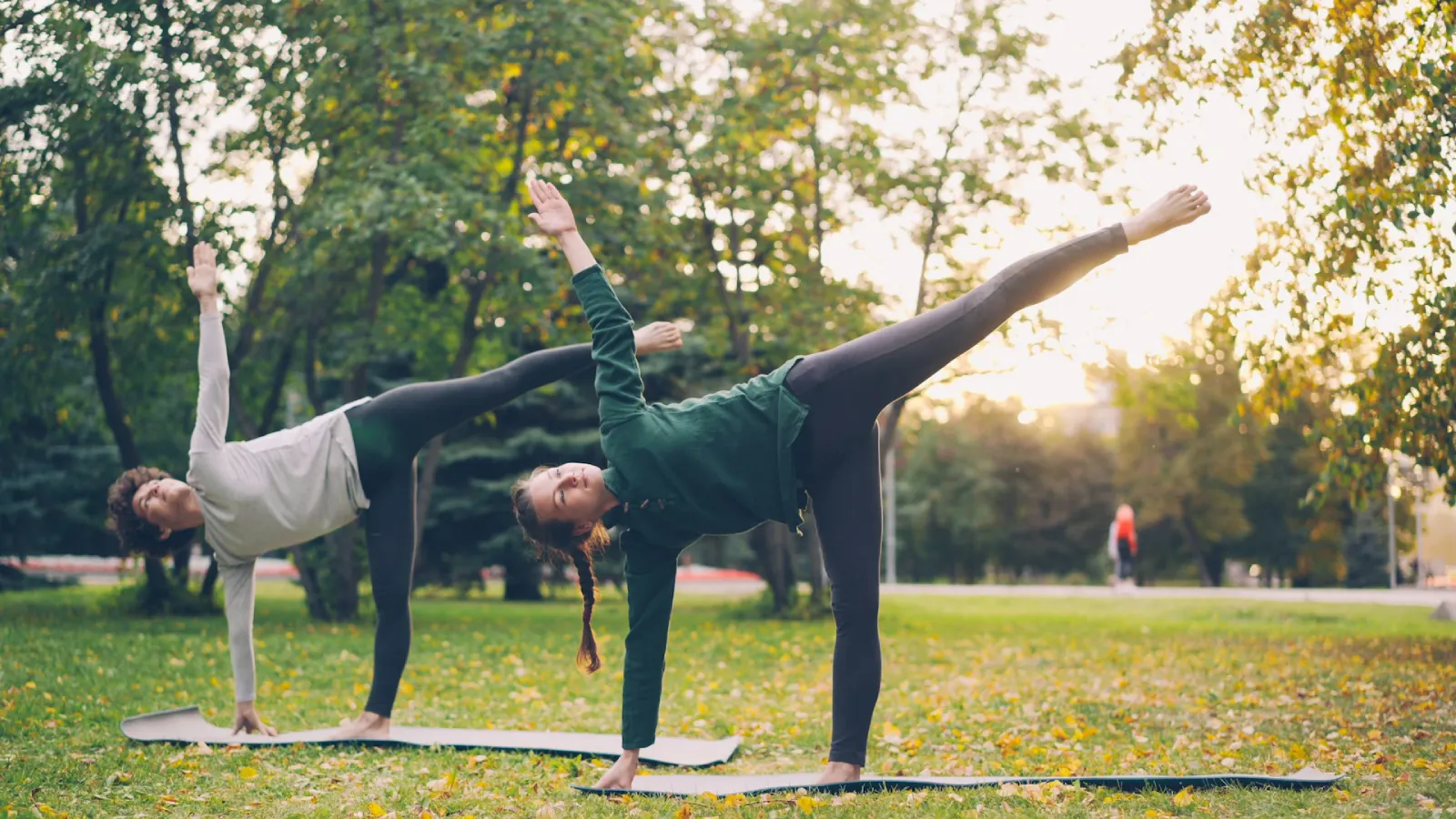
You’ve got two browser tabs open. One says, “yoga retreat Nepal.” The other says “200-hour yoga teacher training.” Both pages show roughly the same kind of photo: someone folded forward against a mountain backdrop, soft morning light, total stillness. And now you’re stuck, because you’re not entirely sure what separates the two, or which one is actually going to give you what you came here looking for.
You’re not the only one confused by this. The two terms get thrown around almost interchangeably online, and a lot of yoga schools don’t go out of their way to explain the difference, mostly because both options work in their favor either way. But a yoga retreat vs yoga teacher training are two genuinely different things to be researched by people with two genuinely different goals, and picking the wrong one can leave you bored in a classroom you didn’t really want, or out of your depth in an intensive course you weren’t ready for.
This guide walks you through what each option entails, who it’s best suited for, what you can expect to pay, and how to decide which makes the most sense. You’ll also learn what these treatments look like in Nepal.
What exactly is a yoga retreat?
A yoga retreat is a chance to step away from the pace of everyday life and spend a few days focusing on your well-being. Instead of rushing from one tourist attraction to another, your time is centered around yoga, good food, rest, and quiet moments. Everything from the daily schedule to the meals and accommodation is usually taken care of, so you can show up and be present.
You may choose from a variety of yoga retreats, including immersive two-week programs and weekend escapes. It’s usually best to remain for five to 10 days if it’s your first retreat. Without spending too much time away from work or everyday life, you have enough time to get into the rhythm, improve your practice, and completely relax.
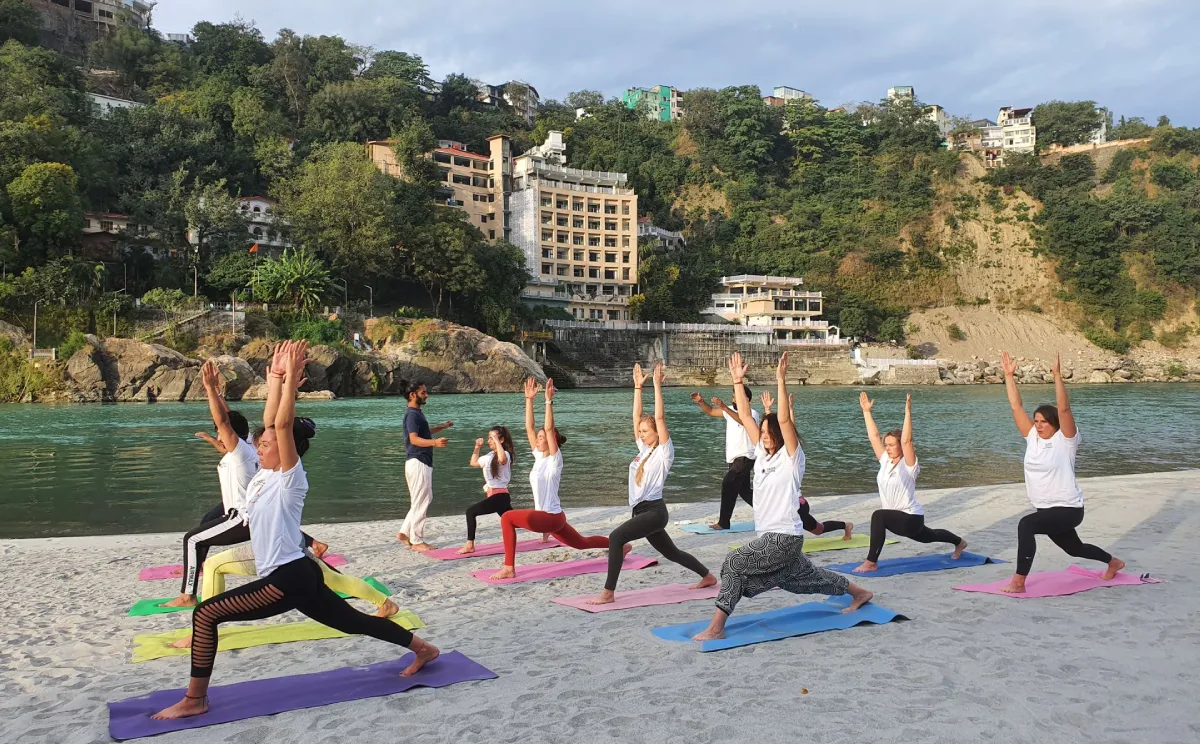
You will start your day with a gentle yoga session or meditation. After the session, you will eat your nourishing breakfast. After that, you’ll often have free time to spend however you like. You might read a book, go for a nature walk, enjoy a massage, explore the local area, or relax and do nothing at all.
In the afternoon, you’ll all come together for another yoga class, and the evening often ends with a calming practice such as restorative yoga, meditation, or chanting. Many retreats also include workshops on yoga philosophy. This way, they provide introductions to Ayurvedic nutrition and wellness or guided visits to nearby temples and cultural landmarks.
You are not required to attend every session, although most retreats have a daily schedule. It’s totally acceptable to miss an activity if you’re exhausted or need some alone time. The goal is to give yourself time and space to relax, re-establish a connection with yourself, and savor the experience at your own pace, rather than trying to fill every hour of your day.
What you walk away with is rest, perspective, and usually a noticeably calmer nervous system, not a certificate, not new teaching skills, and not a technical understanding of how a posture works in someone else’s body. A retreat is an experience you have. It isn’t a qualification you earn.
What exactly is yoga teacher training?
Yoga teacher training, often shortened to YTT, is a structured course that takes you from being a practitioner to someone who genuinely understands how yoga works well enough to teach it safely to others. The most common entry point is the 200-hour course, which is the minimum Yoga Alliance requires for a Registered Yoga Teacher (RYT) credential. However, most established schools, ours included, also offer 100-hour foundation courses, 300-hour advanced trainings, and a combined 500-hour YTT track for people who want to go all the way.
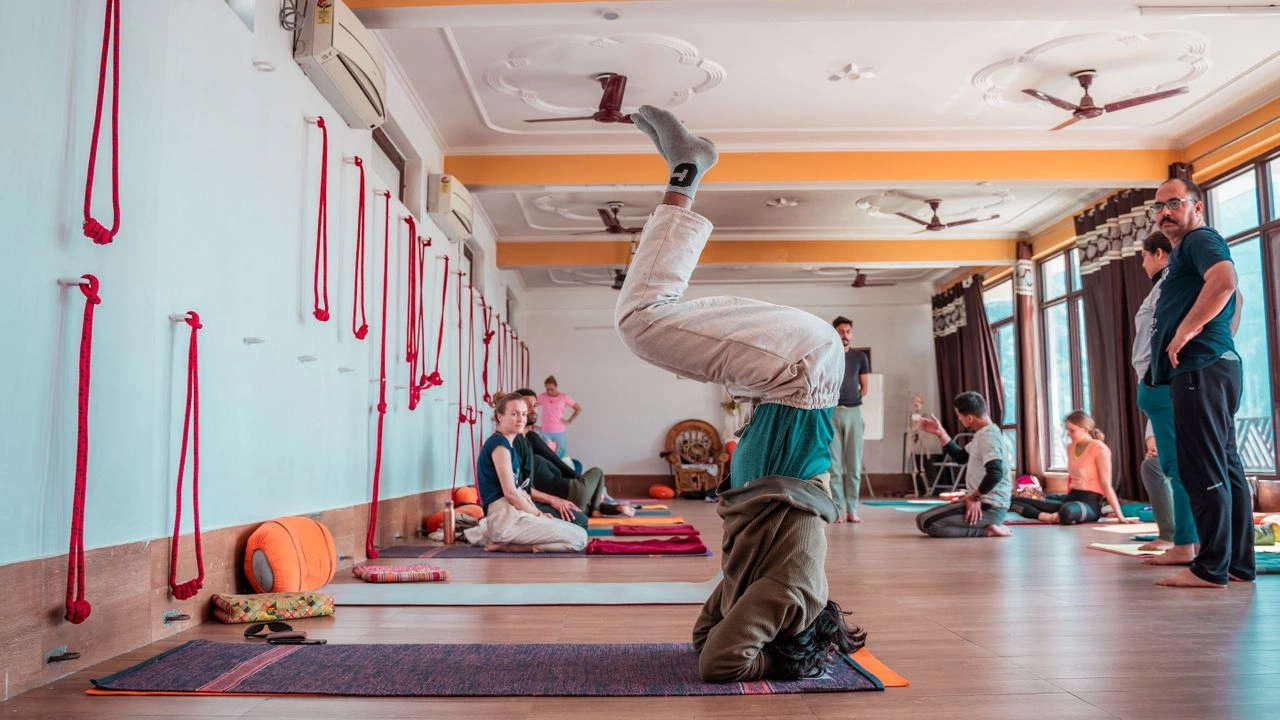
A 200-hour YTT typically runs around three to four weeks, with your days built around actual coursework rather than free time. At Nepal Yoga Academy, for instance, the 200-hour program runs 25 days and begins on the 15th of every month, which is fairly typical for established schools. In addition to daily asana practice, you can expect anatomy classes that explain what happens in the hip joint during a pigeon pose.
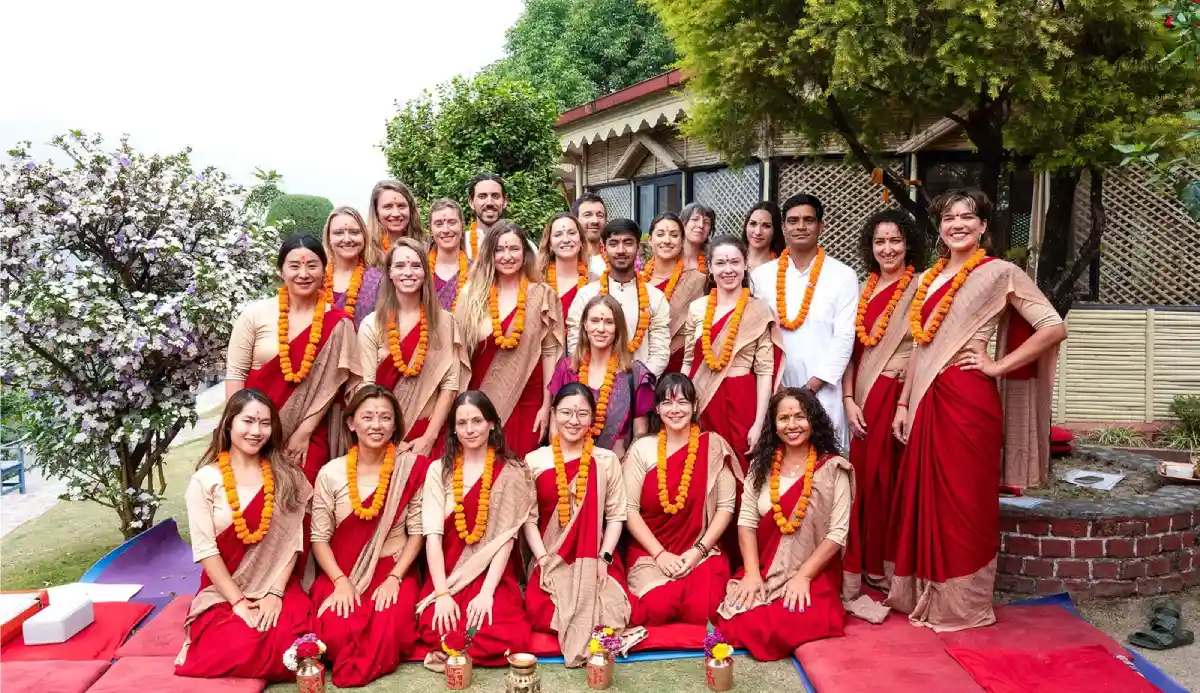
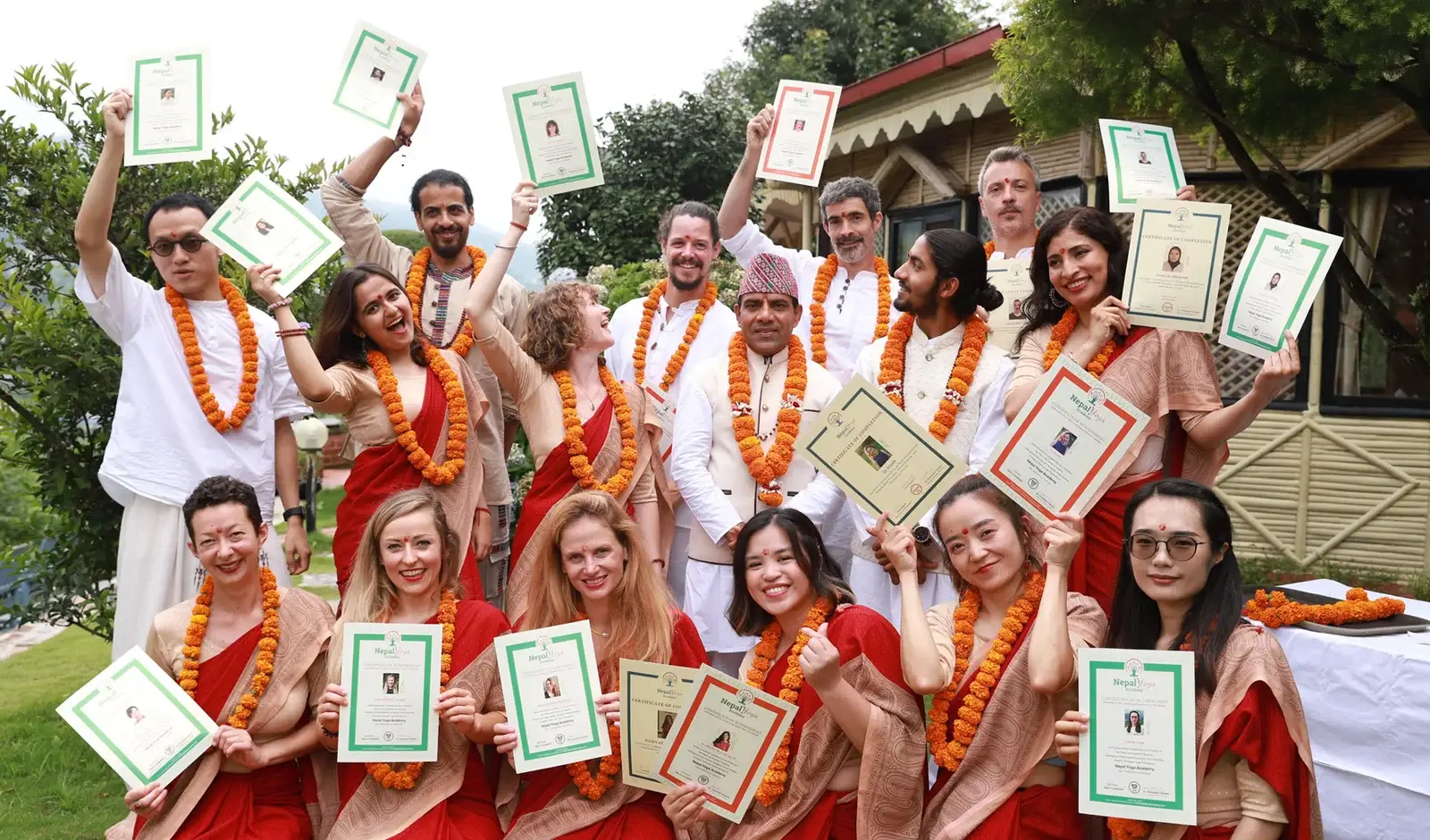
These philosophy sessions go through texts like the Yoga Sutras, lessons on how to organize a class from warm-up to savasana, training in pranayama and meditation, and practice teaching, which involves leading a class in front of your peers while your trainers observe and provide feedback. There are usually written assignments, a final teaching assessment, and, at a properly accredited school, a certificate at the end that lets you register with Yoga Alliance and teach professionally almost anywhere in the world.
Yoga is not a part of this trip. For the duration of the course, practice, lectures, and study time often take 10 to 12 hours each day, 6 days a week. YTT requires something different from you than a retreat: discipline, consistency, and a willingness to be a complete beginner again on the technical side of something you may already be physically good at. But people expect a retreat with extra homework, and they usually struggle the most with it.
Yoga Retreat vs Yoga Teacher Training: The Key Differences
Once you see the two side by side, the differences become pretty obvious. Here’s how they actually compare:
| Factor | Yoga Retreat | Yoga Teacher Training |
| Main goal | Rest, relaxation, and reconnecting with your practice | Building real skills and earning a teaching certification |
| Typical length | 1 day to 2 weeks | 25 days to several months (100-hr to 500-hr) |
| Start dates | Flexible, almost any day | Fixed monthly start (e.g., 200-hr begins the 15th) |
| Daily schedule | Flexible; sessions are optional | Fixed; usually 8–12 hours a day |
| Intensity | Gentle to moderate | Physically and mentally demanding |
| What you study | Asana, relaxation, light philosophy | Anatomy, philosophy, sequencing, and practice teaching |
| Result | Rest, clarity, renewed motivation | Yoga Alliance certification (RYT) |
| Homework | None required | Readings, written work, teaching practice |
| Typical cost (Nepal) | Roughly $140 to $2,000, depending on length and comfort | 200-hr course starts around $1,400 |
| Best suited for | Anyone wanting a break, any experience level | Practitioners ready to commit and go deeper |
If you only take one distinction away from that table, make it this one: a retreat is built around how you feel, while a teacher training is built around what you understand and can pass on to someone else. That single difference shapes almost everything else: the schedule, the workload, the intensity, even the kind of person who genuinely tends to thrive in each one.
The benefits of going on a yoga retreat
The most significant advantage of a retreat is also the most straightforward: it makes you pause. The majority of us struggle to relax on our own terms. Even though we promise to unwind over the weekend, we end up spending Saturday doing laundry and surreptitiously checking our email. That possibility is eliminated with a retreat. There’s no laundry to do, no email that needs to be answered, and a timetable created by someone else that gradually nudges you toward relaxation regardless of your level of commitment.
Apart from that, a retreat usually helps you develop your physical practice in a manner that a single weekly studio session seldom does. You may truly feel changes when you practice every day for a week with teachers who have time to focus on your alignment, since the group is small. Examples of these improvements include tight hamstrings finally letting go, a shaky tree pose suddenly becoming solid, and breath that stops catching halfway through a sun salutation. Additionally, you are exposed to instructors and teaching philosophies that you may not encounter at home, which can completely change how you feel about the practice.
Additionally, there is a social aspect that surprises many. Arriving alone or with a companion, you wind up dining, going for walks, and having lengthy talks with individuals who, by day four, no longer seem like strangers. Many individuals return from retreats with friendships that endure longer than the trip itself, as well as a level of mental clarity that is difficult to achieve back home amid the typical commotion and responsibilities.
The benefits of doing a yoga teacher training
The most obvious benefit of YTT is the certification itself. This credential lets you teach yoga credibly, get hired by a studio, lead your own classes, or build a following as an instructor. But ask people what they actually got out of it once they’ve finished, and the certificate is rarely the first thing they mention.
How much YTT alters your relationship with your own body is typically the first thing that comes up. For the first time, you spend weeks studying anatomy in a way that makes every posture make sense. You learn why certain signals work, and others don’t, why your knee complains in a particular twist, and why your shoulder feels different from your training partner’s in the same shape. You become more than just a better teacher with that knowledge. Whether on or off a mat in front of students, it makes you a safer and more competent practitioner for the rest of your life.
There’s also an emotional side that tends to surprise people the most. Living inside yoga philosophy for several weeks straight, actually sitting with texts like the Yoga Sutras instead of skimming a quote on social media, has a way of shifting how you see stress, ego, and your own habits. Plenty of people who never planned to teach professionally still sign up for a 200-hour course purely for this reason, and leave with more self-awareness than they expected from what they assumed was mainly a fitness course.
And then there’s the confidence. Standing in front of a room and leading a class is uncomfortable the first few times, for almost everyone. By the end of a proper YTT, you’ve done it enough times, with feedback after each attempt, that the fear mostly drains out of it, which matters whether you go on to teach forty students a week or want to confidently guide your own family through a Sunday flow at home.
Who should choose a yoga retreat?
If your sincere objective is to relax, rejuvenate, or incorporate more yoga into your week than your typical schedule permits, then attending a retreat makes sense. If you’re exhausted from work and need a real break instead of just another to-do list, it’s a great fit. It also works well if you’re new to yoga and want an intensive experience before committing to something more significant, or if you practice often and would want a few days of deeper, more supportive practice than you can do on your own.
It’s worth considering, too, if you’re traveling anyway and want to build a meaningful, restorative stretch into a bigger trip. Pairing a retreat with sightseeing in Kathmandu or a trek through the Annapurna region is a genuinely popular combination for visitors to Nepal. You don’t need flexibility, prior experience, or any intention of ever teaching a class. You really need the willingness to slow down for a few days, which, for many people, is the hardest part of the whole thing.
Who should choose yoga teacher training?
YTT fits a wider range of people than the name suggests. Obviously, it suits anyone who wants to teach professionally, whether that’s leading classes at a studio, eventually running their own retreats, or building a private client base. But it also makes sense for people with zero interest in ever teaching, who want to go deeper: practitioners who’ve hit a plateau and want to actually understand the mechanics and philosophy behind what they’ve been doing for years, instead of just following cues from the front of the room.
It’s a strong fit if you genuinely enjoy structure and discipline rather than finding it draining, since the schedule on a proper course doesn’t bend much. And it’s worth committing to if you can clear real time off. Most people need three to four weeks for a 200-hour course, plus travel, and arrive with at least a baseline comfort with regular asana practice, even if you’re far from advanced. You don’t need to be flexible or strong already. You do need patience for repetition, comfort with being a beginner again at the academic side of yoga, and a willingness to be corrected, sometimes daily, in front of other people.
Can you do both, yoga retreat and teacher training?
Yes, and this happens more often than people expect. Many people don’t choose one and leave it there; the two experiences often lead naturally into each other.
Some travel to Nepal for a retreat, take in the fast-paced lifestyle, connect with the practice, and then opt to return for teacher training once they are certain it’s what they really want.
Some take the opposite approach. To give themselves time to assimilate what they’ve learned without the stress of courses, assignments, or tests, students first complete a 200-hour course before staying a little longer for a more sedate retreat experience.
There’s no fixed order. For many people, one experience is enough to help them understand what they want next.
There’s also a genuine middle path worth knowing about. At Nepal Yoga Academy, our Yoga Teacher Training with Retreat program blends roughly 80 to 90 contact hours of real training material, anatomy, philosophy, sequencing, the same building blocks you’d cover on a full course, with the slower pace, smaller groups, and wellness extras you’d normally associate with a retreat rather than a classroom. It’s a good option if you want a genuine head start on certification, but the thought of a rigid, twelve-hour classroom day doesn’t appeal to you.
If your schedule and budget allow it, pairing a short retreat with a full YTT, either right before or right after, is one of the better combinations available. The retreat gives you a soft landing into the place and the practice, or a proper way to decompress once the intensity of training is behind you.
How to choose a yoga retreat or teacher training?
Before choosing, it helps to forget the promises and ask yourself what you actually want from the experience.
Are you looking to change how you feel, or are you looking for a qualification? If you want time to slow down, clear your mind, and reconnect with yourself, a retreat might be the better fit. If you’re interested in learning yoga in depth and possibly teaching it one day, then a YTT could be the right path.
Here, be truthful with yourself. Many people decide to pursue teacher training because it seems like a greater accomplishment, but they eventually discover that their true goals were relaxation, tranquility, and a change of pace.
Another item to consider is time. While a YTT often requires several weeks where you can completely devote yourself, a retreat can work with a shorter vacation. It’s not just the lessons; it’s the practice, the daily schedule, and allowing yourself to participate in the experience.
Additionally, consider the type of surroundings you like. Generally speaking, a retreat offers you more space to unwind and go at your own speed. Because consistency is a component of the learning process, teacher training is more regimented and requires you to adhere to a timetable.
Your experience with yoga doesn’t have to decide everything. Beginners can join both, but if you’re completely new to yoga, a retreat can be a gentler way to begin. Jumping straight into a 200-hour training can feel intense, especially with daily practice, philosophy, and anatomy lessons.
And then there’s Nepal itself. If you’re coming for the mountains, the culture, and a chance to step away from everyday life, a retreat may be what you’re searching for. If you feel drawn to studying yoga deeply and understanding the tradition behind it, teacher training may be the reason you’re making the journey.
What to look for when choosing a retreat or YTT in Nepal?
Nepal has dozens of schools offering both retreats and teacher trainings, and the quality gap between them is wider than most people expect upon arrival. A few things genuinely matter when you’re comparing options.
If you’re choosing a yoga teacher training (YTT) course, accreditation should be one of the first things you check. Look for a school registered with Yoga Alliance, as yoga studios and training providers worldwide widely recognize its certification.
Once you’ve confirmed the accreditation,
- Take a closer look at how the course is taught.
- Find out how many hours you’ll spend studying on your own compared with teachers.
- Inquire about the class size as well.
If a class has more than 20 to 25 students for each teacher, you’ll probably get less personal attention and fewer chances to receive feedback on your practice.
It’s also a good idea to find out who will be teaching you. Look at their training, experience, and teaching style, rather than focusing only on their title. Finally, check how long the course lasts. A standard 200-hour YTT usually takes three to four weeks to complete. If a course is much shorter, ask how those 200 hours are covered to make sure you’re getting the full training.
If you’re booking a yoga retreat, focus on the practical details. Check what’s included in the price, such as meals, accommodation, airport transfers, and activities, as these aren’t always included. Find out how many people will be attending, what the rooms are really like beyond the photos, and whether the schedule gives you enough free time to relax. A good retreat should leave room to rest; not keep you busy from sunrise to sunset.
For both, read recent, independent reviews rather than just the testimonials on a school’s own site, and don’t be shy about emailing or messaging a school directly with questions before you book. A school that takes a day or two to give you a thoughtful, specific answer is usually a better sign than one that fires back a generic sales pitch within thirty seconds.
At Nepal Yoga Academy, this is the standard we hold ourselves to. We teach from the hills above Changu Narayan Temple in the Kathmandu Valley, led by Dr. Chintamani Gautam, who brings more than 25 years of studying and teaching yoga across Nepal and India, along with a PhD in yoga and master’s degrees in yogic science and Sanskrit literature. Our 100-, 200-, 300-, and 500-hour trainings are all Yoga Alliance certified, and our retreats range from a single rejuvenating day to detox longer, Ayurveda, and heritage programs, depending on what you actually need. Groups stay small enough for genuine hands-on correction, the food is freshly prepared and vegetarian, and the campus sits close enough to Kathmandu to be convenient, far enough into the hills, actually, to feel like you’ve left the city behind.
Why does Nepal work so well for yoga retreat or teacher training?
You could do a retreat or a teacher training in dozens of countries, including Bali, Costa Rica, India, and, increasingly, even your own city. Nepal earns its reputation for a reason that applies to both options equally. This is a place where yoga has never needed to be marketed as something new or trendy, because it’s been woven into ordinary life here for longer than most countries have existed in their current form. Temples sit a short walk from where you’ll practice. The philosophy you study in a YTT classroom isn’t important; it’s the same framework that’s shaped how people in this region have thought about the mind and body for centuries.
For people attending a retreat, this creates something difficult to replicate: learning from teachers who have spent years developing their practice, in a setting that naturally supports the experience. The Himalayan foothills, quiet farmland, and prayer flags moving between the trees all add to the atmosphere, creating a sense of calm before the first yoga pose is even introduced.
For trainees, it goes a step further. Studying anatomy and philosophy, in a place where yoga is a living, breathing local tradition rather than an imported fitness trend, tends to change how seriously the material lands. You’re not learning about the Yoga Sutras from a textbook written an ocean away from where the ideas originated. You’re a short walk from temples where similar ideas have been practiced daily for generations.
There’s also a practical reality worth being honest about: Nepal remains considerably more affordable than most other major retreat and YTT destinations, which means your budget tends to stretch further here, a longer course, a few extra days, a private room you might not have been able to justify somewhere else.
Frequently Asked Questions
Do I need to be flexible to join a yoga retreat or teacher training?
No. In fact, this is one of the main reasons many people hesitate to join a yoga retreat. You don’t need to be flexible to start yoga, but flexibility comes with practice over time.
Most retreats welcome people at all levels, from complete beginners to experienced practitioners. Teachers usually offer different variations and adjustments so everyone can practice comfortably.
Even yoga teacher training doesn’t expect you to walk in already doing advanced poses. It’s more about showing up, being willing to learn, and staying committed to the process. Your current flexibility matters far less than your mindset.
Can a complete beginner really join a 200-hour yoga teacher training?
Yes, most schools accept beginners as long as you’ve been practicing for at least a few months before arriving, simply so the physical side of the course doesn’t overwhelm you on top of everything else you’re learning. If you’re brand-new to yoga, it’s worth doing a short retreat or a few months of regular classes first, then coming back for the full training once your body has some familiarity with the basic postures.
How much does a yoga retreat or teacher training in Nepal usually cost?
It varies significantly based on the length and contents. For seven to ten days, a mid-range guided retreat with nicer accommodations and more structure usually costs between $600 and $1,200, while premium choices with a private room can cost up to $2,000. A week-long budget retreat can start at $140. The cost of a 200-hour yoga teacher training program, which is the standard certification course, often starts at $1,400 for the full 25-day program at a reputable Nepali institution. This price usually includes lodging and food; the exact amount will depend on the room type and the inclusions.
Is a yoga teacher training certificate from Nepal recognized internationally?
Yes, as long as the school is registered with Yoga Alliance, the main global standard for yoga teacher credentials. A Yoga Alliance-certified 200-hour course lets you register as an RYT (Registered Yoga Teacher) and teach in studios, gyms, and your own classes in most countries. It’s always worth double-checking a school’s accreditation directly with Yoga Alliance before you book, rather than just trusting a logo on a website.
When’s the best time of year to do a retreat or YTT in Nepal?
Spring (roughly March through May) and autumn (September through November) are generally considered the best windows, with clear skies, comfortable temperatures, and the best mountain views. Monsoon season (June to August) brings heavier rain and humidity, which can still work fine for an indoor-focused training, but isn’t ideal if mountain views and outdoor time are a big part of why you’re coming. Winter (December to February) is cooler, sometimes cold in the early mornings, but still very doable, and tends to be quieter and slightly less expensive.
Is it safe for solo travelers, including women, to join these programs?
Generally, yes. Established yoga schools in Nepal host solo travelers, including solo women, regularly, and most arrange airport pickup and a structured daily routine that takes much of the usual solo-travel uncertainty out of the equation. As with traveling anywhere, it’s still worth doing your own research on the specific school, reading recent reviews, and trusting your gut before you commit.
Final thoughts
Neither option is better than the other; they serve different purposes. A retreat is for the time when you need to slow down, step away from daily life, and reconnect with yourself. Teacher training is for when you’re ready to explore yoga in greater depth, understand the practice more fully, and possibly share it with others.
For some people, a retreat becomes the first step before eventually moving into teacher training. For others, completing a 200-hour course reveals that what they truly needed was the space and simplicity of a retreat. There’s no right or wrong choice. Both can be meaningful reasons to make the journey to Kathmandu.
If you’re still not sure which is right for you, that’s a completely normal place to be, and it’s worth reaching out and talking it through with a real person at whichever school you’re considering, rather than guessing from a website alone. At Nepal Yoga Academy, we hear some version of this question from almost everyone who writes to us, and we’d genuinely rather point you toward the right program than the more expensive one.
Whether that ends up being a few restorative days in the Himalayan foothills or a full 200-hour certification that changes how you see the practice for good, we’re glad you’re thinking it through carefully before you book.