



Beyond the Classroom – Yoga Teacher Training for International Students in Nepal
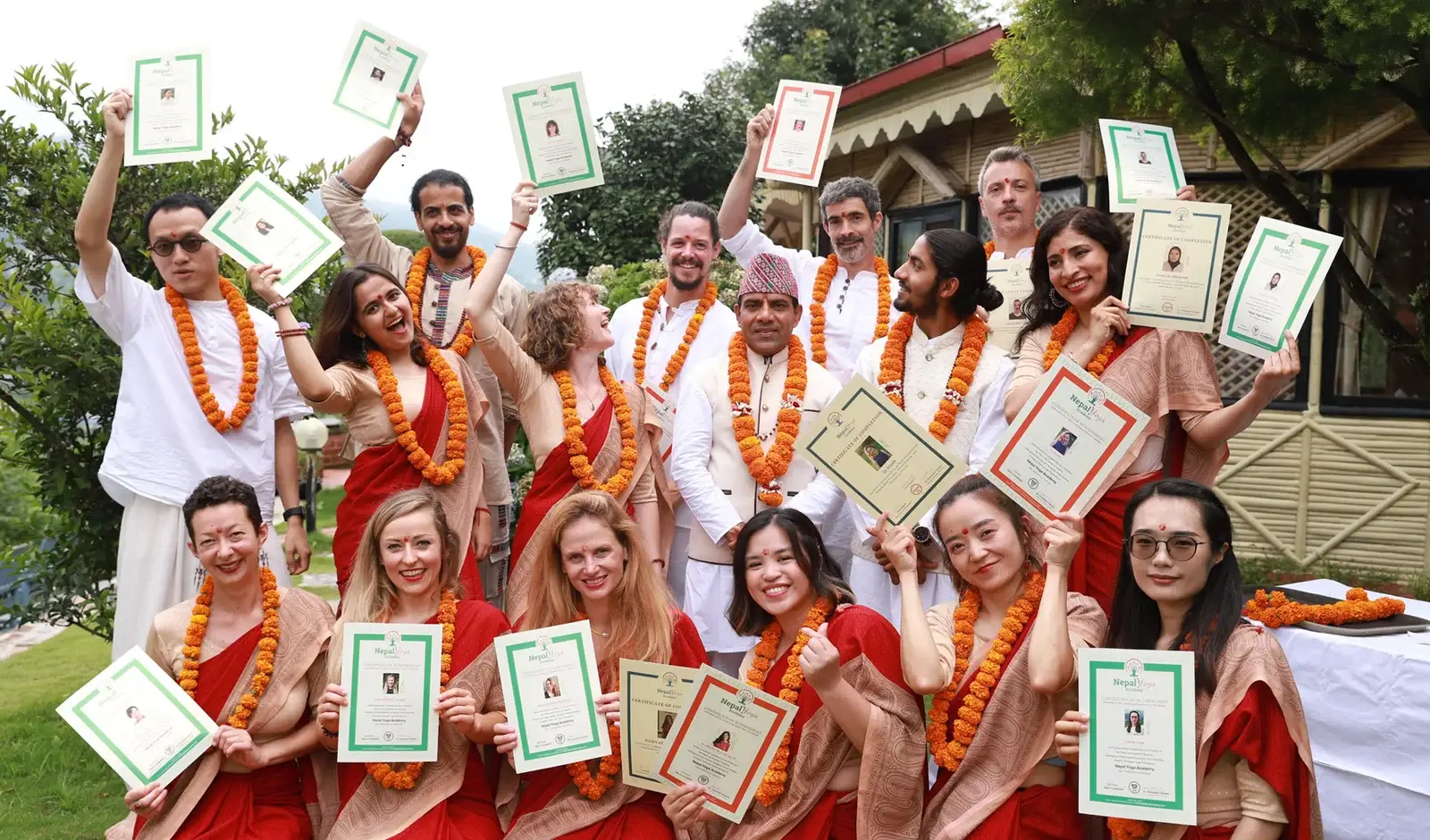
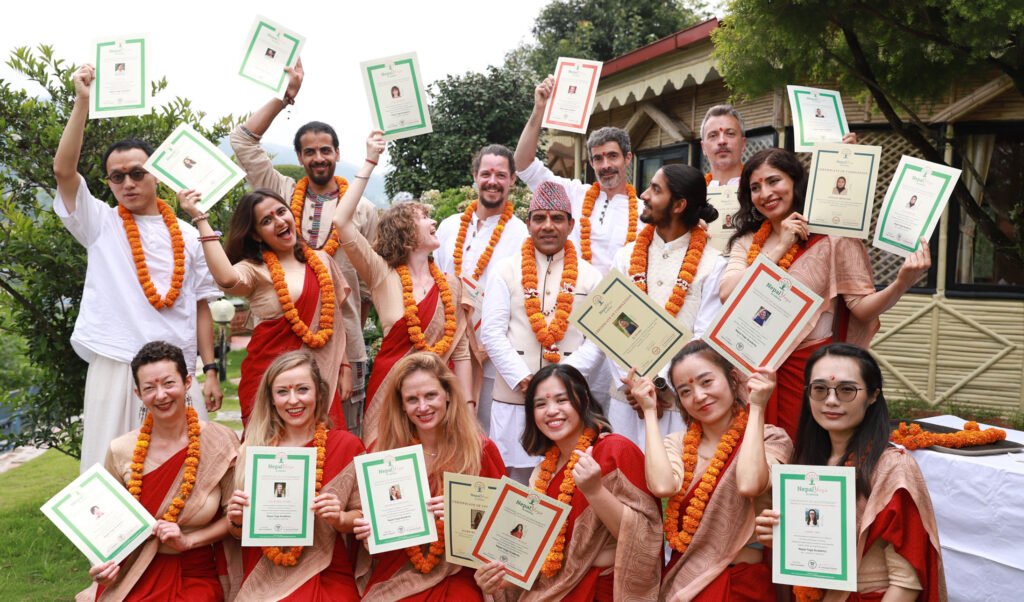
Every yoga teacher training ends the same way: a certificate, a few letters after your name, a line you can add to a studio bio. That part’s simple, and every school’s website will happily walk you through it. What’s harder to put into words is everything else that happens along the way, the part that actually changes how you feel about getting out of bed in the morning. That happens beyond the classroom, and it’s usually why graduates say Nepal, not the certificate, is what stayed with them.
If you’re an international student comparing yoga teacher training programs, you’ve probably already read plenty of syllabus pages. So, let’s skip the usual list of courses and talk about what happens after the day’s lectures end.
That’s where you start to see what the experience is really like, and what makes it more than just a certificate.
Inside the classroom
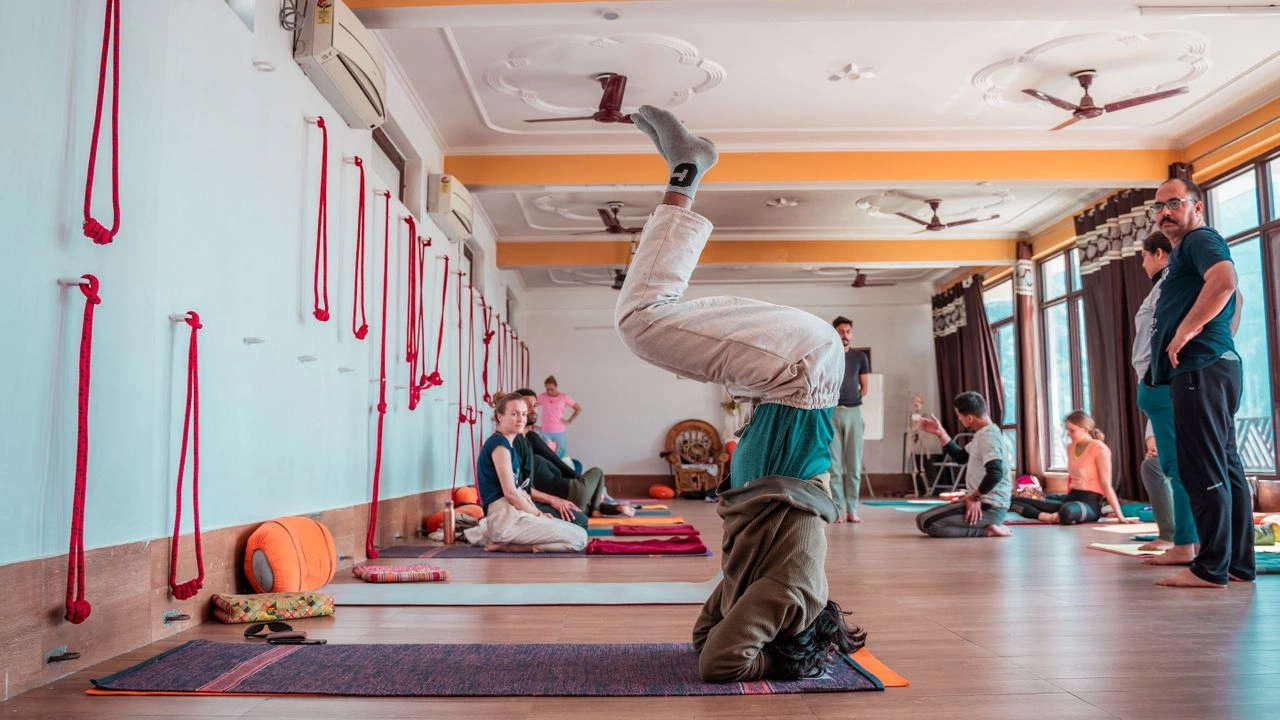
Before getting into the more interesting parts, it’s worth being clear about what you’ll actually study. The curriculum matters, and a well-structured program should give you a solid foundation.
A proper 200-hour or 300-hour training that follows Yoga Alliance standards will typically cover:
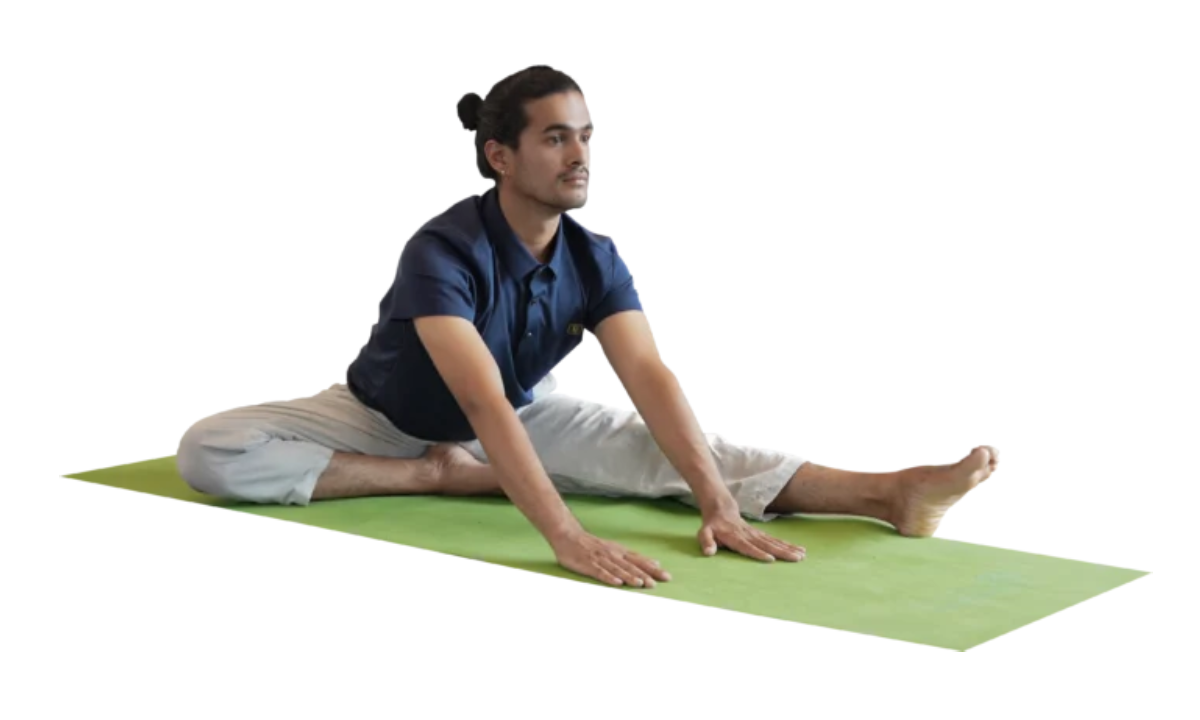
- Asana — alignment, sequencing, adjustments, and practice teaching.
- Yoga philosophy — the Yoga Sutras, the eight limbs of yoga, and often the Bhagavad Gita.
- Anatomy and physiology — how the body moves and how to teach it safely.
- Meditation and pranayama — breathwork and sitting practice, built into most days.
- Teaching methodology — cueing, voice, sequencing, classroom management.
- An introduction to Ayurveda — doshas, basic nutrition, and daily rhythm.
That’s a solid curriculum, and it’s exactly why the certificate carries weight wherever you take it afterward. But if the classroom were the whole story, students wouldn’t fly in from six continents to come here for it. What actually pulls international students to Nepal, and what keeps them talking about it years later, happens once class lets out for the day.
Why do so many international students choose Nepal?
Ask ten different students why they picked Nepal over India, Thailand, or Bali, and you’ll get ten different answers. But a few reasons keep coming up.
Nepal sits right at the foot of the Himalayas, and that setting alone can make your experience feel different from day one. You’re also close to Lumbini, the birthplace of Buddha, with ancient temples, monasteries, and spiritual traditions all around you.
Yoga in Nepal doesn’t feel like a new trend. It has been part of everyday life for generations, practiced quietly in homes, monasteries, and ashrams long before yoga became popular on social media.
Another big reason people choose Nepal is the cost. Yoga teacher training here is generally much more affordable than programs in places like the US, UK, or Australia. Even after adding flights, accommodation, and daily expenses, the overall cost can still be manageable. For many people, that can turn a plan they’ve been putting off into something they can actually do this year.
Then there’s the slower pace of life. Kathmandu and Pokhara can feel much less rushed than many Western cities. You have more space to slow down, focus, and be present.
That can make a real difference during a 200-hour or 300-hour teacher training. Instead of trying to fit yoga around a busy routine, you can make it the focus of your day—practicing, learning, resting, and simply being there.
Beyond the classroom
Living around yoga
There’s a big difference between learning about the Yamas and Niyamas in a studio back home and studying them where many of these ideas are still part of everyday life.
In Nepal, you’ll often come across spiritual practices as part of everyday routines. A shopkeeper may stop for puja before opening in the morning, or you might pass prayer wheels outside a monastery while people go about their day. Meditation and prayer aren’t always seen as wellness activities here. For many people, they’re simply part of life.
Lumbini, the birthplace of Buddha, is also nearby, and temples, monasteries, and old traditions are found throughout the country. Many of these traditions existed long before yoga became popular with travelers. Being around them gives you a different context for what you’re learning.
When your teacher explains a passage from the Yoga Sutras, it doesn’t feel quite as distant or academic. You might be sitting in class with the smell of incense in the air, hearing chanting from a nearby temple, and suddenly the ideas start to feel less like something you’re studying and more like something you’re experiencing.
For many students, this is where yoga starts to feel like more than physical exercise. It becomes a different way of looking at yourself, your habits, and everyday life.
You don’t have to be deeply spiritual for that to happen. Sometimes, you need to slow down and pay attention. And Nepal gives you plenty of reasons to do exactly that.
Getting into the mountains
No syllabus is going to list “mountain views” as a learning outcome. But ask someone what they remember most about their training in Nepal, and the Himalayas will likely come up.
If you’re training in Pokhara, you may be lucky enough to see the Annapurna range from your yoga hall. In Kathmandu, you can head into the hills for a weekend and leave the traffic and noise behind surprisingly quickly.
Some yoga schools include a short trek, hike, or nature day as part of the training. Others leave it completely up to you. Either way, most students find time to get out into the hills at least once before heading home.
After weeks of early mornings, practice, and study, the mountains give you space to slow down and take it all in. You often remember those quiet moments away from the classroom the longest.
There’s something about holding a breathing practice with a mountain in front of you that a windowless studio back home can’t recreate. It’s not really about the photo, although you’ll take one anyway. It’s that the sheer scale of the Himalayas puts whatever stress- like a breakup, burnout, or plain curiosity- brought you here into perspective fast.
Meeting people from around the world
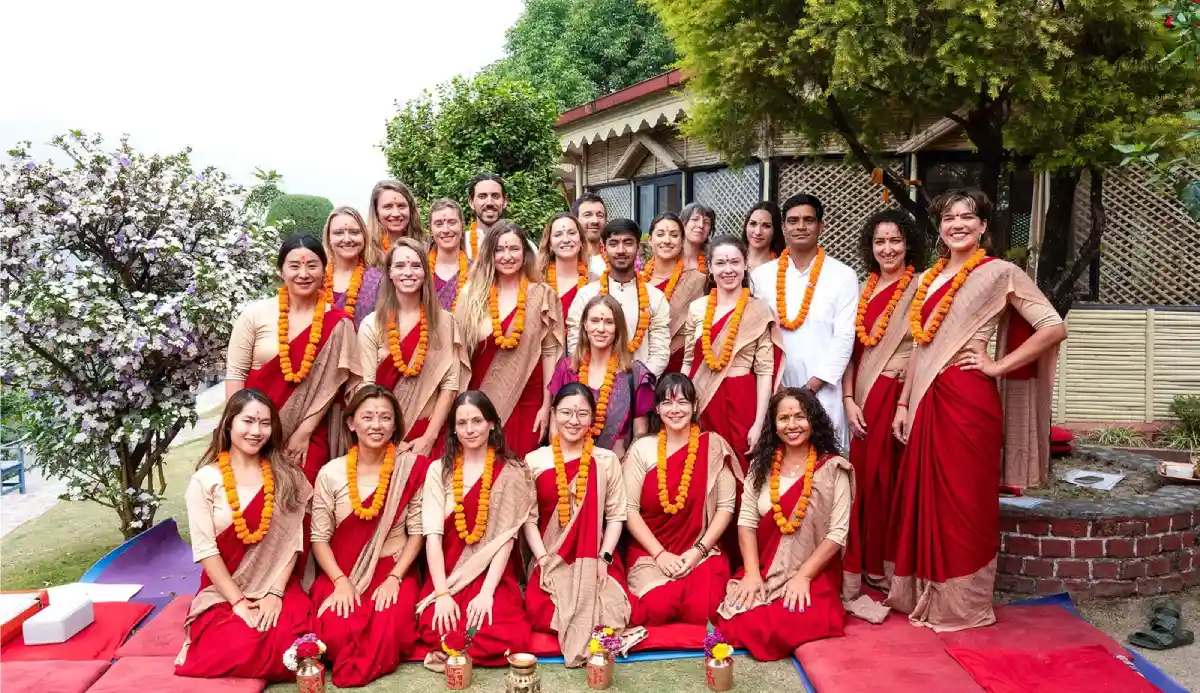
Walk into orientation for an international training in Nepal, and you’ll likely be sitting next to someone from Germany, someone from Australia, someone from Argentina, and someone who flew in from three countries over just for this.
That mix of people matters more than you might expect.
You’ll practice alongside people from completely different backgrounds, each with their own reasons for being there. Some might be looking for a career change. Others are recovering from something, curious about yoga, or simply feeling burned out and looking for a reset.
As the days go by, those differences between people start to feel less important. You share meals over dal bhat, someone always helps with a difficult pose, and there’s usually a joke about waking up so early. Somewhere along the way, the people you first met as strangers begin to feel more like old friends.
For many graduates, friendships end up being one of the biggest surprises of the whole experience. You spend three or four weeks with the same group, sharing meals, going through challenging practices, and waking up for the same early classes every day.
There’s something about going through all of that together that brings people close pretty quickly.
So don’t be surprised if you leave Nepal with more than a yoga certificate. You might also leave with a few friendships that continue long after the training is over.
What a typical day looks like
Most people go into yoga teacher training expecting something like an intensive class. But once you’re there, it can feel more like stepping into a small community for a few weeks.
You start sharing the same routines, meals, early mornings, and quiet moments with the people around you. Your days take on a different rhythm, and after a while, it starts to feel completely normal.
You’ll probably stay with other trainees, either in an ashram or in a guesthouse set up for yoga students. Wherever you stay, your usual routine tends to change.
You might find yourself checking your phone less. You spend less time staring at a screen and more time actually being where you are.
By the end of the day, you’re tired, but it feels like the good kind of tired. You’ve practiced, learned, talked, walked, and made the most of the day. After a few early mornings, you may even start waking up before your alarm without thinking.
None of this sounds like a huge change. But when you step away from your usual routine, you suddenly have more space to slow down and notice the little things you normally move past without a second thought.
A typical day looks something like this:
- Wake up around 5 or 5:30 am, well before the city gets loud
- Morning pranayama and meditation, usually on an empty stomach
- Asana practice, often two to three hours long
- A simple, mostly vegetarian breakfast
- Philosophy or anatomy lectures mid-morning
- Free time or self-study in the early afternoon
- A second asana or alignment class in the late afternoon
- Evening meditation or chanting
- Lights out early, because 5 am comes fast
Written out, it looks strict. In practice, most students say the structure is what makes it work. You’re not spending energy deciding what to eat or when to practice, because someone’s already figured that out; all you have to do is show up and let the day carry you.
Food, festivals, and the little things you remember
Meals are usually simple and mostly vegetarian, with plenty of options for people who prefer vegan food. Dal bhat (rice, lentils, vegetables, and often a little pickle on the side) is a regular part of the menu.
Many yoga teacher training programs also introduce students to the idea of satvik, or sattvic, food, a traditional yogic approach to eating that emphasizes fresh, natural, wholesome foods and mindful eating. In yogic philosophy, sattvic foods are generally associated with qualities such as clarity, calmness, balance, and lightness. Meals may therefore include fresh vegetables, fruits, whole grains, lentils, nuts, seeds, and lightly prepared dishes, while heavily processed, excessively spicy, or very stimulating foods may be limited depending on the school.
The idea behind satvik food is not simply about following a strict diet. It is about understanding how food can support your physical practice, meditation, concentration, and overall sense of balance. For students spending several weeks immersed in yoga, eating in this way can become another part of experiencing the yogic lifestyle beyond the classroom.
At first, you might not think much of it. But after eating it again and again, a funny thing happens: you start craving it. Many students miss it once they leave Nepal.
And if your training falls during a festival, you get to experience a completely different side of the country.
Nepal has festivals year-round, from Dashain and Tihar to Holi and Buddha Jayanti. There are also plenty of smaller celebrations that vary from one region to another.
If your training falls during a major festival, your school may take a short break so you can experience it. It’s a nice chance to step away from the training schedule for a while and see how these celebrations fit into everyday life in Nepal.
Seeing Kathmandu covered in lights during Tihar or finding yourself covered in color during Holi is the kind of experience that stays with you.
Years later, you might not remember every asana you practiced that week. But you’ll probably remember the food, the people, the colors, and what it felt like to be there.
None of this is technically part of “yoga teacher training.” But it’s a big part of why people come home talking about Nepal itself, not just the certificate they earned there.
200-hour or 300-hour: Which one fits you?
If you’re new to yoga teaching altogether, a 200-hour program is the standard starting point. It’s internationally recognized, it meets Yoga Alliance’s baseline requirements to register as an RYT-200, and it covers everything you need to start teaching beginner and general-level classes.
A 300-hour program is for people who already hold a 200-hour certification and want to go deeper into more advanced asana, more nuanced philosophy, and more specialized teaching skills. Combined, the two get you to the 500-hour mark, which opens doors to teaching more advanced students and, eventually, training other teachers yourself.
If you’re still not sure whether you want to teach yoga, starting with a 200-hour training can be a good way to find out.
You’ll build a strong foundation, experience what the training is really like, and see whether teaching feels right for you. There’s no need to commit to the 300-hour level straight away.
You can always come back for the 300-hour later, and plenty of students do. Some return to the same school where they completed their first training, already familiar with the teachers and the community they joined.
A few things to sort out before you arrive
A little planning before you arrive can make things easier, and most of it is pretty simple.
Visa: Depending on your nationality, you can usually get a tourist visa on arrival at Kathmandu’s international airport or at land border crossings. It generally covers a standard tourist stay, but check the latest requirements for your passport before booking your flight, as visa rules can change.
Packing: Layers are useful, especially during the shoulder seasons. Mornings and evenings can feel quite cool even when the daytime is warm, particularly in Pokhara and the hill areas. Bring your own yoga mat if you prefer using one you’re familiar with, although most schools provide them. A light shawl or scarf can also come in handy for temple visits and early meditation sessions.
Budget: Beyond the course fee, which usually includes accommodation and meals, set aside a bit extra for flights, the visa fee, travel insurance, laundry, the odd coffee or snack run, and any side trips you want to take before or after the program.
Connectivity: Wi-Fi is available at most training centers, although it may be slower than what you’re used to. Getting a local SIM card is cheap and usually easy to do within a day of arriving. It’s worth having if you want a more reliable connection for calls and messages back home.
Health: Basic travel vaccinations are worth checking with your doctor before you go, and travel insurance that covers your training dates is a smart, low-cost safety net.
None of this needs to be stressful. Most schools that work regularly with international students will send a pre-arrival guide that answers 90% of these questions before you even ask.
How to choose the right school?
Plenty of yoga teacher training programs are available, so it’s worth considering a few things before deciding.
Start with accreditation. If a school is registered with Yoga Alliance, its certification is internationally recognized, which can help if you plan to teach outside Nepal. Then look into the teachers themselves. Their qualifications matter, but so do their teaching experience and what previous students say about learning from them.
Class size is another thing to consider. Smaller groups usually give teachers more time to work with each student, help with alignment, and answer questions. You also get more opportunities to interact with your teachers instead of getting lost in a large group.
Before choosing a school, take some time to read reviews. Don’t just look at the star rating either. Pay attention to what former students actually say about the teachers, daily schedule, accommodation, food, and overall experience.
If you can, reach out to a few graduates on social media and ask what they wish they had known before starting. You’ll often get a much more honest picture that way.
At Nepal Yoga Academy, we built our program with these things in mind. We keep groups small, work with experienced teachers, and leave enough space in the schedule for the experience beyond the classroom.
Teacher training isn’t only about getting through the syllabus; a lot of what you take away happens in the moments between classes, meals, conversations, walks, and simply having time to be present.
What changes after you get certified?
Most students don’t fully clock how much changes until they’re back home, back in their normal routine, and suddenly nothing feels quite as normal as it used to.
For some graduates, the next step is teaching. They might start teaching classes at a local studio, offer private sessions, or even run small classes of their own.
Others take the certification in a different direction. It can become a foundation for work in wellness or deepen their understanding of their own practice. There isn’t one right way to use what you learn.
What tends to stay with people, though, goes beyond the certificate.
You may notice small changes in everyday life. Maybe you sleep better. You become a little more aware of what you eat. You catch yourself taking a breath before reacting to a stressful situation instead of immediately getting caught up in it.
None of these changes happen overnight, and they’re different for everyone. But after several weeks of practicing, studying, and living differently, it’s common to notice a shift.
The certificate is what you take home on paper. The changes in how you approach everyday life often stay with you much longer.
What you take home?
A yoga teacher training in Nepal gives you the qualification you came for, but the experience rarely ends there.
You spend a few weeks practicing, studying, eating, walking, talking, exploring, and living alongside people you may never have met otherwise. You experience a different pace of life, encounter traditions that give new context to what you’re learning, and have time to step away from the routines you’re used to.
The certificate comes home with you. So do the things that are harder to put on paper: the early mornings, the mountain views, the conversations over dal bhat, the friendships, and the moments when something you learned in class suddenly makes sense in everyday life.
For some people, that experience becomes the beginning of teaching yoga. For others, it simply becomes a deeper personal practice or a few weeks they remember for a long time.
Either way, the value of the training isn’t only in what happens during class. Some of the most meaningful parts happen before the first lesson and after the last one.
The classroom will teach you how to teach yoga. Everything beyond it teaches you why you’d want to.