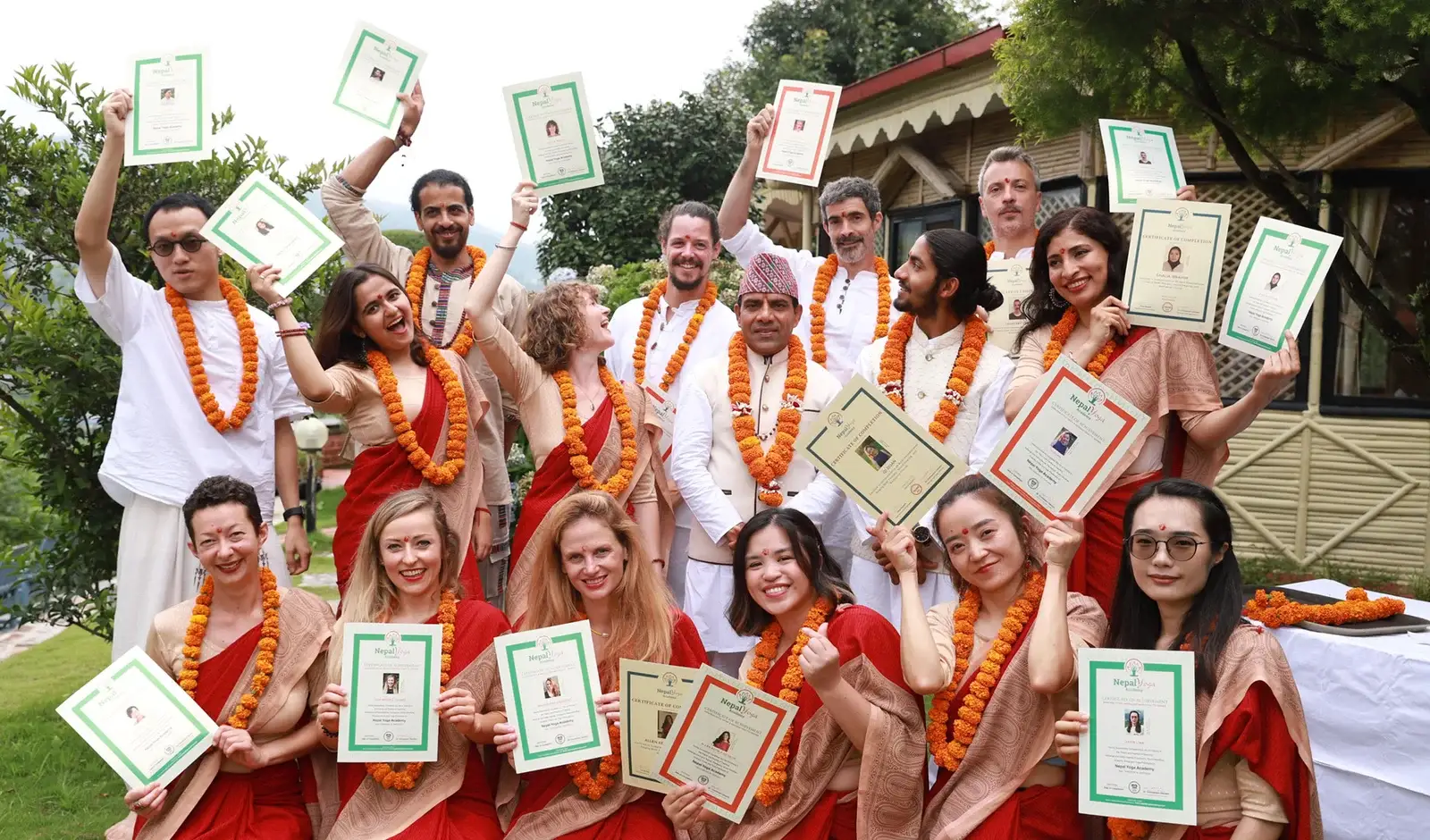


Why is yoga teacher training in Nepal famous worldwide, and what makes Nepal Yoga Academy unique?
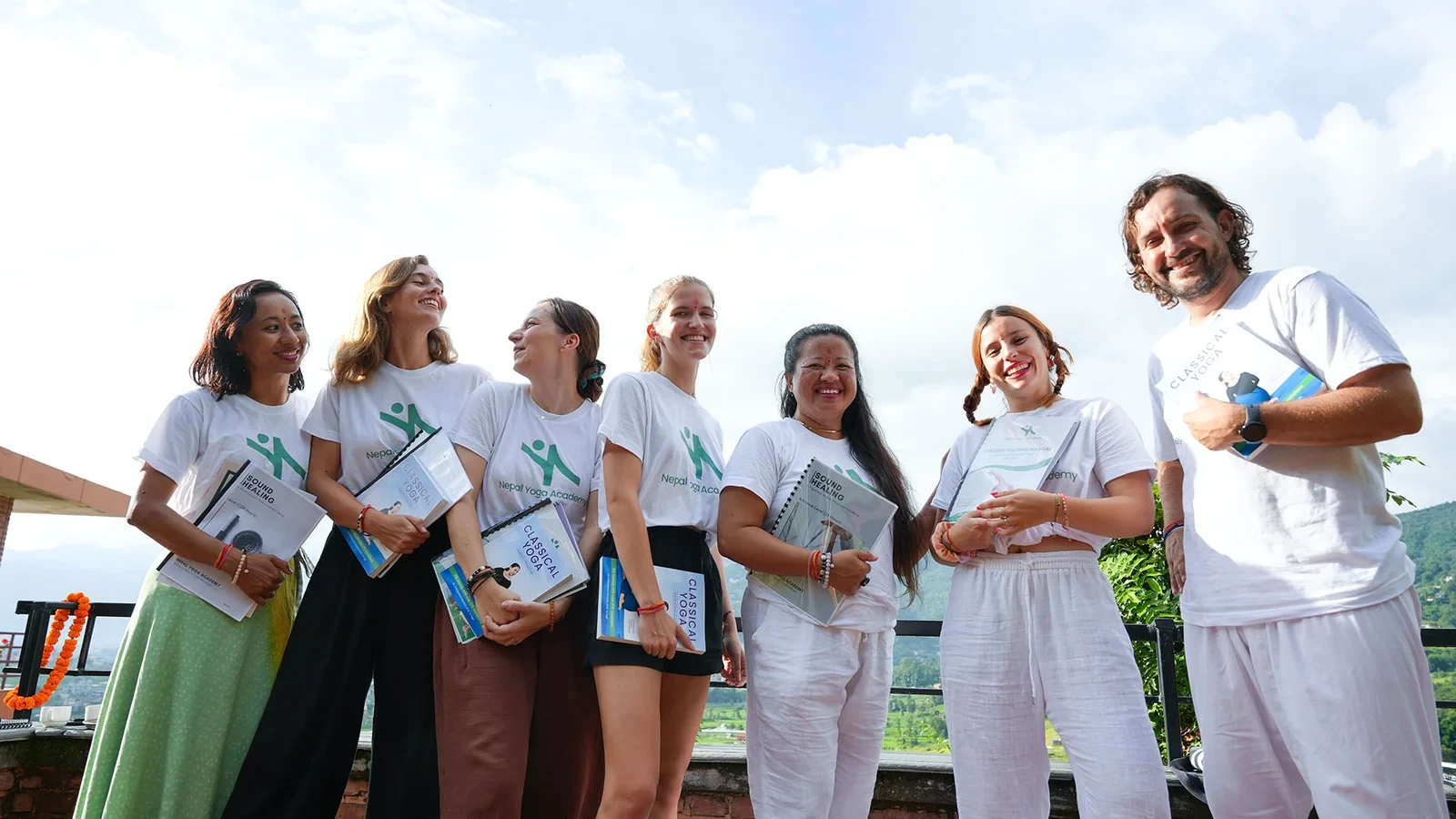
Ask a few yoga teachers where they trained, and you’ll notice something. More and more of them say Nepal. Not India, not Bali. Kathmandu, Pokhara, a little retreat on a hillside somewhere with a view of the Himalayas.
It wasn’t always like this. Ten years ago, most people had never considered Nepal for teacher training. Now it’s a regular on the shortlist, right next to the famous names, and students fly in from Europe, America, Australia and across Asia to spend three or four weeks here.
So why Nepal? Part of it is the obvious stuff: the mountains, the price, the calm. But there’s more, and if you’re thinking about booking a course, you should know what you’re getting into. This post walks you through why teacher training in Nepal has such a strong reputation, what a normal day on a course feels like, how to pick a school without getting burned, and what makes Nepal Yoga Academy a bit different from the rest.
Why yoga teacher training in Nepal is so popular
Mountains surround you, and it helps.
Nepal is home to eight of the world’s fourteen highest peaks. You won’t be climbing any of them during a teacher training, but you’ll see them, and that’s enough. Waking up to cold, clean air and a snow-capped ridge on the horizon does something to your head that a city apartment never will.
Most of us start the day by checking our phones or thinking about everything we need to get done. At a yoga school in Nepal, you can escape that for a while. Your mornings start with yoga, breathing exercises, and meditation, often before the day begins. Pranayama and meditation can feel unfamiliar at first, especially if you’ve never tried them. But doing them every morning gives you time to understand the practice without feeling rushed.
That’s one reason a 200-hour course here often feels deeper than the same hours spread over weekends at home. You’re not squeezing yoga into your life. For a month, yoga is your life.
Yoga here isn’t a trend.
Early mornings in Kathmandu are often filled with the sound of temple bells and prayers. You’ll see people stopping at small roadside shrines to leave flowers before heading to work. Prayer, fasting, and meditation are part of everyday life for many people here.
Being around this while studying yoga gives you a different understanding of the practice. When you read about yoga philosophy in class, some ideas can be hard to relate to. But seeing these beliefs in daily life makes them easier to understand. You might visit a temple with your classmates or spend time talking to a local teacher. These small experiences can stay with you long after the course is over.
Two big traditions in one small country
Nepal blends Hindu and Buddhist traditions, and you can see both in everyday life. This also shapes how people practice and teach yoga. Hindu traditions are closely linked to asana, mantra, and Ayurveda, while Buddhism focuses strongly on meditation. You can learn more about this by visiting places like Lumbini, the birthplace of Buddha, or spending an evening at Boudhanath Stupa in Kathmandu, where pilgrims walk around the stupa as part of their daily prayers.
Many students sign up for the courses and talk about the meditation sessions for years afterward.
It costs less than training at home.
Let’s talk money, because everyone’s wondering about it. Teacher trainings in the US, UK, or Australia can run to several thousand dollars, and that’s before you’ve paid for a bed. In Nepal, a typical 200-hour residential course covers tuition, a room, and all your meals in one price. Often the whole package costs less than tuition alone would back home.
Cheaper doesn’t mean worse. Living costs are just lower, so schools can offer a proper residential program without charging a fortune. For a lot of people, it’s the reason they can do the full course at all, or come back a year later for the next level.
One tip: ask exactly what’s included. Airport pickup, study books, day trips, and certificate fees vary everywhere. A slightly higher price with everything covered usually beats a bargain listing that adds extras later.
Small groups, slow pace
Unlike some larger training centers where classes can get crowded, many yoga schools in Nepal keep their groups small. This gives teachers more time with each student. They can correct your posture, help you adjust poses like Warrior II, and answer questions along the way. You also get more chances to speak up and ask questions about what you’re unsure of, instead of trying to keep up with a large group.
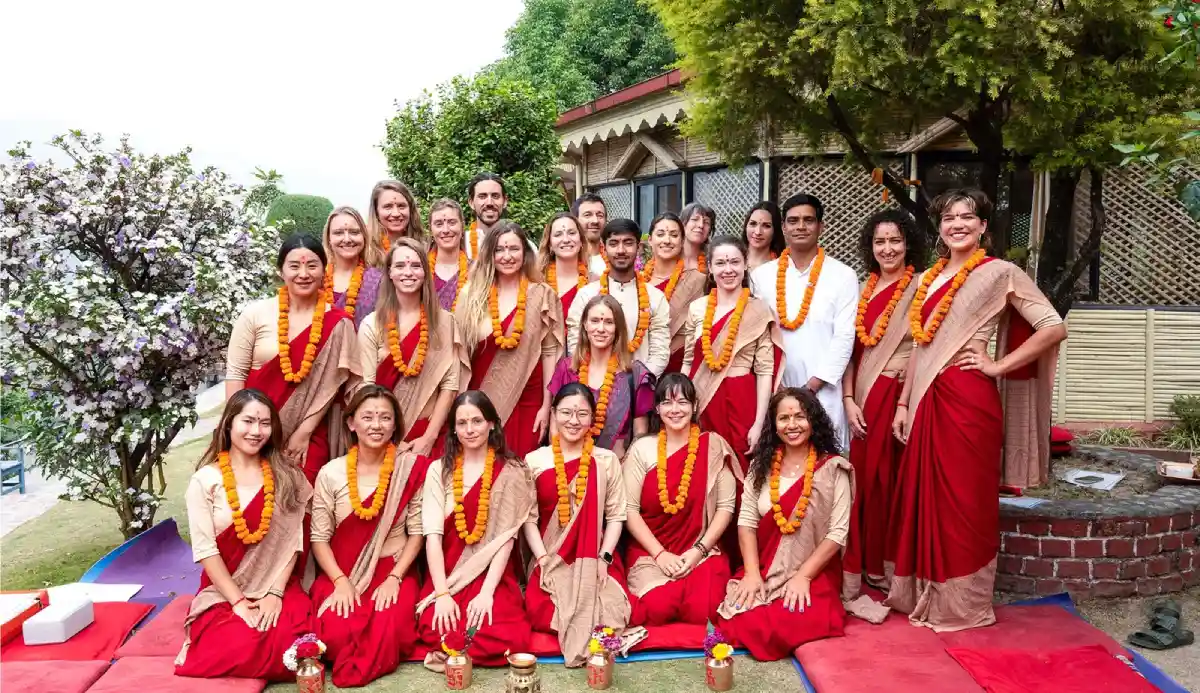
It also changes how you treat the people around you. You eat three meals a day with the same group, you swap notes after class, you help each other with a tricky pose. Plenty of students leave with friends in four or five different countries.
You spend three or four weeks living at the course, following the same daily routine of waking up, practicing, eating, studying, and resting. At first, it takes effort to settle in, but after a week or two, the routine starts to feel natural. By the end of the training, yoga is no longer just something you’ve learned to teach. It has become part of your everyday life.
Types of yoga teacher training you’ll find in Nepal
Yoga teacher training in Nepal comes in different styles, depending on what you want to learn. Hatha is a common choice for beginners and aspiring teachers. If you prefer a more active practice, you might enjoy Ashtanga or Vinyasa. You can also take courses in Yin, Restorative, and Kundalini yoga, as well as Ayurveda-based training. Some schools combine several styles in one course, so you get to try different practices before deciding what suits you best
Then there are the levels. The 200-hour course is where most people start if they want to teach. Next is a 300-hour advanced course, and some schools offer 500 hours for those who want to go further. If a full month is too long, shorter 50- and 100-hour options exist too.
A rough rule: if you love your own practice but have never taught, begin with 200 hours. If you’ve already got that certificate, go straight to the advanced level so you’re not repeating things you know.
Kathmandu or Pokhara? Picking your location
Most teacher trainings in Nepal happen in one of two places, and they feel quite different.
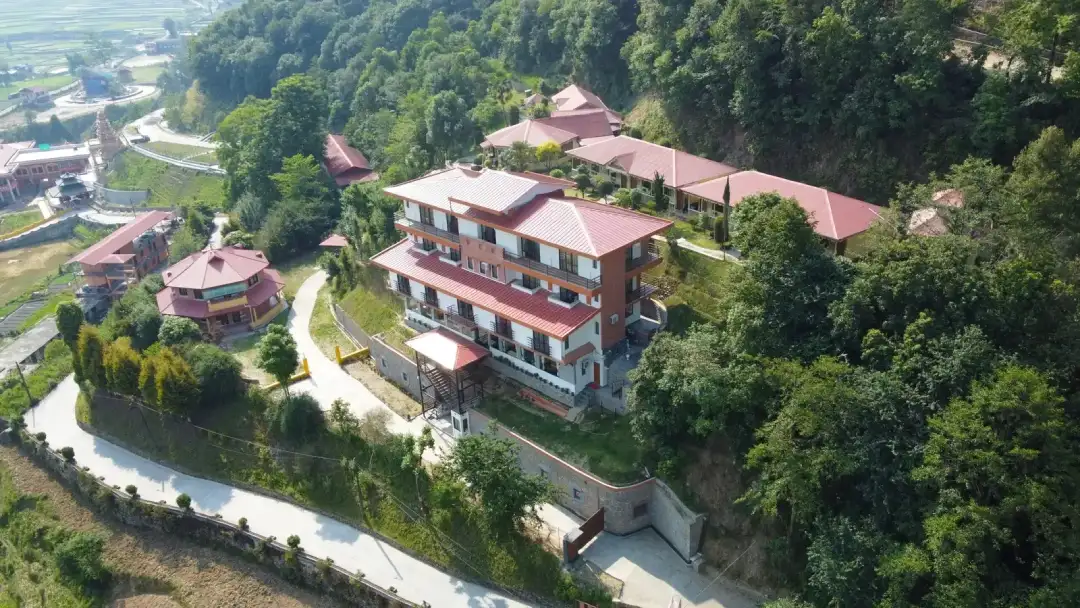
Kathmandu is the capital. It’s loud, crowded, and full of history, with ancient squares, markets, and temples all squeezed together. Many schools sit on the edges of the city or in the hills just outside it, so you get the quiet of a retreat and can still reach the old city on a day off. If you like culture and want plenty to explore in your free time, this is a good base.
Pokhara has a more relaxed feel. The city sits beside a beautiful lake, with the Annapurna mountains in the background. Life moves at an easier pace here. You can spend your time walking along the lakeside, taking a boat ride, or watching the mountains change color in the early morning. If you’re looking for a peaceful place to slow down and enjoy your surroundings, Pokhara is a lovely choice.
Neither is better. It depends on whether you’d rather spend your rest day wandering through temple courtyards or sitting by the water. Think about which one sounds more like you, and look at where the school actually sits, because some are well outside town.
What a day on the course looks like
Every school runs its own timetable, but most follow a similar, busy pattern.
- Early morning: cleansing practices, breathing exercises and meditation
- Mid-morning: a long asana class with plenty of alignment work
- Midday: a simple vegetarian meal, then a break
- Afternoon: classes on anatomy, philosophy and how to teach
- Late afternoon: practice teaching, where you lead your classmates
- Evening: something gentle, like chanting or a slow class, then dinner and bed
The first week isn’t always easy, especially if you’re new to daily yoga practice. Your muscles will probably feel sore, and some days you’ll be more tired than others. But as the days pass, you’ll get used to it. The poses will become more familiar, and keeping up with the daily schedule will get easier. Most schools offer one day off each week, so you can take a break from training, go for a hike, visit a temple, or explore nearby villages.
How to choose a yoga school in Nepal
Many schools claim they’re the best. Here are the things that actually tell you something.
- The teachers. Read their backgrounds. How long have they taught, and who did they learn from? If you can, speak to one before you book.
- The style. A Yin course and an Ashtanga course are very different experiences, so pick the one you’ll enjoy living in for a month.
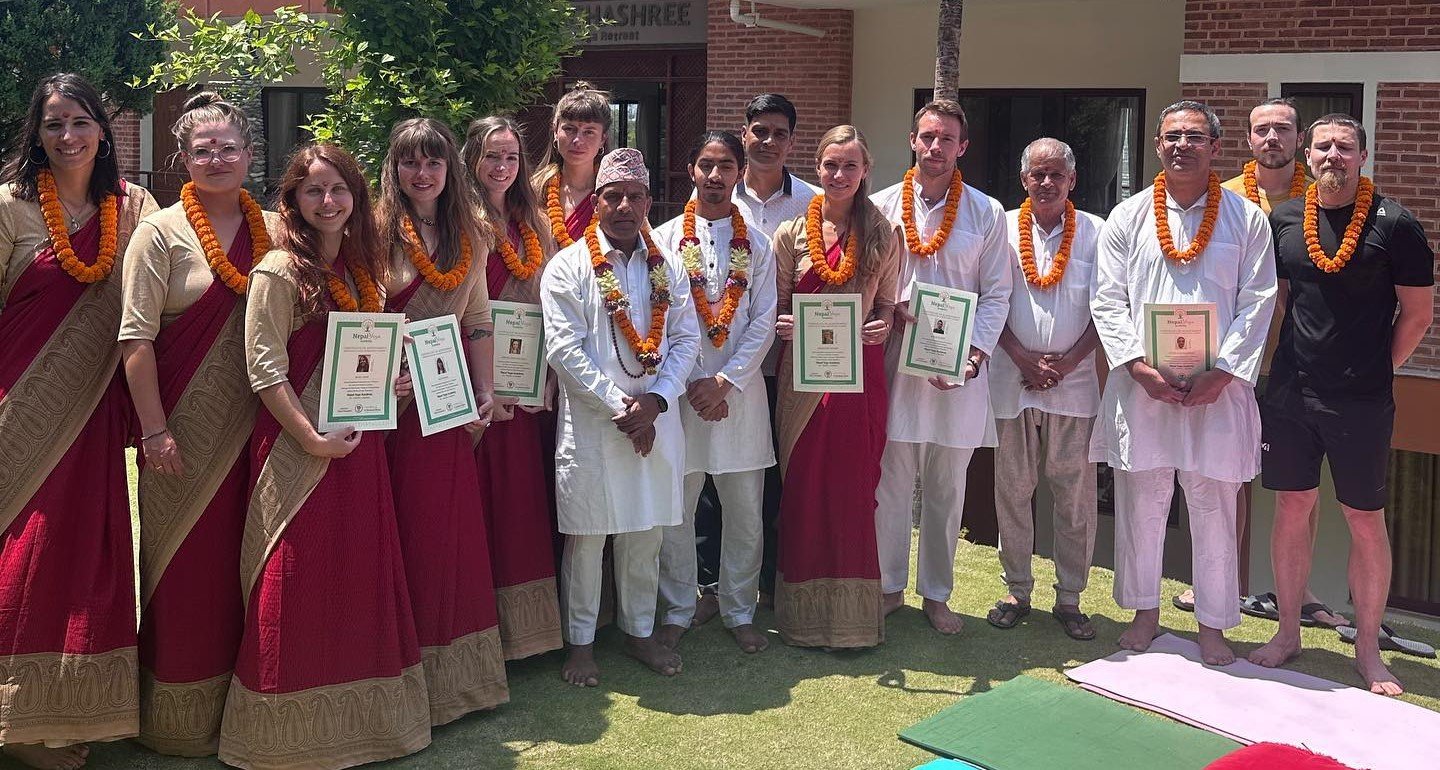
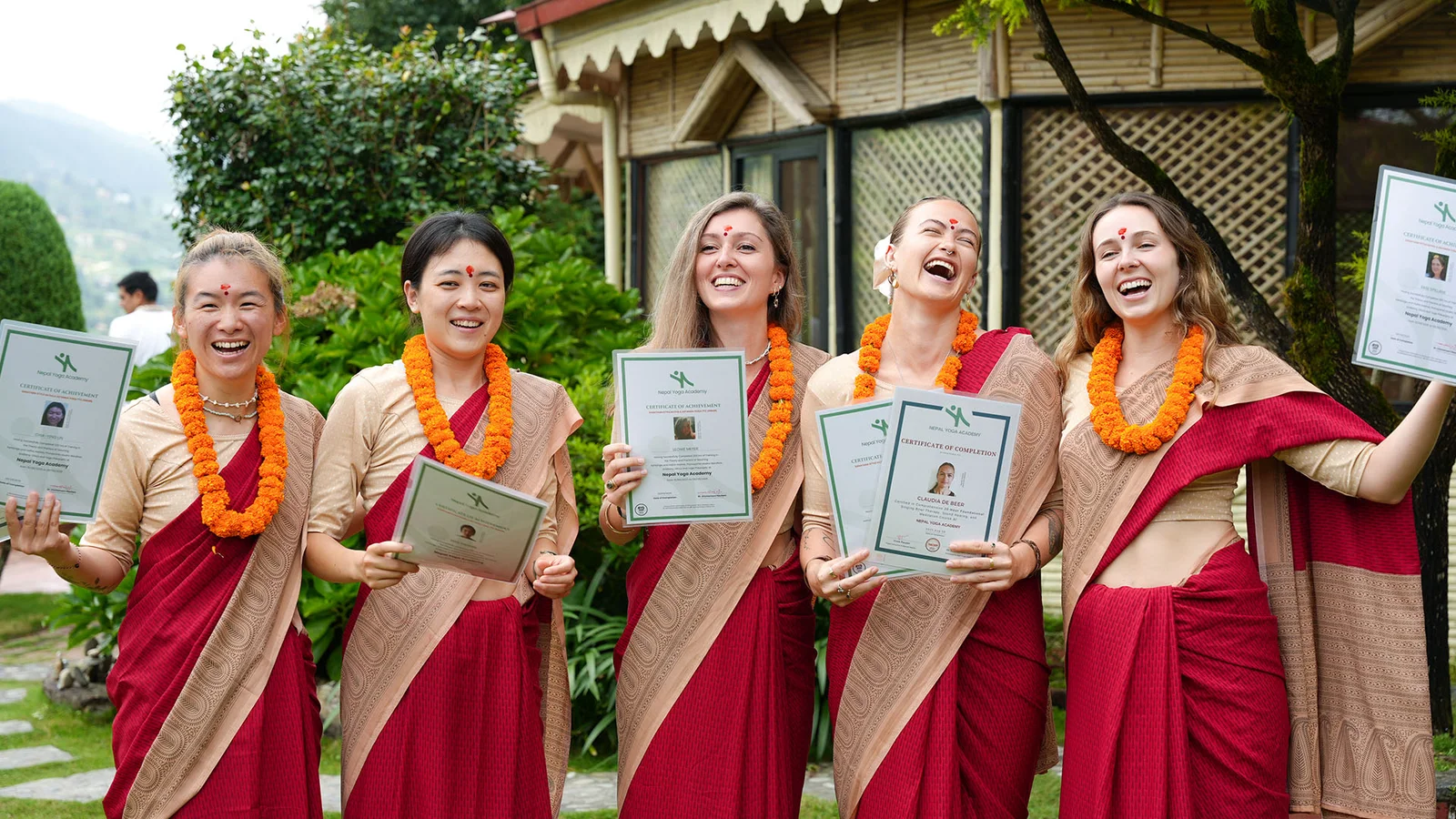
- The certificate. Find out which organization registered the course, then check that yourself instead of trusting a logo on a website.
- Group size. Smaller usually means more attention.
- The balance of theory and practice. You want lectures and real-time teaching.
- The location. Retreat in the hills or a studio in the middle of Kathmandu? Think honestly about which one you’d focus on.
- Read them on a few different sites, not only the school’s own.
Also, watch how they write back: if your emails get clear, honest answers, great. If they’re vague or pushy, that’s worth noticing. The way a school treats you before you’ve paid is usually the way it treats you after.
What makes Nepal Yoga Academy different
Good schools exist all over Nepal, and this isn’t meant to knock anyone. But a few things set this one apart.
It teaches the Sanatan Yoga System.
The academy teaches a rhythmic style of Hatha yoga it calls the Sanatan Yoga System, and it says few other schools in Nepal teach it. If your yoga so far has been mostly drop-in studio classes, this might feel new. Instead of a random sequence of poses, you learn a set way of moving and breathing with its own order and reasoning.
That’s handy when you start teaching. You’ll have a method you can explain, not just a pile of poses you’ve picked up here and there. When a student asks why you sequence something a certain way, you’ll have an answer.
The roots are traditional.
Some programs treat yoga as exercise with a bit of chanting at the end. The academy sticks closer to the old approach, where breathing, meditation, philosophy, and daily habits matter as much as the physical side. If that’s what pulled you to Nepal in the first place, it’s a good match.
You get to teach, not just listen
People who’ve done other trainings often complain about one of two things: too much lecturing, or too much practice with no explanation. The academy’s courses aim for the middle. You study anatomy, philosophy, and teaching methods, and you also spend real time leading classes and getting feedback.
You need both. Knowing the theory is one thing. Keeping a room of strangers safe and focused for an hour is something else.
There’s a next step
You can start with a foundation course, and if you want to continue, there are advanced levels for people who’ve already done a first training. So, you can return to the same teachers and system instead of starting over at a new school.
It’s quiet
A lot of the academy’s residential courses run in retreat-style places outside the busier parts of Kathmandu: less noise, cleaner air, fewer distractions. After a few days, most people have forgotten where they left their phone.
Still, check for yourself.
Before you pay anything, ask for the current schedule, the full list of what’s included, the teachers’ profiles, and the certification details. Read recent reviews. Book a video call if you can. A good school won’t mind.
Is this kind of training right for you?
Probably, yes. People sign up for all sorts of reasons. Some want to teach and need a solid foundation. Some have been practicing for years and want to understand what they’re doing. Some are between jobs or relationships and need a reset. Teachers who’ve been at it a while come to refresh their knowledge or learn the traditional side. And a good number never plan to teach at all. They come for themselves, and the certificate is a bonus.
You don’t need to be bendy. Nobody checks whether you can touch your toes. What helps is showing up every day, listening, and being willing to look a bit silly while you learn.
Things to sort out before you go
A few practical things are worth keeping in mind before you go.
Choose the right season. October and November, along with March to May, are generally the best times to visit. The weather is pleasant, and the mountain views are often clear. Winter mornings in the hills can get quite cold, while the monsoon season brings heavy rain. Most schools run courses throughout the year, so you can choose dates that work best for you.
Pack what you need. Bring comfortable yoga clothes, a warm layer for chilly mornings, a shawl or light jacket, a reusable water bottle, and any personal medication. Most schools provide yoga mats and props, but it’s worth checking with them before you arrive.
Check visa rules before you buy flights. They change over time, so check Nepal’s official immigration website or ask your embassy. Get travel insurance that covers yoga retreats too.
If you can, arrive a day or two early. Kathmandu is loud, colorful, and a bit overwhelming at first. A little time to sleep off the jet lag and wander around makes day one much easier.
And be ready for feelings. After a couple of weeks of quiet, old thoughts can come up. That’s normal. Talk to your teachers if it gets heavy, and keep going.
Mistakes people make when picking a teacher training
- Going only by price. The cheapest course is rarely the best. The most expensive isn’t automatically better either.
- Ignoring the style. If you hate fast flows, a power yoga course will make you miserable no matter how good the photos are.
- Skipping the small print. Look at the cancellation policy, what’s included, and what the certificate covers.
- Not talking to anyone. A short call tells you more than any brochure.
- Expecting a holiday. It’s work. You’ll study, practice, and teach most of the day. It’s good work, but it’s not a spa week.
Frequently Asked Questions
Is Nepal a good place for yoga teacher training?
Yes. You get a calm setting, a culture where yoga is part of daily life, experienced teachers, and prices that are usually lower than in the West. That’s why students come from all over the world.
How long is a 200-hour yoga teacher training in Nepal?
Most residential courses take about three to four weeks. Some schools offer shorter formats, so check the schedule before you book.
Do I have to be an advanced practitioner?
No. Foundation courses usually welcome all levels. You’ll need some interest in yoga, a willingness to learn, and basic fitness.
When is the best time to go?
Autumn and spring, mostly, because the weather is mild and the views are clear. That said, many schools run courses all year.
Can I teach right after finishing?
A good foundation course gives you what you need to begin. Confidence takes longer. Many graduates start with friends or a small group and grow from there.
What will I eat?
Most residential programs serve fresh vegetarian food, usually simple and filling. If you have allergies or dietary needs, tell the school before you arrive.
Is it safe to travel to Nepal for a course?
Nepal gets plenty of visitors, and yoga schools are used to hosting international students. As with any trip, check current travel advice, buy insurance, and use common sense.
So, should you do your yoga teacher training in Nepal?
Nepal offers a lot for anyone considering a yoga teacher training course. Training is relatively affordable, and you get to experience yoga in a place with deep cultural roots. The mountains, the slower pace of life, and the time away from your usual routine all add to the experience. A month here gives you the chance to focus on your practice and return home with a new perspective.
Nepal Yoga Academy is worth a closer look if the Sanatan Yoga System and a traditional, hands-on teaching style appeal to you. Whether it’s right for you depends on what you want out of the course, so ask your questions and trust your gut.
And if you’ve been going back and forth on this for months, maybe that’s your answer. Pick a season, send the first email, and see what comes back.