

How to become a certified yoga teacher
You might have started by taking a free yoga class at your gym to stretch after work, or maybe a friend persuaded you to go to your first one, and during that session you mostly watched the other people, trying not to fall over. Nevertheless, at a certain stage yoga changed from something you did to something you needed, and one idea keeps coming back: what if you actually taught it?
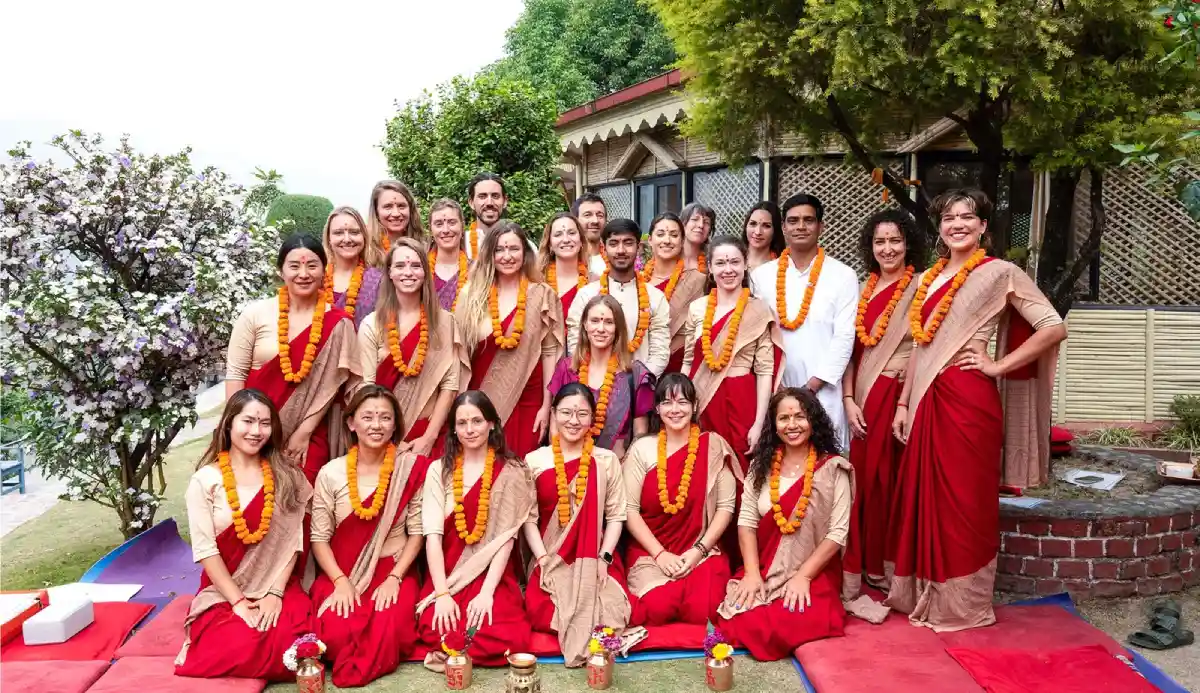
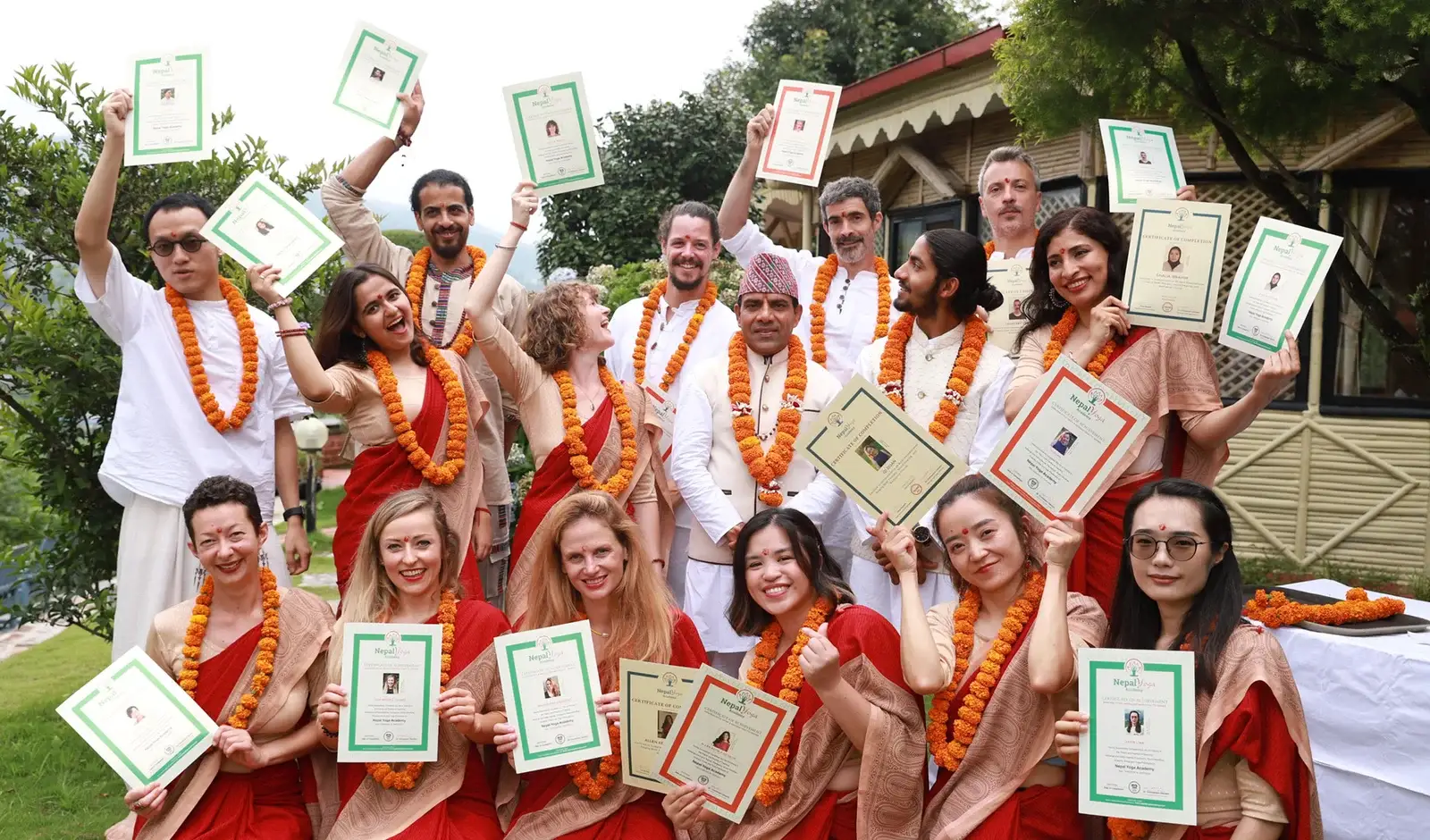
If that sounds familiar, then you’re not alone. Each year, people from all parts of the world go to Kathmandu with a single aim: to finish a yoga teacher training course and leave with a certificate—India or Thailand, not Nepal.
If you think about it thoroughly, it all makes sense. The Buddha was born here, and the Himalayas are right outside your window, with yoga still part of everyday life. It doesn’t feel put together for tourists.
The guide will show you, step by step, exactly how to become a certified yoga teacher in Nepal. It covers everything you should know before booking anything, what the training is like once you’re there, and what to do with your certificate once you’re back home.
Why is Nepal such a good place to become a yoga teacher?
Nepal doesn’t promote yoga the way many other countries do, since there is no real need to. The tradition is old and deeply rooted, intertwined with Hindu and Buddhist philosophy long before yoga became a worldwide wellness phenomenon. Lumbini, where the Buddha was born, is in Nepal, and so is much of the Himalayan mountain range, including Everest.
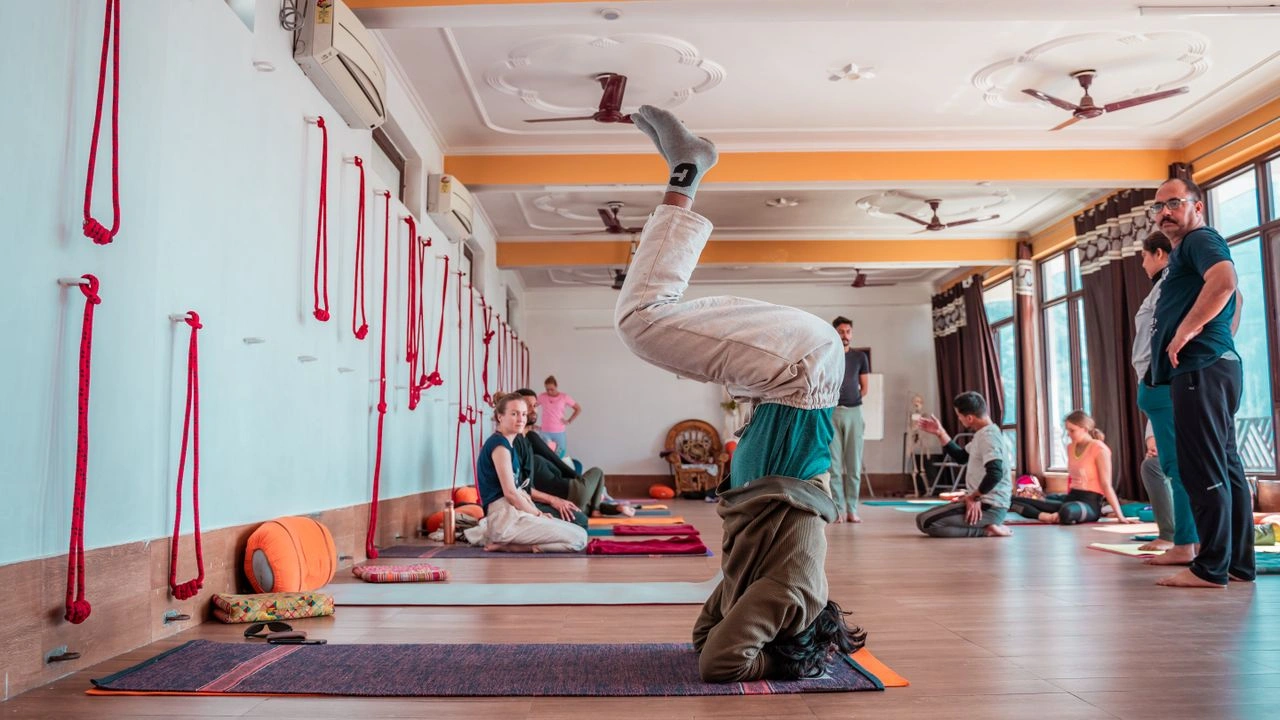
Where you train can really change the whole experience. Practicing in the morning with cool mountain air coming through an open window feels very different from being in an air-conditioned studio with traffic outside. For many students, that kind of peaceful setting helps them slow down and clear their heads before training even starts.
It also has a practical side. Yoga teacher training in Nepal is usually more affordable than similar courses in the West, and often costs less than courses in India as well. English is also widely spoken, so communication usually isn’t a big issue, even outside the bigger cities. And because people in Nepal are generally warm and welcoming, international students often feel comfortable and cared for rather than feeling like they’re just passing through.
Taken together, these points make it clear why Nepal has become one of the most desirable places on earth for people who want to complete a yoga teacher training course.
What does “certified yoga teacher” actually mean?
Before you go on, it helps to know what you’re aiming to achieve. No government authority issues yoga teaching licenses, either in Nepal or elsewhere. Instead, most schools train people to register with Yoga Alliance, a nonprofit organization based in the United States that has become the informal global standard for yoga certification.
Yoga Alliance offers a few main credentials:
- RYT 200: Registered Yoga Teacher, 200-hour YTTC. This is the entry point and what almost every studio job or teaching opportunity expects.
- RYT 300: A deeper, more advanced training, usually taken after the 200-hour level.
- RYT 500: Either a standalone 500-hour YTTC, or the 200 and 300 combined.
- YACEP: Continuing education credits for teachers who already hold a credential and want to keep learning.
Because you completed a course at a school registered with Yoga Alliance (an RYS), you can register your own profile with Yoga Alliance upon completion. At this point, you will officially become an RYT. Studios, gyms, and retreat centers worldwide recognize that qualification, so check a school’s accreditation before committing.
Step 1: Decide which level of training you actually need
The figure of 200 hours is a common starting point. For a valid reason, since it is the minimum that most places will accept before they will think about employing you, and it includes the fundamental areas such as asana (postures), pranayama (breathwork), anatomy, philosophy, and the skills needed to teach a class rather than just carrying out one yourself.
If you already have a 200-hour certificate and want to take things further, a 300-hour course goes deeper into what you’ve already learned. You’ll usually work on more advanced poses, spend more time on yoga philosophy, and may choose a specific area to focus on, such as yin, restorative, or therapeutic yoga. A 200-hour and 300-hour YTTC course together make up 500 hours, although some schools offer the full 500-hour training as one program.
Not every yoga style feels the same. Hatha Yoga is slower, which gives you more time to get used to the basics. Ashtanga and Vinyasa are more active and can be quite demanding, especially when you’re not used to them. Yin and restorative are much quieter. You hold poses longer and spend more time relaxing. If you enjoy that kind of practice, you might find it more natural to teach gentler classes too.
Consider who you actually want to teach, for example, complete beginners, athletes, or people who are recovering from injury, and let that decision determine which course and which teaching style you choose.
Step 2: Time your training around Nepal’s seasons
Nepal has distinct seasons, and they matter more than most people realize when choosing dates for a training course.
The monsoon season, which lasts from about June to August, brings heavy rainfall and high humidity, especially in lower areas such as Kathmandu and Pokhara. Although you can train during this time, it is not the most comfortable period.
The ideal times are September to November and February to April, when the weather is clear, temperatures are pleasant, and mountain visibility is at its best for hiking or outdoor activities.
December and January can still work if your training is in the valley (since Kathmandu and Pokhara are at a lower, milder altitude than many people think). But mornings and evenings can get cold enough that you’ll need proper layers.
If you’re hoping for clear Himalayan views or want to fit in some trekking or an outdoor retreat, spring and autumn are usually the best times to go.
Step 3: Choose your yoga school with care
This is the step where people either set themselves up well or end up regretting a rushed decision. A few things worth checking before you pay any deposit:
- Accreditation: Check whether the school is a Registered Yoga School (RYS) with Yoga Alliance. If you’re planning to teach after you get home, make sure you know whether the certificate will be accepted where you want to work.
- The full syllabus: Don’t settle for a page that lists a few subjects. Ask the school for a proper schedule and see how much time is actually spent on anatomy, philosophy, teaching methods, and practice teaching. You don’t want the whole course to be focused on doing poses.
- The teachers: Take a little time to look into the main teachers. See where they trained, how long they’ve been teaching, and what kind of experience they have. You’ll be learning directly from them, so this matters.
- Class size: Ask how many students are usually in a group. With fewer people, teachers have more time to watch your practice, correct you, and give you feedback. That becomes especially useful when you start learning how to work with other students.
- Reviews: Don’t rely only on the reviews posted on the school’s website. Those are the ones the school has chosen to show you. Look at Google reviews, Facebook groups, Reddit, or other places where former students can speak more openly about their experience.
- What’s included: Find out exactly what you’re paying for. Accommodation and meals may be included, but check the details. Will you have your own room or share one? What kind of food is provided? Is laundry included? Small things like these can make a difference once you’re there.
You shouldn’t choose a school just because it was the cheapest one that came up first; a slightly higher fee at a school with a real record of success almost always pays off in what you actually end up knowing.
Step 4: Sort out your visa and flights
Most people from different nationalities can obtain a Nepal tourist visa on arrival at Tribhuvan International Airport in Kathmandu, with visa durations usually 15, 30, or 90 days. You can extend your visa at the Department of Immigration upon arrival if your stay, plus any additional travel time, exceeds the length you initially applied for, so you don’t need to worry about it beforehand.
When flying to Kathmandu, the journey usually involves connecting at hubs such as Delhi, Bangkok, or Doha, depending on your point of departure. If the school you have picked is in Pokhara, not Kathmandu, you have two options after you arrive: take a short domestic flight or travel by road on a scenic route that takes about six to seven hours.
Also verify your passport’s expiry date, since Nepal usually requires at least six months of validity before you travel.
Step 5: Work out a realistic budget
Costs depend on the school and the season. How comfortable you want the course to be, but a standard 200-hour course in Nepal is generally less expensive than similar training in the United States, the United Kingdom, or Australia, and is often cheaper than in India.
The course fee usually covers accommodation and meals, so build your budget around these pieces:
- Course fee (varies by school, and by shared vs. private room)
- Flights to and from Kathmandu or Pokhara
- Visa fees
- Travel insurance (don’t skip this one)
- Personal spending money for extras like laundry, side trips, or souvenirs
- A buffer for the unexpected, because travel always has one surprise cost somewhere
It’s a good idea to email a shortlist of schools directly and request a full cost breakdown, rather than relying on the figure on their homepage, since some only quote the basic course fee and then add charges for things like airport pickup or a final excursion.
Step 6: Prepare your body and mind before you arrive
Yoga teacher training is not a retreat, even though it is sometimes promoted using retreat-style photographs. For several hours each day, you’ll have practice sessions, lectures, and study, and this continues for weeks. If you walk in unprepared, the first week will be difficult.
If you’re a few months into your practice, try to establish a more regular home routine if you haven’t already, aiming for most days of the week rather than just weekends. You don’t need to achieve a full lotus position or do a deep backbend. Yoga schools aren’t looking for people with exceptional flexibility. What does help is physical and mental stamina, as well as a body used to moving frequently.
As for the mental aspect, it’s a good idea to read something beforehand so the philosophy lessons don’t have to start from scratch. The Yoga Sutras of Patanjali and the Hatha Yoga Pradipika are the two texts most frequently referenced in training courses, and a quick review beforehand helps you follow the classroom discussions.
If you assume it’s going to be intense with early mornings, long days, and real physical fatigue—you’ll be better than most other students.
Step 7: What an average day of training actually looks like
Every school runs things slightly differently, but most 200-hour programs in Nepal follow a similar rhythm:
- Early morning (around 5:30–6:00 AM): Wake up, followed by pranayama and meditation to start the day with a clear head.
- Morning practice: The first asana session of the day, usually the most physically demanding one.
- Breakfast: Meals at many traditional yoga teacher training programs follow the principle of sattvic (satvik) food, that is, fresh, simple, wholesome, and predominantly vegetarian foods prepared to support a calm and balanced state of mind. Depending on the school, this may include fresh fruits, vegetables, grains, lentils, nuts, seeds, and lightly spiced dishes, while foods considered overly heavy, stimulating, or processed may be limited. The idea is not simply to eat healthy food, but to connect what you eat with the broader yogic practice of cultivating balance, clarity, and awareness.
- Lecture block: Anatomy, philosophy, or yoga history, depending on the day.
- Teaching methodology: Learning how to actually cue a pose, correct alignment, and hold a room, not just perform postures yourself.
- Lunch and rest.
- Afternoon session: A second, often gentler, asana practice, or supervised teaching practice where students take turns leading each other.
- Evening: Meditation, chanting, or a quieter philosophy discussion.
- Dinner, then lights out early, because the next morning starts just as early.
On Saturdays, the workload is usually lighter, occasionally involving only a half day or even a full day off, and in many cases the school organizes at least one excursion over the course of the week, this being something like a trip to a local temple, a short walk, or a visit to town. Although the timetable is full, there is no doubt about that; the way it’s structured tends to make even a busy month seem manageable once you get used to the routine.
Step 8: Get through the practicum and assessments
Around the middle of most courses, you will start holding practice sessions first with your fellow students and later on by yourself, leading longer parts of them. This is where genuine learning happens. The sort of thing that teaches you more than anything in a lecture is seeing yourself struggle to give clear instructions, or realizing you’ve said ‘now breathe in’ three times in a single sentence.
Near the end, you’ll usually have a written exam on things like anatomy and philosophy. There’s also a practical part, where you teach part or all of a class while someone watches. It’s not really meant to catch you out. They want to see that you understand what you’ve learned and can pass it on safely when you’re teaching.
Blunt feedback at various stages is part of the process; accept it as information rather than criticism. All teachers currently working professionally have experienced the same difficult, awkward first attempts you are about to go through.
Step 9: Register officially with Yoga Alliance
After you finish the course and pass the required assessments, the school will give you a certificate of completion; this certificate serves as proof, but it still doesn’t make you an officially registered teacher.
The next step is to set up your own profile directly with Yoga Alliance, using the completion certificate your school gives you. A small registration fee applies, and once it’s processed, you will officially have the RYT qualification at the level you completed, most often RYT 200.
From that moment, your name appears in Yoga Alliance’s public directory, which studios and retreat centers usually consult before you apply to teach. Although this is a simple administrative step, skipping it means you have to carry around a certificate that hasn’t been activated yet.
Step 10: Figure out what comes next
Once you have the certificate, the real issue is what you then do with it.
Many people decide to start teaching right away by taking classes at a local studio, gym, or community center. Others start small, offering free or low-cost classes to friends and family to build confidence before asking for payment. Another feasible option is to offer online classes, which lets you teach students anywhere in the world with just a laptop and a good internet connection.
It’s all right if you’re not ready to start teaching at once; many graduates spend a few months helping a more experienced teacher, learning by observing before taking over themselves.
If, after taking a 200-hour course, you still want more, which happens to many people when they get interested in the training, a 300-hour course or a specialization such as prenatal, yin, or children’s yoga is a natural next step. Certification isn’t the end of the road; it’s the point where you are finally qualified to keep learning properly.
Mistakes worth avoiding
A few patterns show up again and again with students who end up disappointed:
- Choosing a school purely on price, without checking accreditation or reviews first.
- Assuming the course will feel like a relaxing retreat, then getting blindsided by how physically demanding it actually is.
- Booking non-refundable flights before confirming exact course dates and visa requirements.
- Skipping travel insurance to save a small amount of money upfront.
- Not asking what’s actually included in the course fee, then getting surprised by extra costs once there.
- Treating the certificate as the finish line, and assuming it alone will make you a good teacher. It won’t. You only learn real teaching by actually teaching.
None of these are complicated fixes. Most come down to asking a few more questions before committing, not after.
Quick answers to common questions
Do I need to be flexible or already advanced to join a yoga teacher training course?
On the contrary, most schools require a regular personal practice rather than advanced flexibility. Some students enrolled in a 200-hour course have had yoga experience for only one or two years.
Is 200 hours actually enough to start teaching?
Yes, for most entry-level teaching positions. It is the internationally recognized minimum requirement, and studios and gyms ask for it when hiring new teachers.
How much does yoga teacher training in Nepal typically cost?
The price can vary depending on the school, time of year, and the kind of room you choose. In general, though, training in Nepal costs less than similar courses in the US, UK, or Australia, and is often a little cheaper than India too. Before you sign up, ask the school for a full breakdown of what the fee covers, rather than just the total price.
What’s the best time of year to train in Nepal?
From September to November and from February to April, the skies are clearest and the temperatures most comfortable. If you can, avoid the monsoon season, which lasts from June through August.
Can complete beginners really do a yoga teacher training course?
Although some schools will take complete beginners, most advise at least six months to a year of regular practice before attending, so the physical requirements feel manageable rather than overwhelming.
Your next step
Getting certified as a yoga teacher in Nepal is about more than having a certificate to put on the wall. You’ll spend weeks waking up early, dealing with sore muscles, sitting through long conversations about philosophy, and spending a lot of time on your own practice. Little by little, you start looking at yoga differently. You’re not just practicing anymore. You’re learning how to teach it too.
Nepal makes an unusually good backdrop for that shift. Training where yoga’s roots run this deep, with the Himalayas sitting right outside, tends to change how seriously people take the process.
If you’re weighing your options, take time to compare schools. Look closely at accreditation, class sizes, and what past students actually say once the course is over. Nepal Yoga Academy is one option worth putting on that shortlist, alongside whichever others you’re considering, and comparing properly before you commit is exactly the kind of step that pays off later.
Whichever school you choose, the step that matters most is the one you’re on right now: deciding to finally do this instead of just thinking about it.