
Yoga Teacher Training with Accommodation in Nepal: Costs, Courses & Benefits
If you’ve ever tried to plan a yoga teacher training abroad, you already know the headache. One website quotes you the course fee. Another one has the accommodation. A third makes you sort your own meals and figure out airport transport on top of it. By the time you’ve built a spreadsheet to compare two schools, the excitement has mostly drained out of the process.
Nepal does things a little differently. Most yoga schools keep everything together. Your room, meals, classes, and often airport pickup are included in the same price.
You land in Kathmandu, someone picks you up, and before long you’re settled into your room for the next few weeks. You don’t have to arrange a bunch of separate bookings or worry about where you’ll eat every day. You arrive, settle in, and get started.
That’s what “yoga teacher training with accommodation” really means. It’s something to understand before you spend your money and time off.
So, let’s break it down.
What you’re paying for, what the courses actually cover, what your days will look like, and why so many people leave Nepal saying it changed more than just their yoga practice.
Why do people keep choosing Nepal over everywhere else?
Yoga didn’t start as a fitness trend. It grew out of a spiritual and philosophical tradition that’s been alive in this part of the world for thousands of years. Nepal sits right at the heart of that history, with temple bells and prayer chants that can inspire awe and deepen your connection to yoga’s roots.
It also has a practical side. A month of yoga teacher training in Nepal, with your room and meals included, can cost less than a month’s rent in the US or UK. In some parts of India, it can also work out cheaper.
The lower cost doesn’t mean you’re getting basic training. Many established schools have teachers with 15, 20, or even 30 years of experience. Some have grown up in families where yoga has been part of daily life for generations.
Then there’s the setting. Kathmandu is busy and full of life, with temple bells, prayer flags, incense, narrow streets, and street food around every corner. But Pokhara is quieter, with the lake and the Annapurna mountains close by.
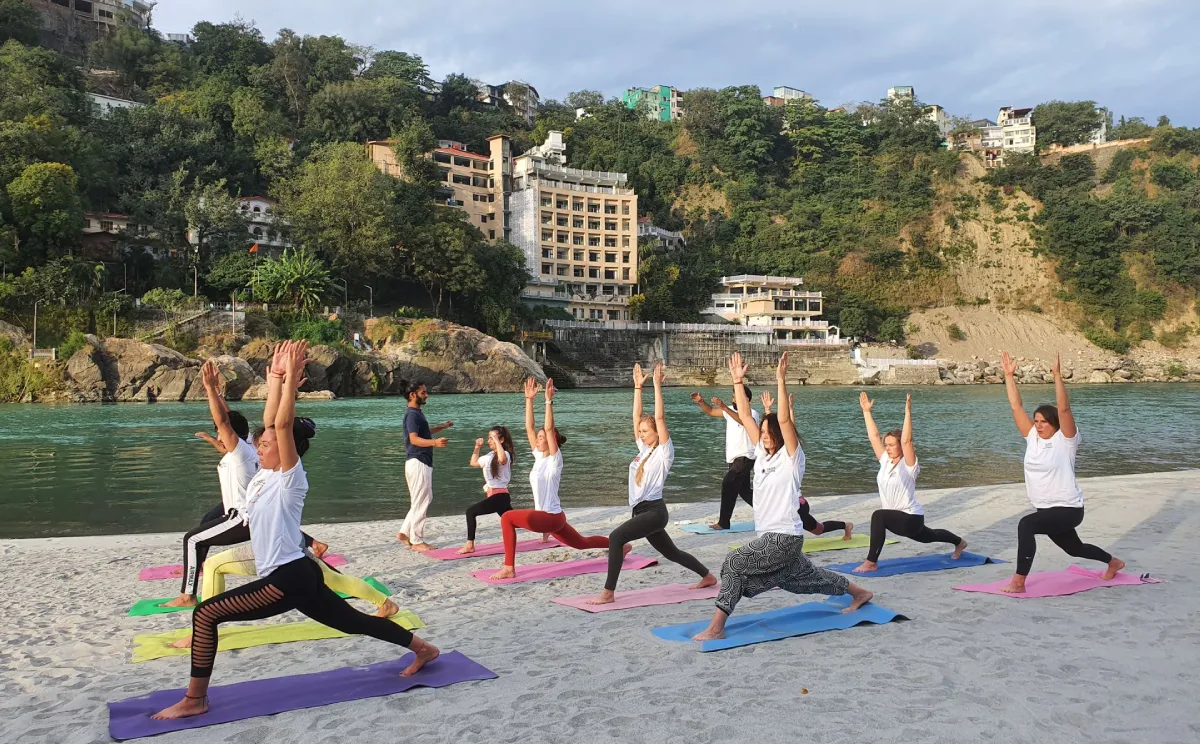
Wherever you go, the surroundings give you a chance to step away from your normal routine, slow down, and focus on why you came.
What do most packages include?
When a course lists accommodation as included, you’re usually getting more than just a bed. Most packages fold in:
- A room for the full length of the course, shared or private depending on what you book
- Two to three meals a day, almost always vegetarian, sometimes vegan
- Wi-Fi, hot water, and basic laundry facilities
- An airport pickup, and sometimes a drop-off too
- Use of the shala (the yoga hall) outside of class hours for your own practice
- Access to the grounds, gardens, common areas, sometimes a small library or meditation space
Flights, visa fees, personal expenses, and optional activities such as rafting or paragliding are usually not included. Staff tips may also be extra.
Some schools also charge a separate fee for Yoga Alliance registration after the course, while others include it in the price. It’s worth checking exactly what you’re paying for before you book.
This bundled model works so well for a training like this for more than convenience. When you don’t have to think about where your next meal is coming from or how you’re getting to class, you actually show up differently. You’re not distracted by logistics. You’re just there, on the mat, present for the thing you flew across the world to do.
The different course lengths, and which one is actually yours
Yoga teacher trainings are measured in hours, and the number tells you a lot about how deep you’ll go. Here’s how the main ones break down.
100-Hour Training
This is the shorter option, usually around one or two weeks. It won’t give you a full teaching certification, but it’s a good way to learn more about yoga and see if teaching is something you’d actually like to do.
It also works well if you’re new to yoga and don’t want to commit to a month-long course right away.
200-Hour Training
This is the standard type of yoga teacher training most people mean when they talk about getting certified. It usually takes around three to four weeks and covers the main things you need to teach yoga.
You’ll learn asana (yoga poses), pranayama, meditation, yoga philosophy, basic anatomy, and how to teach a class. By the end, you should have the skills to lead a class yourself.
You don’t need years of yoga experience to join a 200-hour course. Even beginners can take one. You mainly need to be willing to learn, practice, and put in the time.
300-Hour Training
Built for people who already hold a 200-hour certificate and want to go deeper. Combine the two, and you reach the 500-hour level, which is recognized as an advanced qualification. A 300-hour course spends more time on advanced asana, therapeutic yoga, deeper philosophy, and often a specific tradition or lineage, depending on the school.
500-Hour Training
Some schools offer both levels as one longer course instead of making you do the 200-hour and 300-hour training separately. It’s a bigger commitment, usually taking at least four or five weeks. This option is generally for people who already know they want to teach yoga professionally or maybe open their own studio someday.
If you’re not sure which one fits you, a useful way to think about it: the 200-hour course teaches you to teach. The 300- and 500-hour courses teach you to teach well, across a much wider range of students and situations.
A day in the life: what you’re actually signing up for
Numbers on a syllabus don’t tell you what the experience feels like, so here’s roughly how a typical day unfolds on most residential courses in Nepal.
Most days start pretty early, usually around 5:30 or 6 AM. There might be a wake-up bell, some herbal tea, and a bit of pranayama or meditation before the day gets going.
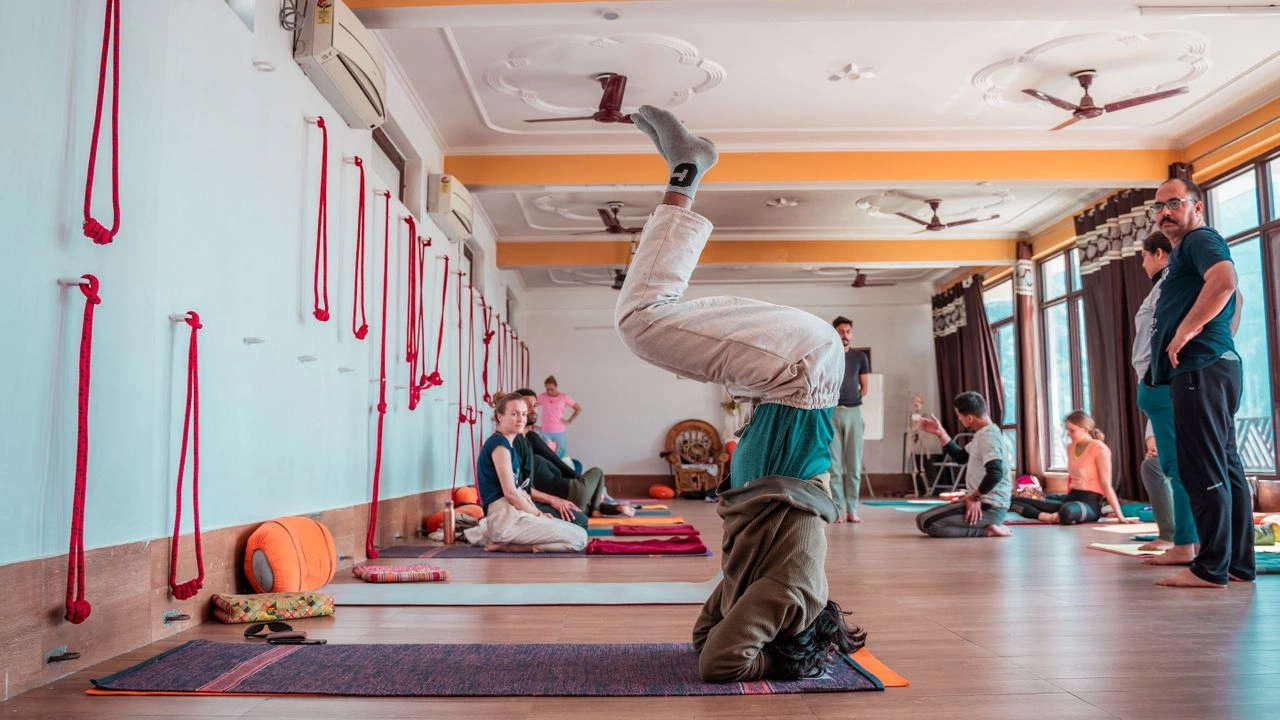
Then you’ll have your main yoga class, which can run for two or three hours. You’ll work on alignment, sequences, and adjustments. It’s not just about doing the poses yourself. You’ll also learn how to teach them to other people.
Breakfast is usually simple and vegetarian, with warm food, fruit, and tea. After that, you’ll spend some time in the classroom studying things like anatomy, yoga philosophy, the history of yoga, and teaching methods. It gives you a better idea of why you’re doing each practice, rather than just following along.
There’s often another shorter yoga session in the afternoon. It could be Yin, restorative, or another style. Evenings are usually quiet, with meditation or chanting before dinner. Most schools also have an early bedtime, which makes sense when you’re getting up at 5:30 every morning.
One day a week is normally free. You can sleep in, do some laundry, explore the area, go for a hike, or visit a temple. The schedule is busy, but that day off gives you some time to relax and enjoy Nepal.
What It Actually Costs
Prices vary by school, location, course length, and, this matters a lot, the type of room you choose. Here’s a realistic range based on what’s currently being offered across Nepal for 2026 courses.
| Course | Duration | Dorm Room | Twin-Share | Private Room |
| 200-Hour YTT | 20–24 days | $1,200–$1,400 | $1,400–$1,600 | $1,700–$2,200 |
| 300-Hour YTT | 25–28 days | $1,500–$1,700 | $1,700–$1,900 | $2,000–$2,500 |
| 500-Hour YTT | 28–35 days | $2,500–$2,800 | $2,800–$3,100 | $3,200–$3,800 |
Approximate 2026 pricing in USD, based on current listings at established yoga schools in Nepal. Always confirm the exact figure and inclusions directly with the school before booking.
A few things can change the price. Check whether you get two or three meals a day, if your bathroom is private or shared, and whether the room has air conditioning. AC can be useful if you’re going during the warmer months. Also check if things like a welcome dinner, a Himalayan trek, or a day of sightseeing in Kathmandu are included or cost extra.
If a course is much cheaper than the others, ask why. It could simply be a smaller school with lower costs. But sometimes the lower price means bigger classes or very basic accommodation.
The easiest thing to do is email the school and ask exactly what’s included. It only takes a few minutes and can save you from surprises later.
Dorm, Twin-Share, or Private: What’s the difference
Dorm rooms usually sleep four to eight people and are the most budget-friendly option. They’re a great fit if you’re doing this training for the community aspect; you’ll bond fast with roommates you wake up with at 5:30 AM every day. The trade-off is less privacy and less control over your sleep schedule if someone in your room is a night owl.
Twin-sharing rooms split the difference. You get a roommate, usually one other trainee, but a lot more breathing room and quiet than a dorm setup. Many people end up making their closest friend on the course out of whoever they’re paired with.
Private rooms cost more but give you your own space to process everything you’re learning — and there’s a lot to process on a course like this. If you need alone time to recharge, especially after a physically and emotionally intense day of training, it’s worth the extra cost. Most private rooms also come with an attached bathroom, which dorm and twin-share setups don’t always have.
There’s no wrong choice here. It genuinely comes down to your budget and how you personally recharge.
The food, the rhythm, the whole lifestyle shift
Most courses serve vegetarian food, and some are fully vegan. The meals are usually based on Ayurvedic ideas and kept pretty simple. Think dal, rice, vegetables, fresh fruit, and herbal tea. The idea is to give you enough energy for long days of practice without making you feel heavy.
Coffee is usually available, but it’s not a big part of the routine. Alcohol is normally not allowed during the course either. Most schools also ask you to stay off your phone as much as possible, especially during classes.
It might sound strict at first, but there’s a reason. The whole point is to slow down and focus. Staying up late, drinking, or spending hours scrolling on your phone doesn’t really fit with that.
And honestly, this is what catches a lot of people off guard. You go there to learn yoga, but you may also end up changing some of your everyday habits. You start sleeping better, eating without rushing, and spending more time without your phone. Those are often the things you take home.
The real benefits, beyond just getting certified
A certificate is the obvious outcome, but it’s rarely what people talk about a year later. Here’s what actually tends to stay with you.
You come out with a genuinely different relationship to your own body. Three to four weeks of daily practice, guided by teachers who notice things you’d never catch on your own, does more for your alignment and awareness than years of casual weekend classes.
You understand the “why,” not just the “how.” Anyone can follow a sequence. Proper training teaches you the anatomy, the philosophy, and the reasoning behind why a pose works the way it does, which matters enormously the moment you start teaching other people, because you’ll need to adapt for bodies that aren’t your own.
The people you meet don’t just disappear once the course is over. You spend three or four weeks eating together, practicing together, and getting through the harder parts of training with the same group. Spending that much time together tends to bring people close. Many students stay in touch after the course, and some even visit each other or travel together later on.
You get to experience Nepal properly, not just pass through it. By staying in one place for a month, following a local rhythm, and eating local food, you come away understanding the country in a way a ten-day tourist trip never gives you.
It’s genuinely affordable compared to doing the same training back home. Between flights, course fees, and everything included, most people still spend less on a full month in Nepal than they would on a two-week training closer to home.
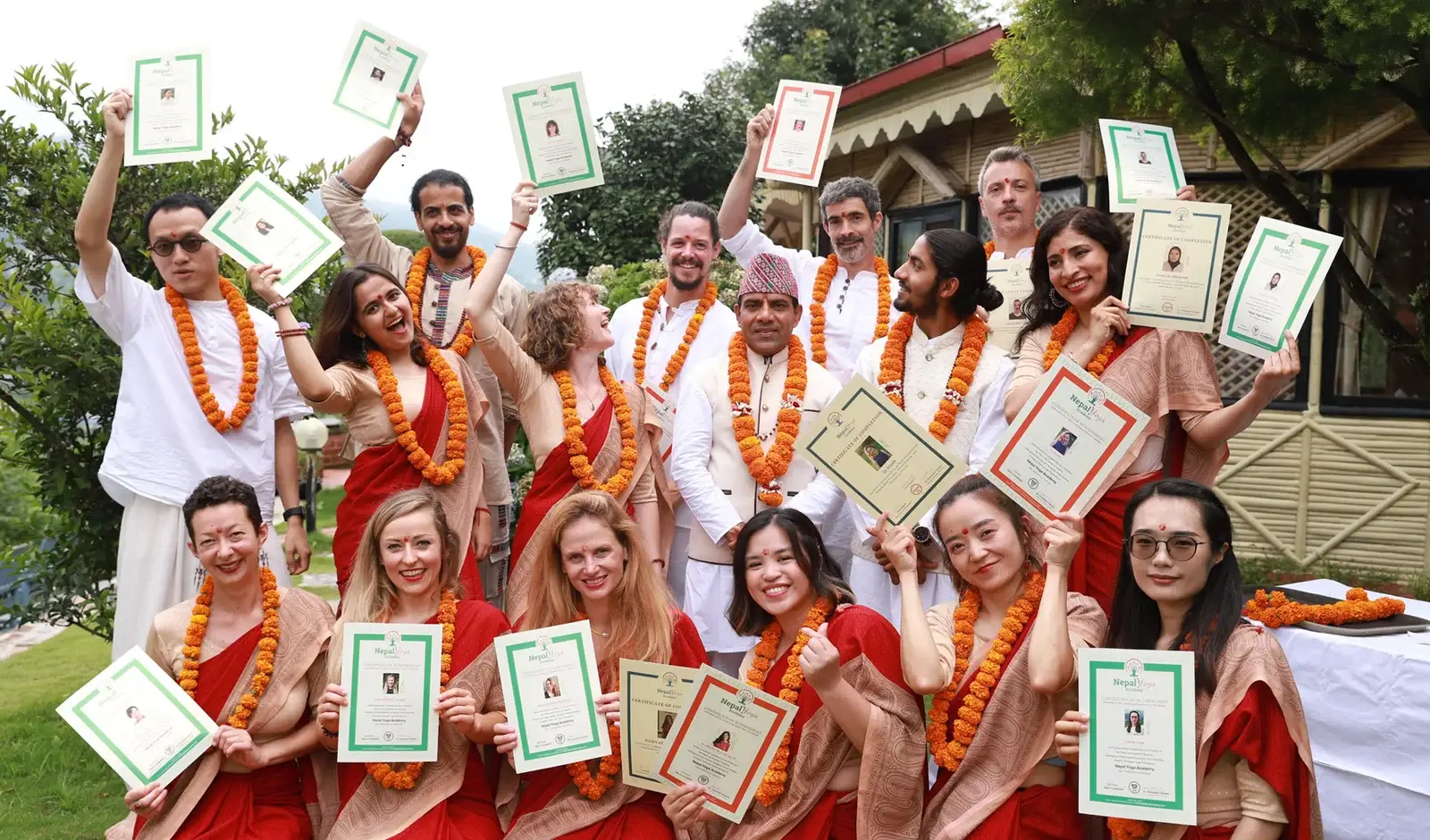
The certification travels with you. A Yoga Alliance–recognized RYT-200 (or higher) is respected internationally, which means the work you put in during your weeks in Nepal opens doors wherever you end up teaching afterward: a studio in your hometown, a resort somewhere on the other side of the world, or online.
How to actually pick the right school?
With so many options out there, it helps to have a short list of questions before you hand over a deposit.
- Is the school Yoga Alliance registered, and at what level? This determines whether your certificate is recognized internationally.
- How many students are in each group? Anything under 20 usually means you’ll get real, individual feedback from your teachers rather than getting lost in a crowd.
- Who’s actually teaching? Look up the lead teachers. Experienced schools are usually happy to share detailed bios, and a quick search will tell you how long they’ve been teaching and what tradition they come from.
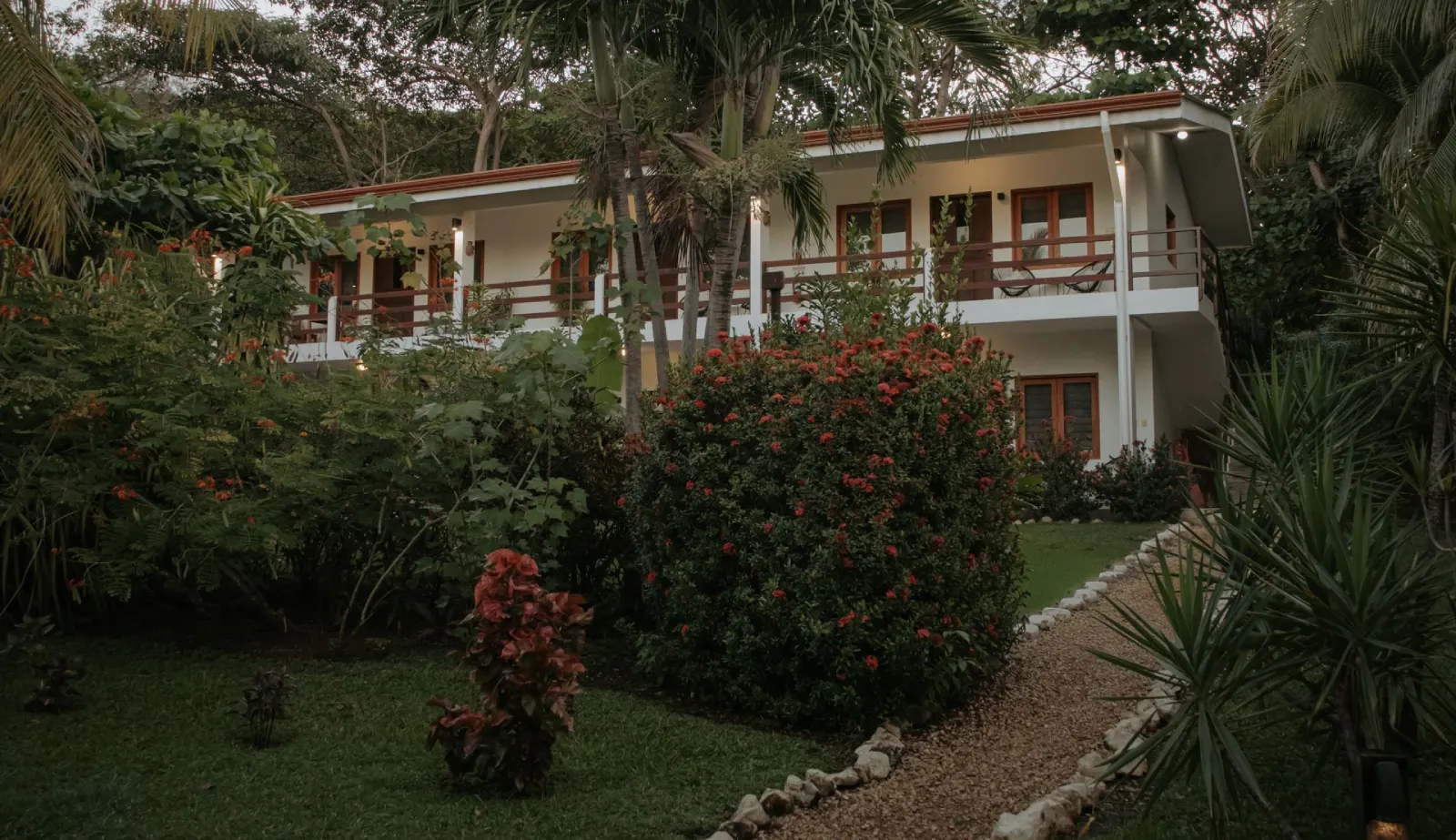
- What is the accommodation actually like? Ask the school for recent photos instead of relying only on the ones on its website. Things like hot water, decent Wi-Fi, and a clean private bathroom can make a big difference, especially if you’re staying for a few weeks.
- What if you need to cancel or change your dates? Plans can change, so check the refund and rescheduling rules before you pay.
- Can you find and talk to past students? Check reviews on independent websites and, if possible, message someone who has already taken the course. They’ll usually give you a much better idea of what to expect than a brochure will.
Best time of year to train in Nepal
Nepal has four main seasons, and the weather can affect your yoga training more than you might expect.
September to November and March to May usually have the nicest weather. Days are comfortable, skies are often clear, and you have a better chance of seeing the Himalayas.
December to February is colder, especially early in the morning and at night, but yoga courses still run as normal.
June to August is the monsoon season, so expect more rain and humidity, especially in Kathmandu. You can still do a course during this time, but bring wet-weather clothes and be ready for a few rainy days.
Getting ready to go
Once you’ve picked your course, the rest is pretty easy. Most people can get a visa on arrival at Kathmandu airport, but it’s still a good idea to check the rules for your passport before you fly.
Pack light and bring comfortable clothes. You’ll be moving around a lot, and mornings can be chilly even when the afternoons are warm. A journal is worth bringing too. You may find yourself writing more than you expected.
Most of all, come with an open mind. This isn’t a five-star hotel. You’re there to focus on yoga and live a little differently for a few weeks. Life in Nepal can move more slowly, and that’s part of the experience. Nepal Yoga Academy is offering special offers for courses. Book a special offer now.
After the course: what happens next?
Finishing the course doesn’t have to be the end. For many people, it’s just the beginning. Some start teaching right away, maybe at a local studio, in community classes, or even with friends and family while they get more experience.
Others use the training alongside another career, such as physiotherapy or wellness coaching. What they learn about movement and breathing can be useful there too.
And then some people never plan to teach at all. They want to understand yoga better and take their own practice further. That’s a perfectly good reason to do the training too.
Wherever you’re headed with it, the month you spend training in Nepal tends to become a reference point. People look back on it as the moment things slowed down enough for them to actually notice what they were doing with their body, their breath, and their attention.
If you’re trying to decide where to start, Nepal Yoga Academy is one option worth looking at. It offers training, accommodation, and meals together, so you don’t have to arrange everything separately.
You arrive, focus on the training, and leave with more than just a certificate.