
Authentic Yoga Teacher Training Course in Nepal
Maybe you first came to yoga to stretch after a long day. Maybe a friend invited you to a class, and before you knew it, you were going back every week. Slowly, yoga became more than exercise. It became something you wanted to understand more deeply.
Then, at some point, you may have started wondering, “Could I actually teach yoga?”
That question is where the search for a teacher training course often begins. And soon, another question comes up: “Where should I do it?”
Once you begin searching, you’ll quickly see there are hundreds of programs in beach towns, city studios, and retreat centers, all promising life-changing experiences in just 200 hours. Some are excellent, but many fall short.
In Nepal, yoga doesn’t feel like something created for fitness studios or social media. It’s woven into everyday life through temples, festivals, meditation, and centuries-old spiritual traditions.
In Kathmandu, the sound of temple bells often fills the morning before the streets get busy. In Pokhara, the peaceful views of the Annapurna mountains create a natural sense of calm. Nepal has long shared the spiritual traditions that have shaped yoga, particularly through Hindu and Buddhist practices that continue to this day.
This guide will give you a clear idea of what a yoga teacher training course in Nepal is really like, the rewarding parts, the challenging days, and a few things you may not expect before you begin.
If you are comparing programs or considering joining a yoga school in Nepal, knowing what to look for can make your decision much easier. From the daily routine and teachers to the course content and overall experience, we’ll look at what really makes a yoga teacher training feel authentic.
Why Nepal deserves its reputation for real yoga training
Yoga’s roots lie in the Indian subcontinent, and Nepal has never claimed otherwise. What makes Nepal special is the spiritual culture you experience here.
Nepal has a long history of Hindu and Buddhist traditions living side by side. You can see this connection in everyday life, from temples and monasteries to the way people practice meditation and spirituality. Taking a step back from a busy life and spending time looking inward has been part of the culture for generations.
The Himalayas make the experience even more special. For a very long time, monks, sadhus, and wandering yogis have come to these mountains to find peace, spend time in silence, and connect with themselves.
This is one of the things that makes yoga in Nepal feel so different. You are not only learning yoga in a training room. You are surrounded by a place where spirituality and meditation are still a natural part of life.
Nepal’s connection to yoga and spirituality isn’t something created for visitors. It’s part of everyday life. Pashupatinath Temple is one of the most important temples dedicated to Shiva, and people come here to pray every day. At Boudhanath, locals and monks walk around the stupa, turning prayer wheels and chanting quietly. Not far away, Lumbini is widely recognized as the birthplace of the Buddha and remains an important pilgrimage site.
During your yoga teacher training in Nepal, visiting sacred places gives you a chance to experience the country’s spiritual traditions in a real and meaningful way. These traditions are not just for tourists; they are part of everyday life in Nepal. Being part of this culture can help you feel more connected to Nepal and better understand the true meaning of yoga.
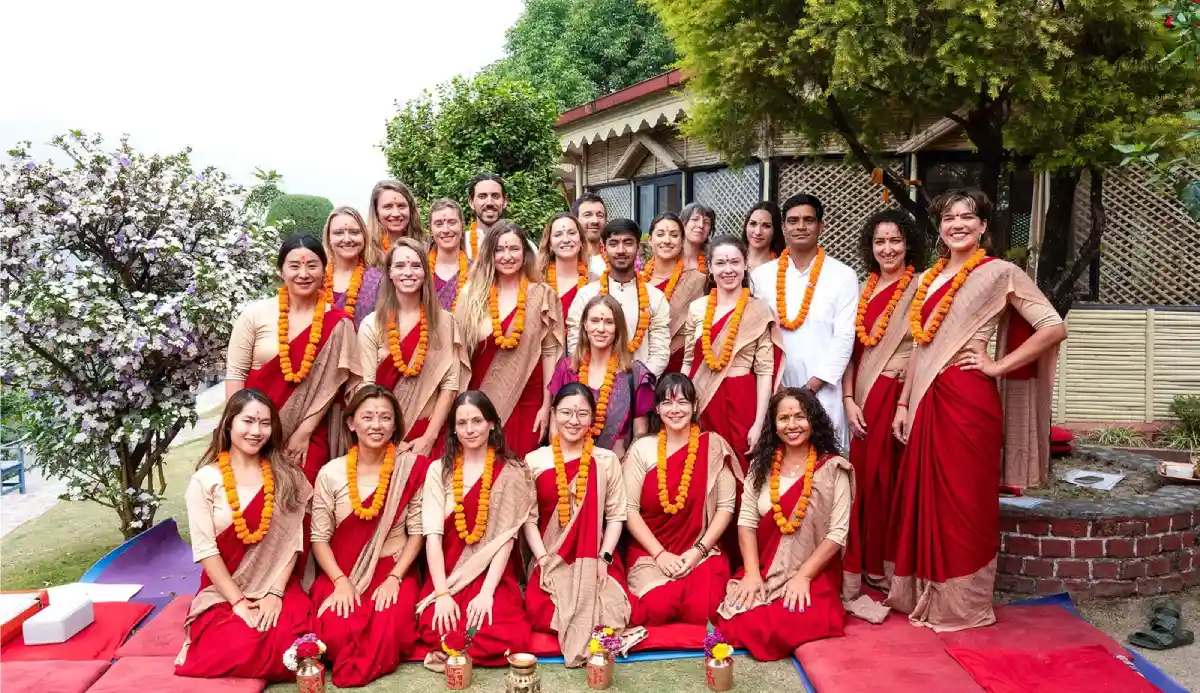
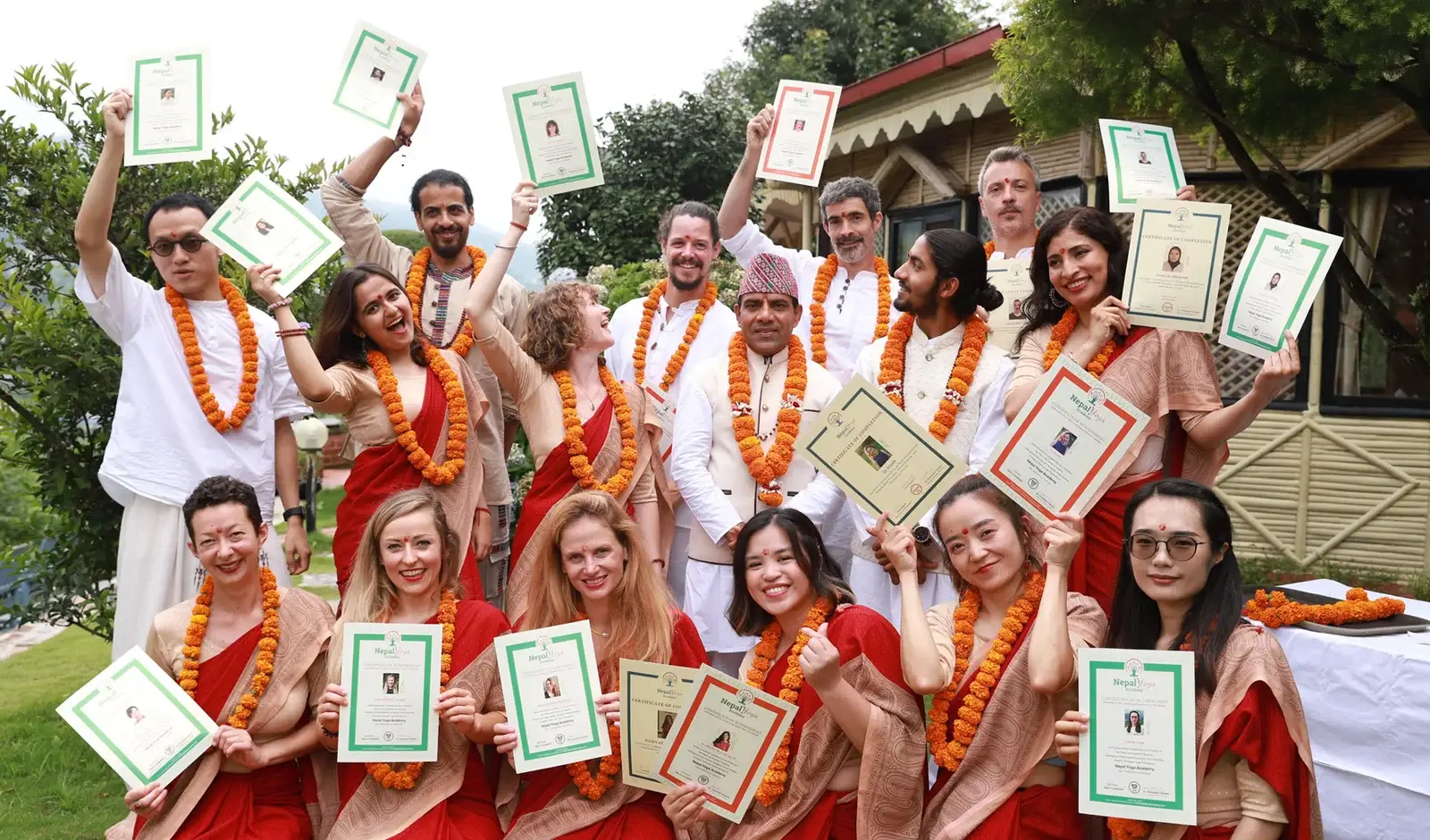
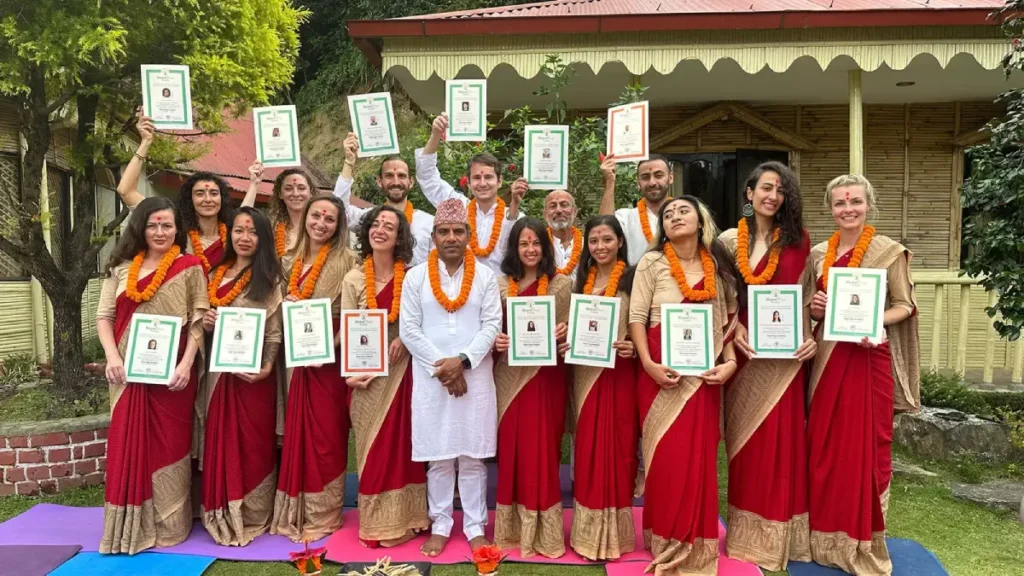
Nepal is also a great choice for practical reasons. Compared to many popular yoga destinations, it is less commercialized. Many well-known yoga schools in Nepal keep their class sizes small so that teachers can give more attention to each student. For example, Nepal Yoga Academy focuses on creating a personal learning environment where students receive regular guidance, feedback, and support throughout their training.
What “authentic” actually means when choosing a yoga teacher training course
Almost every yoga school describes its program as authentic. The word appears on countless websites, but it doesn’t always mean the same thing. So, how can you tell whether a course genuinely offers a traditional and well-rounded learning experience?
An authentic yoga teacher training is about more than learning yoga poses or getting a certificate. It teaches yoga as a complete practice that includes movement, breathing exercises, meditation, philosophy, and self-awareness. While every yoga school has its own teaching style, good programs often share a few important qualities.
Experienced and qualified teachers. Look for teachers who have proper training and several years of teaching experience. It can also be helpful to choose teachers with a strong background in traditions such as Hatha, Ashtanga, or Vinyasa. A good teacher should explain not only how to practice a pose, but also why it is done that way.
Small class sizes. Learning yoga becomes easier when your teacher has time to focus on you. Sometimes, a simple adjustment to your posture or a different explanation is all you need to better understand a pose. With fewer students in the class, teachers can give more personal guidance and help you improve at your own pace.
A balanced curriculum. Yoga teacher training should cover more than asana. Topics such as anatomy, pranayama, meditation, teaching methodology, ethics, and yoga philosophy are all important parts of becoming a confident and responsible teacher.
A daily routine that keeps you on track. Yoga teacher training is not only about what happens in the classroom. Most courses have a daily routine that includes morning yoga, classes, teaching practice, meals, and time to study on your own. Following this routine helps you stay focused and slowly build your skills and confidence.
A certification you can trust. If you’re planning to teach yoga after your training, it’s important to choose a course with a recognized certification. Programs registered with organizations such as Yoga Alliance can give your qualification wider recognition. This can be helpful if you want to teach at yoga studios in different parts of the world.
Choosing the right program. Authenticity is not just about the location or the way a school presents itself. It comes from good teaching, a complete curriculum, experienced teachers, and a supportive learning environment. Researching these areas will help you find a program that supports your growth as a practitioner and future yoga teacher.
200-hour, 300-hour, or 500-hour: Which one is right for you
If you’ve spent any time researching, you’ve seen these numbers everywhere and probably wondered what they actually mean.
200-hour YTT is the foundation. It’s the internationally recognized entry point for becoming a registered yoga teacher (RYT-200), and it’s where most people start, even experienced practitioners who’ve been doing yoga for a decade but never formally studied it. Over roughly three to four weeks, you’ll cover asana alignment, teaching methodology, basic anatomy, pranayama, meditation, and enough philosophy to actually explain to your future students why you’re asking them to breathe a certain way.
The 300-hour YTT is usually for people who have already completed a 200-hour course and want to deepen their learning. It goes deeper into advanced yoga poses, anatomy, and teaching techniques. When you complete both levels, you have 500 hours of training, which can be useful if you want to teach at more advanced yoga studios or retreat centers.
If you are new to yoga, there is no need to jump straight into a 500-hour course. Starting with a 200-hour training is usually the better choice. It gives you time to understand the basics, build confidence, and develop your own practice before moving on to more advanced training. Think of it as the first step in your yoga journey.
A day in the life at an authentic Nepal retreat center
People ask this more than almost anything else, so here’s an honest picture of what a typical day looks like. It’s demanding, in the best way.
- 5:00–5:30 AM — Wake up. Yes, really. This isn’t for punishment; in yogic tradition, the early morning hours are considered the best time for meditation and pranayama, when the mind is naturally quieter.
- 5:30–6:30 AM — Meditation and breathing practices (pranayama).
- 7:00–9:00 AM — Asana practice, often Hatha or Ashtanga depending on the school’s lineage.
- 9:00–10:00 AM — Breakfast, usually simple, sattvic, vegetarian food.
- 10:30 AM–12:30 PM — Anatomy, philosophy, or teaching methodology lectures.
- 1:00 PM — Lunch and rest.
- 3:00–5:00 PM — Alignment workshops or teaching practicum, where you start actually leading small groups.
- 5:30–7:00 PM — Second asana session, often gentler, sometimes yin or restorative.
- 7:30 PM —
- 8:00–9:00 PM — Satsang, chanting, or self-study, then lights out early because tomorrow starts at 5 again.
It might sound like a lot when you first look at the schedule, and honestly, it can be. But for many students, having such a structured routine is what makes the training so valuable.
You have a set time for practice, classes, meals, study, and rest, so you naturally learn to stay focused and manage your time. There is not much room to skip or put off things until later. Over time, that daily discipline becomes part of your practice and can also help you become a more responsible and confident teacher.
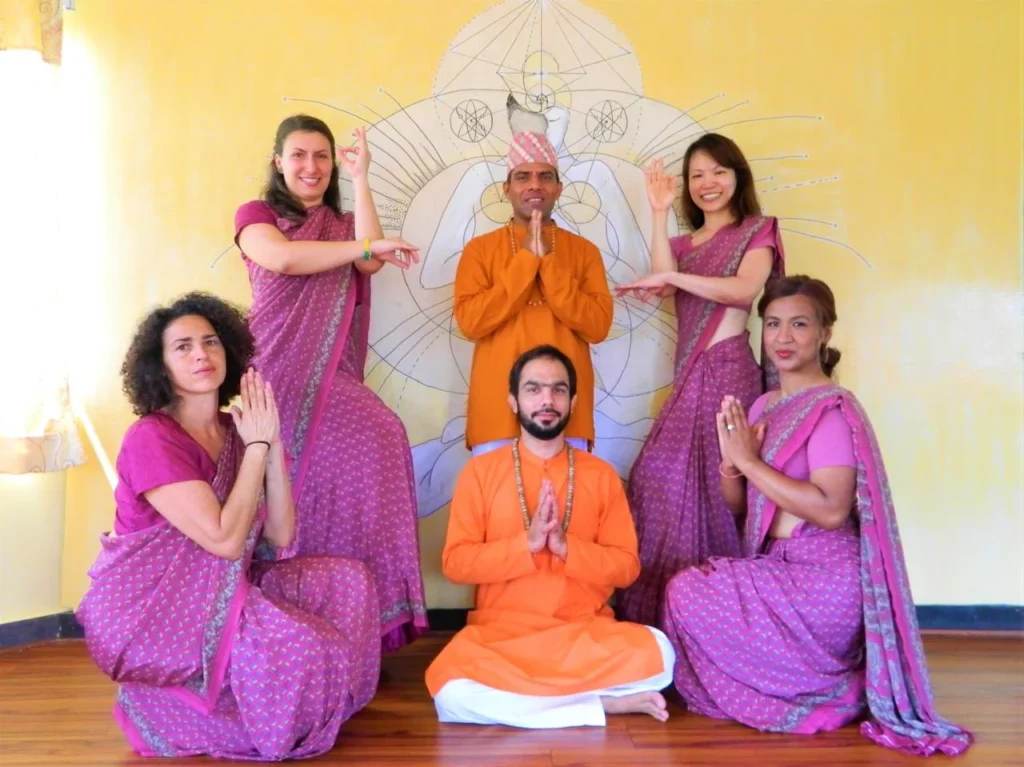
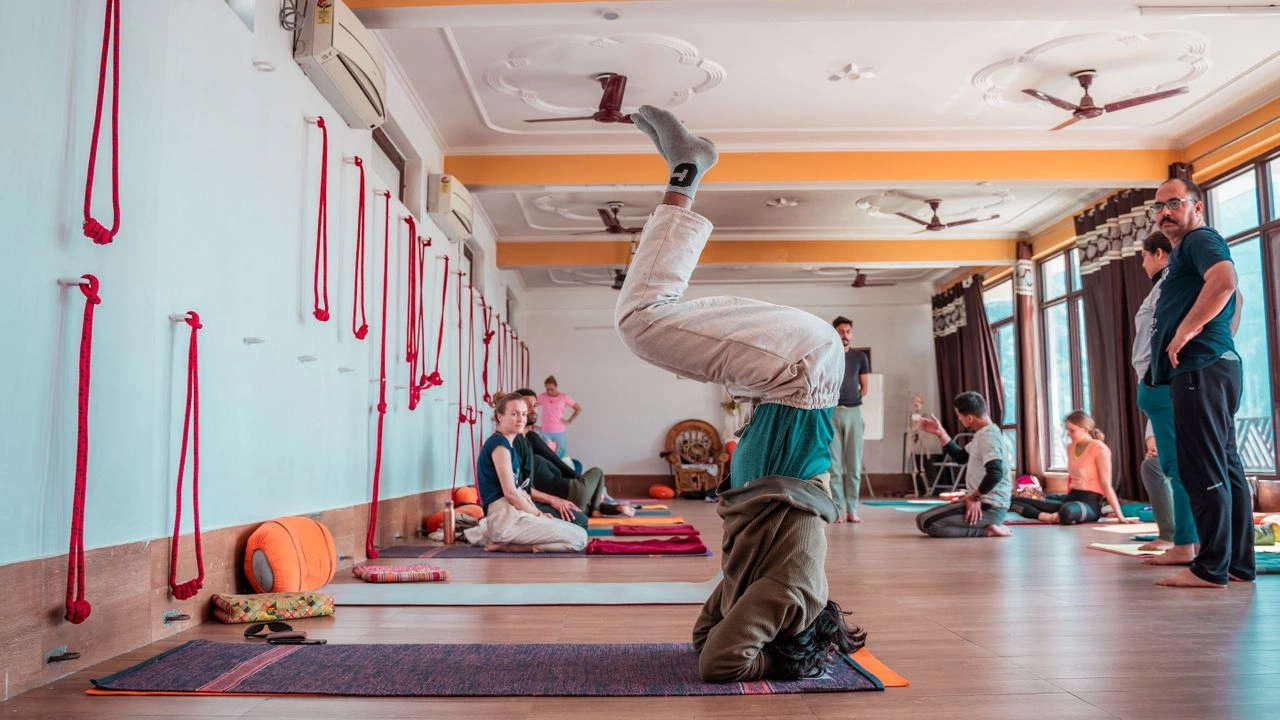
What you’ll actually learn (beyond a perfect headstand)
Many people start yoga teacher training thinking they need to master difficult poses. But that is not really the point, and it can be surprising at first.
You will probably become stronger and more flexible along the way, but those are just part of the process. Teacher training goes much deeper than that. You learn how yoga works, why the practices matter, and how to safely and confidently guide other people.
So, what do you actually learn during a yoga teacher training course? Here’s what you can expect:
- Asana and alignment — not just how to do postures, but how to see them in other bodies and adjust safely.
- Functional anatomy and physiology — enough to understand what’s actually happening in a hip opener or a backbend, and where the real risks are.
- Pranayama — breathing techniques that go far beyond “take a deep breath,” including practices most gym-based yoga classes never touch.
- Meditation — multiple techniques, not just one style, so that you can adapt to different students later.
- Yoga philosophy and history — where the practice actually comes from, and why that context changes how you teach it.
- Teaching methodology — how to sequence a class, use your voice, cue safely, and read a room.
- Basic Ayurveda — Nepal and its neighboring traditions treat yoga and Ayurveda as close cousins, so you’ll get a working introduction to it.
- Sanskrit terminology and mantra — enough to use pose names correctly and understand what you’re chanting, not just repeat sounds.
- The business of teaching — practical guidance on building a career once you’re certified, whether that’s studio teaching, private clients, or running retreats of your own.
By the end, you’re not just someone who can perform yoga well. You’re someone who understands why every piece of it exists.
Kathmandu and Pokhara: Two very different training grounds
Nepal is not the same everywhere, so where you choose to do your yoga teacher training can really shape your experience.
Kathmandu puts you right in the middle of Nepal’s living culture and history. The valley is full of temples, monasteries, and old traditions that are still part of everyday life. It can be noisy and busy, but that is also part of its charm. If you want your yoga training to be closely connected to the local culture and daily life, Kathmandu gives you that experience in a very real way.
Pokhara is quieter, set beside Phewa Lake with the Annapurna range rising directly behind it. Mornings here often mean watching mist lift off the water with snow peaks appearing behind it, which is about as good as meditation scenery gets. Many people find Pokhara easier for deep focus, simply because there’s less city noise competing for their attention.
Neither location is “better”; it depends on whether you want cultural immersion or natural stillness. Some schools even split the course between both, giving you a taste of each.
Who actually signs up for yoga teacher training in Nepal
There’s a myth that YTT is only for twenty-something backpackers on a gap year. In reality, the rooms are far more mixed than that. You’ll find:
- Complete beginners who’ve done a handful of classes but felt pulled to go deeper.
- Longtime practitioners, sometimes with a decade or more on the mat, who never had formal training and want to fill that gap.
- People in the middle of a career change, looking for something that feels more meaningful than their current job.
- Retirees, nurses, teachers, engineers, parents, people from every background you can imagine, united by nothing except wanting this specific thing.
You genuinely don’t need to be already flexible, young, or “good at yoga” to sign up. What matters more is a willingness to show up early, sit still when it’s uncomfortable, and stay open to being a beginner again.
What it costs (and why Nepal is easier on your wallet)
Many people wonder about the cost of yoga teacher training before making a decision. The good news is that training in Nepal is usually more affordable than in many Western countries. The lower cost of living allows you to enjoy a high-quality education and a meaningful experience at a more affordable price.
Most reputable programs price their courses as an all-inclusive package covering:
- Tuition and course materials
- Shared or private accommodation for the full duration
- Three vegetarian meals a day
- Certification fees
- Sometimes airport pickup and a weekend excursion or two
Since accommodation and meals are usually included, it’s easier to estimate your overall costs. Before comparing prices, ask each school exactly what’s included. A lower-priced course may end up costing more if you have to pay extra for things like food or accommodation later.
When to come: picking your season
Nepal has real seasons, and they change the experience noticeably.
- Spring (March–May) — Clear skies, comfortable temperatures, excellent mountain visibility. One of the two peak windows.
- Autumn (September–November) — Similarly clear and mild, often considered the single best stretch of the year for both weather and visibility of the Himalayan range.
- Monsoon (June–August) — Rain moves through most afternoons, but mornings are often clear, everything turns lush and green, and you’ll have the place far more to yourself.
- Winter (December–February) — Winter can be quite cold in the higher mountain areas, but Kathmandu and Pokhara are generally mild and pleasant during the day. Most yoga training centers also have warm, comfortable indoor spaces for practice.
Note: If mountain views and dry mornings matter most to you, aim for spring or autumn. If you’d rather avoid crowds and don’t mind some rain, the monsoon season has its own quiet charm.
The practical stuff: visa, flights, and what to pack
Most people travel to Nepal through Tribhuvan International Airport in Kathmandu. Many nationalities can get a tourist visa on arrival, while others need to apply before they travel. Indian citizens don’t need a visa.
Since visa rules and fees can change, it’s always a good idea to check the latest requirements before booking your trip.
Make sure your passport is valid for at least six months from the date you arrive in Nepal. It’s also helpful to carry a couple of passport-sized photos, just in case.
That’s about it. Most schools provide everything else you’ll need, so you can focus on your practice instead of carrying extra luggage.
You don’t need to pack a lot. A few basics are enough:
- Comfortable clothes for daily yoga practice
- A light jacket for cool mornings and evenings
- A reusable water bottle
- A notebook or journal
- Any personal medicines you may need
How to spot a school that’s actually authentic
Because the word “authentic” is used so often, it can be hard to know what a good yoga teacher training program actually looks like. Before you sign up, here are a few simple things worth checking:
- Is it registered with Yoga Alliance? Check the registration yourself rather than simply taking the school’s word for it.
- Are the classes small enough? Smaller groups usually mean more time with the teacher and better personal guidance.
- Who are the teachers? Look at their training and experience, and see if they have studied within a recognized yoga tradition.
- What does the course actually teach? A good program should cover more than yoga poses. Look for philosophy, anatomy, meditation, and practical teaching skills as well.
- What do past students say? Look for reviews from independent sources, not only testimonials published on the school’s own website.
- What is included in the price? Make sure you understand what your fees cover and ask about any extra costs before enrolling.
Life after your certificate
Once you finish your yoga teacher training, there are many ways you can use what you have learned. Some people start by teaching at a local yoga studio, while others begin with private lessons or small group classes. These smaller classes can be a great way to gain experience and feel more comfortable as a new teacher.
You can also teach online. With online classes, you can work with students from different countries and build your own community without being tied to one location.
Over time, some teachers return to Nepal or other destinations to organize yoga retreats and share the same knowledge and experience they once received as students.
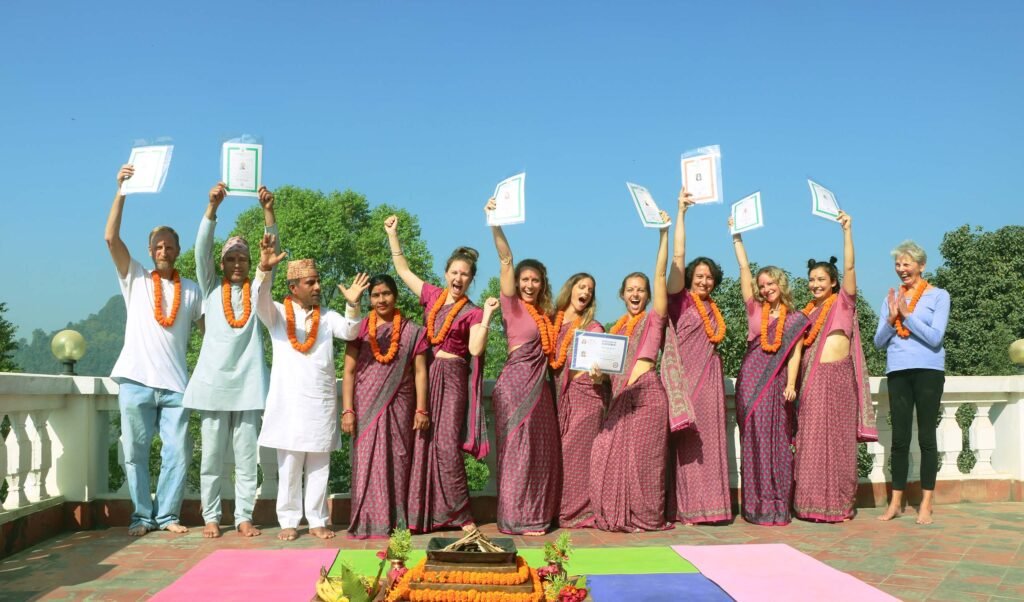
Once you complete your RYT-200 or RYT-300 training, you can register with Yoga Alliance. Many yoga studios and retreat centers recognize this qualification when hiring teachers. So, it is more than just a certificate that can help you find teaching opportunities and take the next step in your yoga career.
Final thoughts
At the end of the day, choosing a yoga teacher training is a personal decision. The certificate matters, but so does the experience you have along the way, what you learn, who guides you, and how the training shapes your own practice.
If you are considering training in Nepal, take a moment to look beyond the course title. Get to know the teachers, check the daily schedule, read through the course content, and find out how much support students receive. A good training should give you the chance to ask questions, practice teaching, learn from your mistakes, and gradually become more confident.
The right course should leave you feeling that you have learned something you can carry with you, both on and off the mat.
Nepal can make that learning experience even more meaningful. You get to practice yoga while surrounded by ancient temples, quiet monasteries, mountain landscapes, and a culture where spirituality remains part of everyday life. For many students, that becomes an important part of the journey, not just learning how to teach yoga, but understanding why they wanted to learn it in the first place.