


My 200-Hour Yoga Teacher Training in Nepal
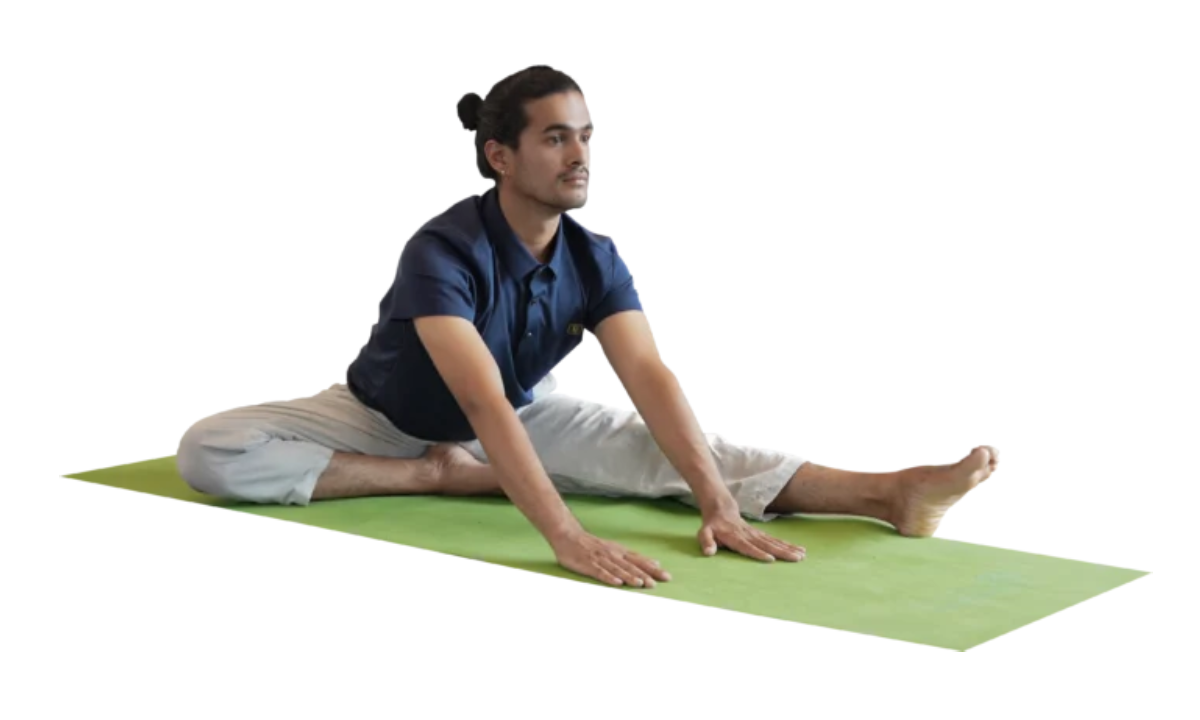
Completing my 200-hour yoga teacher training at Nepal Yoga Academy changed the way I understood yoga.
Before the course, I mainly experienced yoga from the inside: how a posture felt, how the breath moved, and what happened in my mind during practice. Teacher training required me to look outward as well. I had to learn how to explain a posture, recognize what another student needed, and guide a class with clarity and purpose. In effect, YTT becomes a pretty big lesson in empathy.
The training was physically demanding, but the greatest challenge was learning to take responsibility for the practice rather than simply participating in it.
Why I Chose to Train in Nepal
Nepal felt like a natural place to study yoga because spiritual practice is still visible in daily life. Temples, rituals, mantras, and meditation are not confined to yoga studios. They belong to the wider culture. In Nepal, there is a certain presence that is felt while working in the shadows of the Himalayas, and this presence is amplified at a quiet center such as Nepal Yoga Academy.
At Nepal Yoga Academy, the environment supported serious study without making yoga feel commercial or performative. The course was not presented as a quick path to becoming an expert. It felt more like an introduction to the responsibility of teaching.
Living and studying in one place also created continuity. Instead of fitting yoga around ordinary life, the practice shaped the entire day.
What the Training Included
The course combined asana, pranayama, meditation, philosophy, anatomy, sequencing, and teaching methodology.
In my own practice, I had often focused on performing the posture correctly. During the training, I began asking different questions. Why is this posture being taught here? What is it preparing the body for? How does this benefit the body in a larger picture? Who might need a modification and what does that look like? What risks should a teacher notice?
Anatomy gave practical context to the physical practice, while philosophy prevented yoga from becoming only a form of exercise. For me, philosophy is the spiritual reason or fuel (if you will) that transformed Yoga from a practice like lifting weights or running, into a path that connects to the deeper questions and answers of life. Pranayama and meditation also became more systematic. Instead of using them occasionally, we learned how they fit into a complete practice.
Learning to Teach
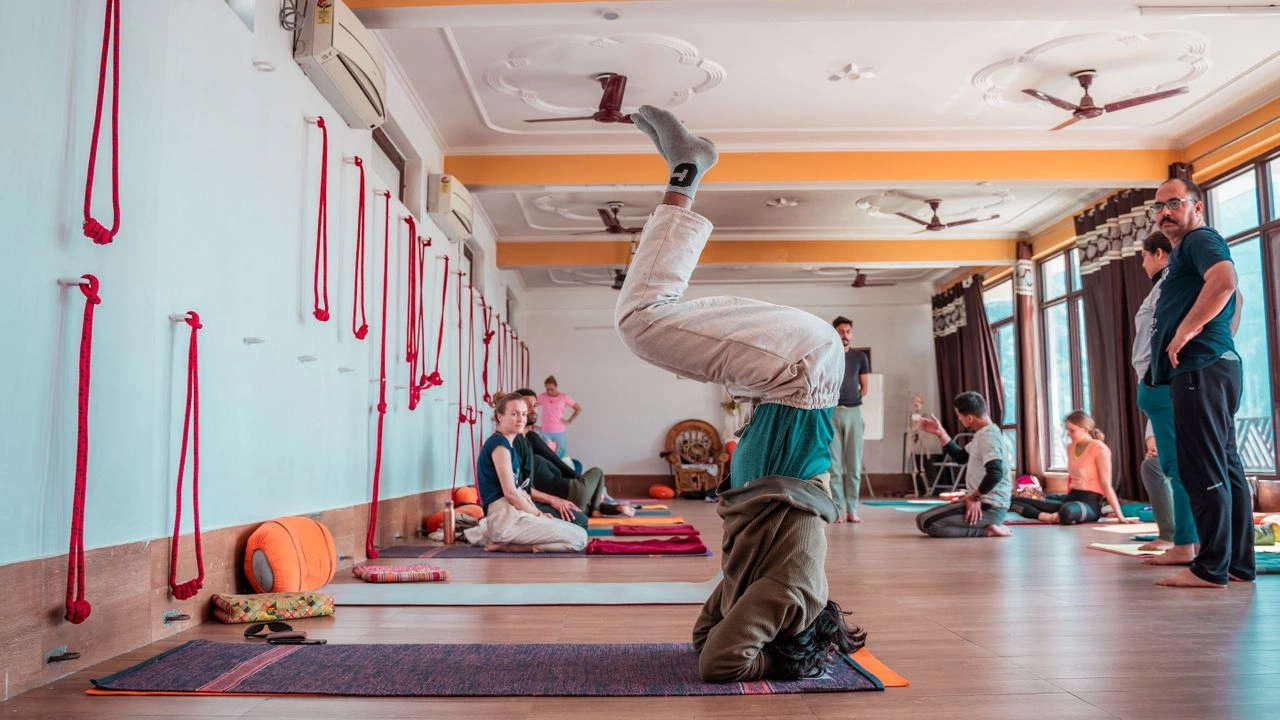
Teaching was the most valuable and uncomfortable part of the course.
It is one thing to understand a sequence in your own mind. It is another to stand in front of a group and communicate it clearly. I had to think about timing, tone of voice, demonstrations, transitions, and the amount of information students could realistically absorb.
I also learned that good teaching is not about speaking constantly. A teacher must know when to explain, when to observe, and when to allow students to experience the posture for themselves.
The teaching practicums made weaknesses visible very quickly. Instructions that seemed clear in my head were sometimes confusing when spoken aloud. Sequences that looked balanced on paper did not always feel natural in the body.
Receiving feedback helped turn those mistakes into part of the training rather than something to avoid.
Learning to Sequence a Class
Before teacher training, I did not fully appreciate how much thought goes into a coherent yoga class.
A sequence should not simply be a collection of interesting postures. It should prepare the body gradually, develop toward a clear intention, and finish in a way that allows the nervous system to settle.
We learned to consider the relationship between postures, rather than treating each one separately. A standing pose could prepare the hips for a later posture. A twist could create space before a forward fold. A demanding section of class needed to be balanced by a deliberate return toward stillness.
This changed my personal practice as well. I became less interested in individual poses and more interested in how the entire practice moved.
The Daily Routine
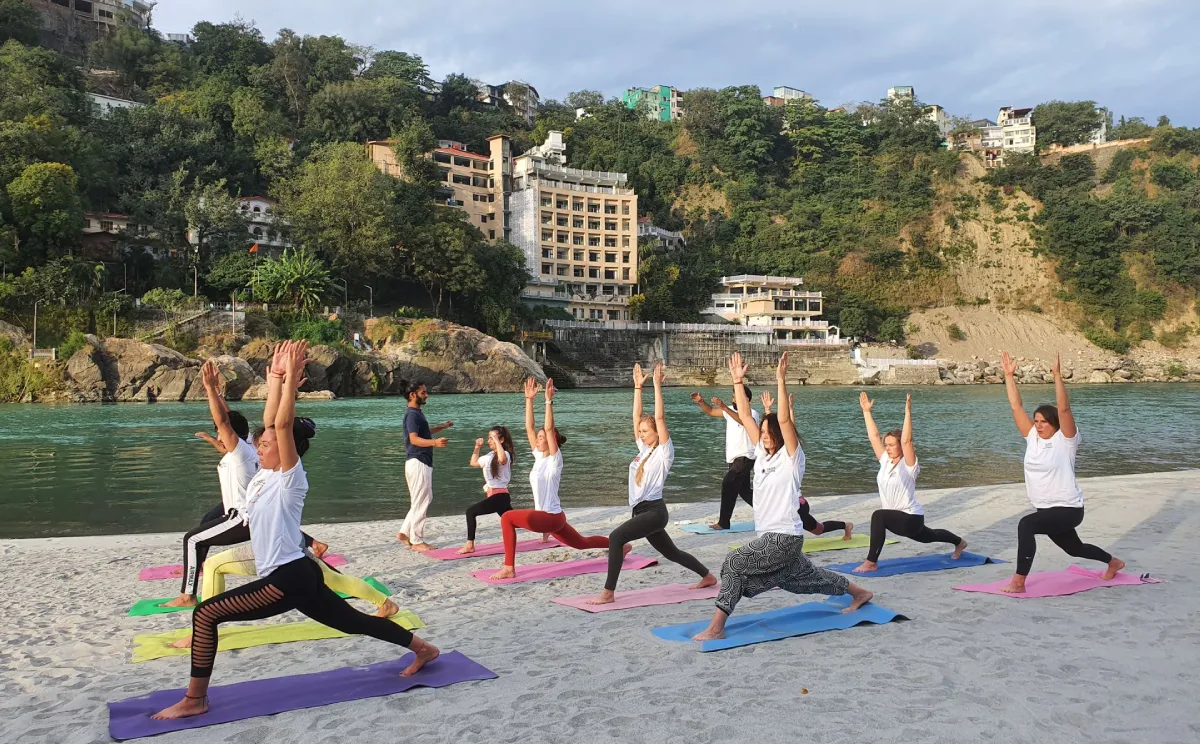
The days were full. Morning practice began early, followed by meals, lectures, workshops, and teaching exercises. Evenings often included meditation, reflection, or preparation for the next day.
The schedule required discipline. There were moments of physical fatigue and periods when it was difficult to absorb more information. Yet the intensity was also what allowed the different parts of yoga to connect.
Asana informed anatomy. Philosophy influenced teaching ethics. Meditation affected how we communicated. The subjects stopped feeling like separate classes and began to form one system.
What I Found Most Difficult
My main challenge was not flexibility or physical endurance. It was learning to teach without trying to control every part of the experience.
New teachers can easily over-explain because silence feels uncomfortable. They may rush through transitions, forget to observe the room, or focus so much on remembering the sequence that they stop responding to the students.
I experienced all of these problems during the course.
Gradually, I learned to slow down. I began to understand that a teacher does not need to display everything they know. The purpose is not to impress the class. It is to create conditions in which students can practice safely and attentively.
What I Learned About Being a Yoga Teacher
The course made me more cautious about the title of “teacher.”
Completing 200 hours provides a foundation, but it does not mean the learning is complete. It gives a person enough knowledge to begin teaching responsibly, provided they remain aware of their limitations.
A teacher must continue studying anatomy, philosophy, sequencing, and communication. More importantly, they must continue practicing.
In my own practice, I have noticed that teaching exposes inconsistency very quickly. It is difficult to ask students to breathe patiently, move with awareness, or remain present if those qualities are absent from your own life.
Teaching therefore becomes another form of practice.
Can Beginners Complete a 200-Hour Training?
A student does not need to perform advanced postures before joining a yoga teacher training 200-hour course. However, some previous experience is helpful.
The more important qualities are consistency, curiosity, humility, and the willingness to receive feedback. Teacher training involves more than attending yoga classes. Students must study, participate, speak in front of others, and continue practicing when tired.
Someone who does not intend to teach can still benefit from the course, but they should understand that teaching exercises are an essential part of the experience.
Certification and What Comes Next
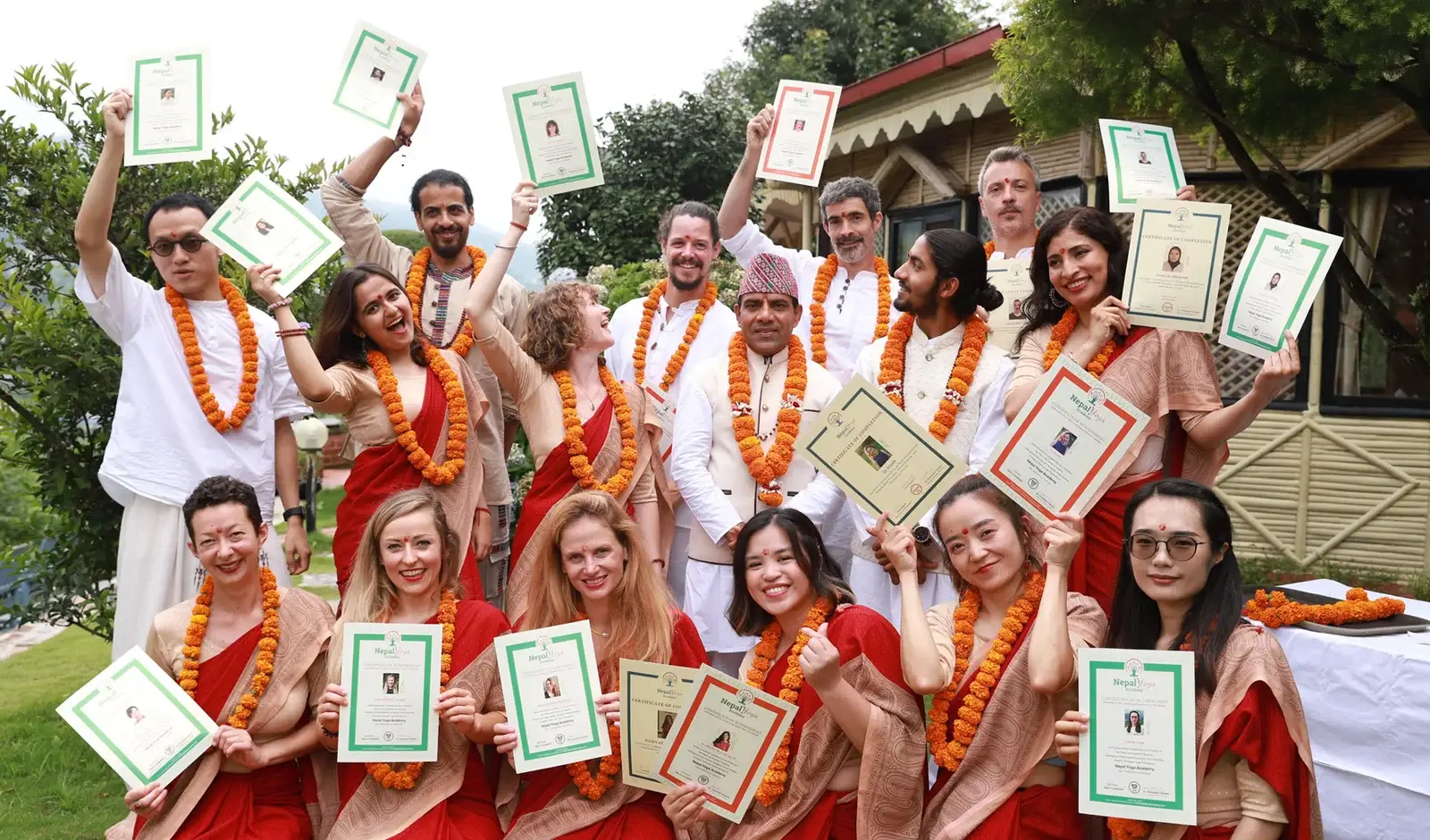
The certification represents the completion of a foundational curriculum. It does not automatically create confidence, employment, or mastery.
After finishing the course, I felt more prepared to teach, but also more aware of how much I still needed to learn. That awareness was one of the most important outcomes.
The next step is not necessarily to begin teaching large classes immediately. It may be better to practice with friends, teach small groups, observe experienced instructors, and continue developing a personal style.
Confidence should grow from preparation and experience rather than from the certificate alone.
Final Thoughts
Completing my 200-hour yoga teacher training at Nepal Yoga Academy changed my understanding of yoga by placing it in relationship with the rest of my life.
I had already accumulated many experiences, ideas, and ambitions, but the training gave me a different perspective through which to understand them. Yoga began to feel less like one interest among many and more like a way of bringing those experiences into a coherent inner practice.
The most difficult part of the course was not physical. It was learning to open myself to the teachers and the other students.
That required a kind of vulnerability that was unfamiliar to me. Yet it was also part of what made the experience meaningful. Teaching yoga asks for knowledge and confidence, but it also asks for honesty, receptivity, and the willingness to be seen while still learning.
As a Westerner, I had often encountered yoga through material goals: becoming stronger, more flexible, healthier, or more capable. The training did not dismiss those benefits, but it placed them within a deeper spiritual context.
The physical practice became a doorway into something more fundamental—a need for discipline, self-understanding, connection, and inner stillness.
I finished the course feeling encouraged.
I left with a greater respect for my teachers and an eagerness to become a thoughtful teacher myself. I hope to teach while pursuing my PhD, allowing yoga and psychology to develop alongside one another rather than treating them as separate paths.
Patanjali’s Yoga Sutras describe yoga as the stilling of the movements of the mind, after which the seer rests in its own nature.
I do not feel that completing a 200-hour training brought me to the end of that path. It gave me a clearer understanding of where the path begins—and of the responsibility involved in helping others walk it.