

Yoga for Stress Relief: Best Poses to Calm Your Mind
Stress has become part of our daily lives. Between work, family, and constant notifications, it’s hard to find a moment of peace. Yoga for stress relief is a natural and straightforward way to ease that tension. By moving gently and focusing on your breath, you can relax your body, quiet your mind, and restore a sense of calm and balance. In this article, we’ll explore how yoga helps relieve stress and highlight some of the best yoga poses to help you feel peaceful and centered.
Suppose you’re passionate about learning yoga deeply. In that case, you can also consider yoga teacher training, which can enhance your knowledge and help you teach others how to manage stress through mindful practice.
Understanding the Connection Between Yoga and Stress Relief
Yoga is much more than physical exercise. It’s a holistic practice that unites the body, mind, and spirit through poses (asanas), breathing techniques (pranayama), and meditation.
When you practice yoga regularly, it triggers the body’s relaxation response — reducing cortisol levels, slowing down the heart rate, and lowering blood pressure. Yoga also encourages mindfulness, which helps you stay present rather than worry about the past or future.
Scientific studies continue to show that yoga can genuinely help reduce anxiety, depression, and everyday stress. It makes you feel better, helps you sleep better, and provides your mind the space it needs to relax. Yoga is one of the best ways to manage stress in a natural, steady way.
The Benefits of Yoga for Stress Relief
- Yoga soothes your nervous system. Just slowing down, stretching, and focusing on your breath can help your body relax and your mind feel lighter.
- It clears your head. Paying attention to the present moment during practice makes it easier to think clearly and handle challenges without feeling overwhelmed.
- It keeps your emotions steady. Regular yoga helps you notice your feelings without getting caught up in them, so you can respond with calm rather than react impulsively.
- It takes care of your body. Stretching, moving gently, and holding poses strengthen your muscles, improve flexibility, and relieve stress-related tension.
Taking a yoga teacher training lets you dive deeper into how yoga works and why it helps. You’ll also learn how to guide others so they can feel the same calm, clarity, and balance in their own lives.
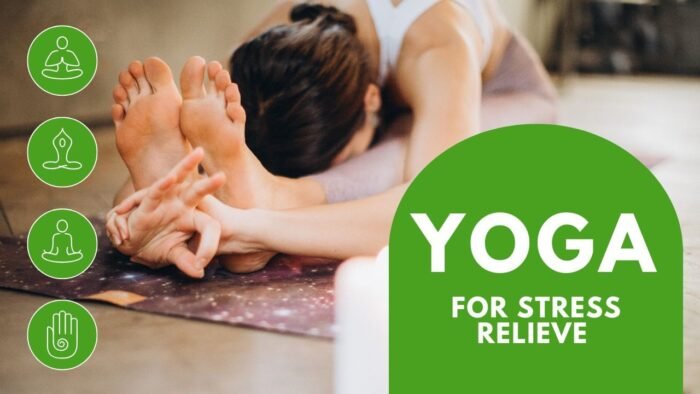
Best Yoga Poses for Stress Relief
Here are some simple and effective yoga poses to help you relax your mind and body. They are beginner-friendly and can easily be done at home, even in a small space.
1. Balasana (Child’s Pose )
This gentle resting pose helps release tension in your lower back, shoulders, and neck — common areas where stress accumulates.
How to Do It:
- Kneel on the floor and bring your big toes together.
- Sit back on your heels and stretch your arms forward, lowering your forehead to the mat.
- Take slow, deep breaths and stay 1–2 minutes in the pose.
This will help calm the nervous system, relieve fatigue, and encourage deep relaxation.
2. Marjaryasana-Bitilasana (Cat-Cow Pose)
This gentle pose links your breath with movement, easing stiffness in the spine and helping you tune in to your body. Moving slowly between the two positions encourages flexibility, warms up the back, and brings a sense of calm.
Steps:
- Begin on all fours, with your hands under your shoulders and knees under your hips.
- Inhale and gently arch your back, lifting your chest and tailbone toward the ceiling (Cow Pose).
- Exhale and round your spine, drawing your chin toward your chest (Cat Pose).
- Exercise gently and attentively for 5-10 rounds.
This basic stance reduces back stress, increases flexibility, and helps restore emotional equilibrium.
3. Uttanasana (Standing Forward Bend)
This pose encourages deep relaxation by increasing blood flow to the brain and relieving anxiety.
Steps:
- Stand with feet hip-width apart.
- Exhale and bend forward from your hips, letting your head hang naturally.
- You can bend your knees slightly for comfort.
- Hold for 30–60 seconds, breathing deeply.
This pose soothes the mind, stretches hamstrings, and releases physical stress.
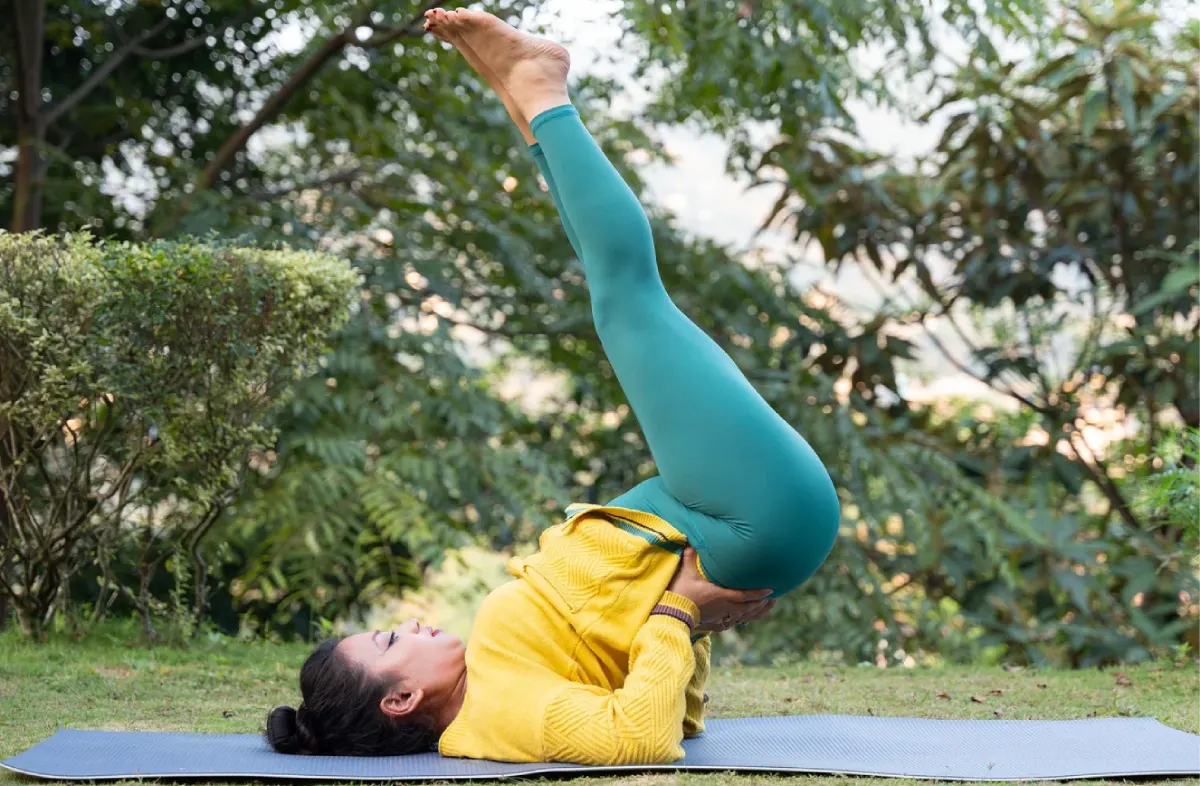
4. Viparita Karani (Legs-Up-the-Wall Pose)
This gentle inversion pose is among the most restorative in yoga. It helps your body unwind and brings an immediate sense of calm to your mind.
Steps:
- Sit with one hip close to a wall, then gently lie down on your back.
- Swing your legs up the wall, keeping your hips as close as feels comfortable.
- Let your arms rest softly by your sides and close your eyes.
- Stay here for 5–10 minutes, allowing your breath to slow and your body to fully relax.
This pose improves circulation, reduces fatigue, and promotes deep relaxation.
5. Savasana (Corpse Pose)
Savasana is usually done at the end of a yoga practice, and for good reason. It gives your body and mind a chance to settle, breathe, and fully take in the benefits of everything you’ve just worked through. It’s a quiet moment of rest that helps you finish your practice feeling grounded and refreshed.
Steps:
- Lie flat on your back with arms and legs comfortably apart.
- Close your eyes and focus on your breath.
- Stay still for 5–10 minutes.
This pose helps calm the mind, reduce anxiety, and relieve insomnia.
Breathing Techniques for Stress Relief
Besides poses, breathing is equally essential in yoga. Knowing specific breathing techniques, or pranayama, helps reduce stress and makes you feel more grounded.
- Deep Belly Breathing: Breathe deeply into your abdomen instead of shallow chest breathing.
- Alternate Nostril Breathing (Nadi Shodhana): Balances both sides of the brain and calms the mind.
- Box Breathing: Inhale for four counts, hold for 4, exhale for 4, and hold for four again, and repeat several times.
So, you should include all the breathing exercises discussed above in your daily routine to bring instant peace and clarity.
How Yoga Teacher Training Deepens Stress Relief Practice
If you genuinely want to understand how yoga works for stress relief, enrolling in a yoga teacher training program is highly beneficial.
Such training provides in-depth knowledge of:
- Yoga philosophy and mindfulness
- Anatomy and physiology
- Meditation and breathing practices
- Sequencing and teaching techniques
Even if you don’t plan to teach professionally, yoga teacher training can be a life-changing experience. It helps you develop self-awareness, discipline, and a deeper connection to your inner peace. Additionally, you’ll learn how to create customized stress-relieving practices for both yourself and other people.
Tips to Make the Most of Your Yoga Practice
- Consistency matters. Even just 10 minutes yoga routine daily can make a noticeable difference in how you feel.
- Try to create a calm, uncluttered space for your practice. A peaceful environment naturally helps your mind settle.
- Listen to your body as you move. Go gently, ease into each pose, and avoid pushing yourself beyond your comfort zone.
- Pair your practice with a few minutes of meditation. It deepens the sense of relaxation and helps your mind feel clearer and more grounded.
- Be patient: Stress alleviation is a long process. With frequent practice, you will gradually feel more relaxed.
In the end
Almost everyone carries some level of stress, worry, or emotional weight these days. Yoga offers one of the simplest and most natural ways to soften those feelings. When movement, breath, and awareness flow together, they create a quiet space within you; one where things feel a little lighter, a little more grounded. With time and steady practice, these poses and breathing exercises start to shape how you feel each day. Your mind settles more easily, your focus slowly becomes clearer, and you begin to handle stress with a little more softness.
Isn’t this sound interesting? You should get yourself ready and plan for the program.
If you ever feel drawn to deepen your understanding of yoga or share its benefits with others, taking a yoga teacher training can be a significant step forward. And at the heart of it all, yoga is simply about showing up as you are, listening to yourself, and creating a little calm and clarity in your life, one practice at a time.