


How a Spiritual Wellness Retreat Can Transform Your Life
There’s a moment most people recognize, even if they don’t say it out loud. You’re going through the motions. Work, phone, sleep, repeat. Maybe you’re ticking every box on the outside, but something on the inside feels hollow. You can’t quite name it. You’re not depressed, not sick. Just… disconnected. From yourself, from what matters, from the kind of quiet that used to come naturally.
That’s exactly where a spiritual wellness retreat meets you. Not with answers handed on a silver platter but with the space, the stillness, and the structure to find your own. If you’ve been on the edge of booking one and aren’t sure what to expect, or if you’re just curious about what the whole thing actually does for a person, this piece is for you.
Let’s be honest about what a spiritual retreat is, what it isn’t, and why more people are walking away from them genuinely changed.
What is a Spiritual Wellness Retreat, really?
The word ‘spiritual’ tends to make some people back away slowly. It conjures images of incense-heavy ashrams or people in robes chanting at 4 AM. And while that’s part of some traditions, it’s a narrow picture of what spiritual wellness actually means in practice.
Fundamentally, a spiritual wellness retreat is a set period, typically three days to several weeks, during which you take a break from everyday life to focus within. Yoga, meditation, breathwork, quiet sitting, guided writing, energy healing, or just leisurely walks in the outdoors might all be part of this. The format varies greatly based on the retreat center and tradition.
The aim is what sets it apart from a vacation or a spa weekend. You’re not there to get away from your life. For the first time in a long time, you are there to gaze at it unobstructed and clearly. Everything about the experience is altered by that change in purpose.
The wellness aspect anchors the spiritual in the physical. Sleep, food, movement, rest, all of it is taken seriously. Many retreats follow Ayurvedic principles, traditional yoga philosophy, Buddhist mindfulness practices, or some combination of these. The body and mind aren’t treated as separate problems, but as one living system that needs care.
The real reason people go (and what pushes them over the edge)
People rarely book a spiritual retreat on a whim. Something happens first. A burnout that doesn’t lift. A relationship ending. A loss. A creeping sense that life is passing by while you’re looking at a screen. A health scare that reorders your priorities overnight.
Sometimes it’s more nuanced than that. An increasing annoyance with superficial discussions. A restlessness that doesn’t go away with sleep. The persistent sense that you’ve been avoiding something for years, without ever looking back to see what it is.
These are all legitimate reasons. There’s no threshold of suffering you need to hit before a retreat makes sense. Some people arrive in crisis. Others arrive simply curious. Both come away with something they didn’t expect.
It’s fascinating to see how often people say that deciding to attend the retreat felt like the start of a transformation, as if something had already changed inside of them before they had even packed a suitcase.
What actually changes: The transformations that stick
Yes. This is the section that most people actually want to know about. Not the theory, but the actual shifts. The things that will be different six months later.
Your relationship with your own mind changes
The majority of individuals don’t realize how noisy their inner world is until they come to a retreat. The silent self-criticism that operates like background software, the incessant inner commentary, the reliving of previous discussions, and the fear projections about the future are all present. However, we are unaware of it since everyday life is similarly noisy.
Retreat eliminates outside sounds. What’s left may also be unpleasant over the first several days. Before your mind becomes quieter, it becomes louder. However, for most individuals, something settles around day three or four. Instead of being pulled by your ideas, you begin to notice them. That gap between stimulus and response, the one Viktor Frankl wrote about, becomes real and tangible in daily experience. That shift alone changes everything.
The body gets to speak.
There is a physical address for chronic stress. It resides in the chest, belly, jaw, and shoulders. People have normalized the feeling of having years’ worth of unresolved stress in their bodies.
Yoga nidra, restorative yoga, and somatic breathwork are practices that help the nervous system downregulate and exit a chronic fight-or-flight state. After a week-long retreat, some claim to sleep differently. deeper. Their digestion calms down. It takes some time for headaches that have been a steady companion for years to manifest. The body was awaiting authorization to go to sleep.
Old patterns become visible.
One of the most common things people say after a spiritual wellness retreat is that they see their patterns, behavior, emotion, and relationships with a detached clarity they’ve never experienced before, not from a position of judgment, but with almost loving inquiry.
- Why do I still pick these kinds of relationships?
- When I’m feeling uneasy, why do I go for my phone?
- Why do I think less of myself in some circumstances?
These are not questions you receive at a retreat; rather, they arise naturally when the clutter is cleared, and you need to be honest with yourself.
A reconnection to what actually matters
It’s quite easy for modern life to persuade you that haste and purpose are synonymous. It’s urgent in your inbox. The deadlines, timetables, alerts, and news are all critical. However, the question “Am I living the life I want to live?” is more relevant than most of them.
People return from retreats with reordered priorities. Not in a dramatic, burn-everything-down way, though, occasionally that too. More often, quietly. They stop saying yes to things that drain them. They spend more time with people they actually love. They take their creative work seriously again. They remember what they used to care about before life got so busy.
The role of silence in a spiritual retreat
Many spiritual wellness retreats incorporate periods of silence from a few hours a day to full silent retreats lasting several days. For people who’ve never done it, this sounds either deeply appealing or mildly terrifying, usually both.
It’s not empty to be silent. It’s an atmosphere. When you take away the opportunity to fill each instant with dialogue or information, you take up the space. The altered version is not your true ideas. Your true emotions, not the ones you feel comfortable sharing with others. This is first intimidating. Then it starts to feel relieved.
Silence has been included in almost every meditative tradition throughout human history for a reason. It’s because profundity necessitates quiet, not because talking is evil. The cacophony of continual communication makes it impossible to hear your gentler aspects.
After a brief time of silence, some report feeling a presence they haven’t experienced since their childhood. An enhanced sense of awareness. The hues are more vibrant. Real food tastes better. Conversations feel more sincere and thoughtful when they resume.
Who is a Spiritual Retreat Actually for?
Short answer: almost anyone. Long answer, let’s break it down.
- The burnout professional who hasn’t had a proper break in years and knows something needs to give before their body decides for them.
- The person in a life transition, divorce, career change, bereavement, or an empty nest, who needs time and space to figure out who they are on the other side of it.
- The long-term meditator or yoga practitioner who wants to deepen a practice they’ve been doing in fragmented 20-minute slots and never fully absorbed.
- The curious person. Who has heard people talk about retreats with that particular light in their eyes and wants to understand what the fuss is about.
- The creative writer, artist, musician who has gone dry and needs to fill up the well before they can give again.
What spiritual retreats are not designed for is passive entertainment. You get out what you bring in terms of openness, willingness, and genuine engagement with the experience. People who approach it with skepticism but real curiosity often have some of the most profound experiences. People who approach it as a luxury holiday sometimes don’t go deep enough to feel the change. Intention matters.
The science behind the spiritual: What research tells us
For the skeptics in the room, good. Healthy skepticism is worth bringing. And fortunately, there’s a growing body of research that supports what participants in spiritual retreats have been reporting for decades.
Measurable drops in cortisol, the main stress hormone, improvements in immune function, and notable reductions in self-reported symptoms of anxiety and depression have all been found in studies on intensive meditation retreats. These effects last for months after the retreat ends, not just in the immediate afterglow.
Yoga has been shown in several studies to be an effective therapeutic intervention for reducing inflammatory markers, regulating the autonomic nervous system, and improving sleep quality. Pranayama (breathing) methods, which are crucial to many retreats, instantly relax the vagus nerve, the body’s principal nerve for rest and digestion.
The feature of meaning-making is what science is yet unable to grasp completely. A person’s perception of their position in the world seems to have changed. That is still within the realm of experience. However, the physiological underpinnings are genuine, proven, and important.
How to prepare for your first Spiritual Wellness Retreat?
Preparation matters more than most people realize, and most of it has nothing to do with what you pack.
Before you go, it’s worth getting clear on what you’re actually hoping for. Not in a rigid, goal-setting way, rigid goals can actually block the experience. But a quiet, honest question: what is it you’re hoping to understand or feel differently about? Let that sit without needing an answer. The retreat will surface what needs to surface, whether or not it matches your expectations.
Practically speaking, if at all possible, begin cutting back on coffee and screen time one week before your arrival. The retreat program will test both of these moderate dependencies, and making the change beforehand helps to ease the transition.
Bring a journal, not for Instagram captions or for documenting the experience to share, but for your own private processing. Some of the most valuable moments in retreat come from writing honestly to no audience, with no filter.
Why choose a Spiritual Wellness Retreat in Nepal?
When choosing a location for a spiritual retreat, location is not a minor detail. The environment you place yourself in shapes the experience beyond logistics. Mountains, forests, rivers, the natural world has always been where human beings go to remember who they are. And few places on earth do this more powerfully than Nepal.
Nepal is located at the top of the globe, nestled between the fertile subtropical lowlands and the Himalayas. It is the birthplace of the historical Buddha, Siddhartha Gautama, and has been the site of uninterrupted yoga and meditation practices for thousands of years. This is not a trend-driven approach to wellness travel. For those who come in sincere search, this spiritual heritage is alive, ongoing, and reachable.
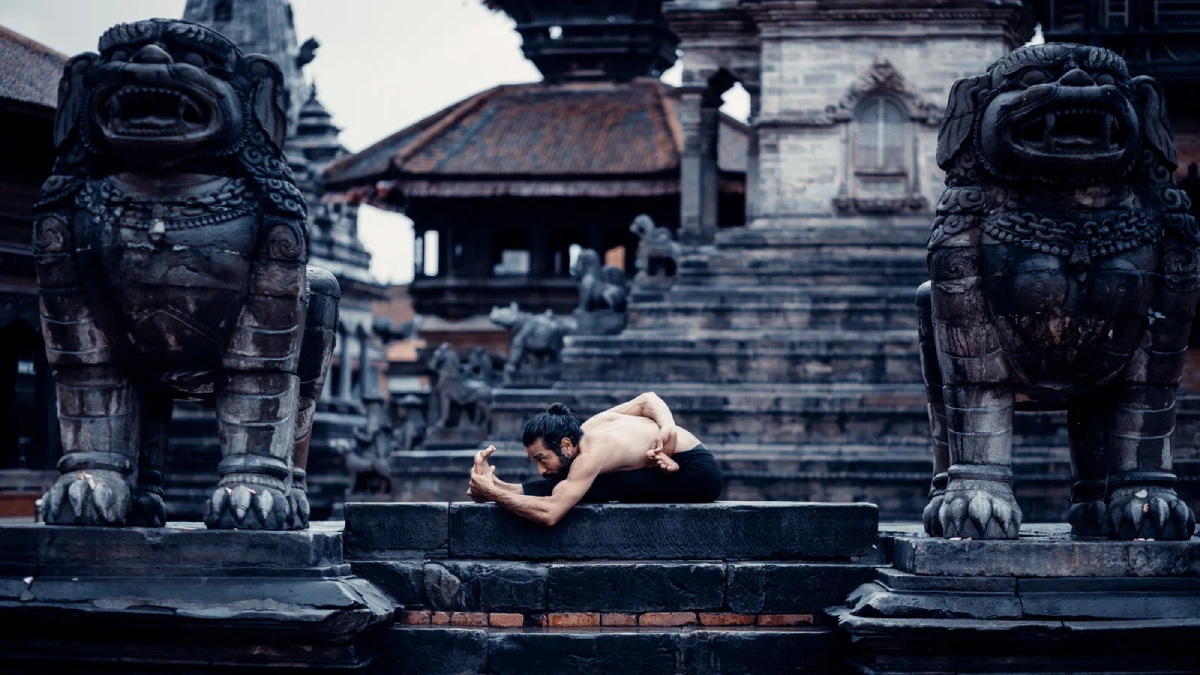
There are more temples, stupas, and holy places per square kilometer in the Kathmandu Valley alone than practically anyplace else in the world. At daybreak, strolling around Boudhanath, the enormous old stupa encircled with prayer flags and monks dressed in saffron robes, is the type of experience that transcends logical comprehension and lands somewhere deeper. To experience it, you don’t need to be Buddhist. You must be there.
Retreat centers outside Kathmandu are tucked away in places that seem to have stopped time, especially for this reason. Pokhara, with the Annapurna range mirrored on its surface, is located on the banks of Phewa Lake. Above the clouds before morning, the highlands of Nagarkot. Insects and wind are the only noises at night in the forest retreats in the Chitwan buffer zone.
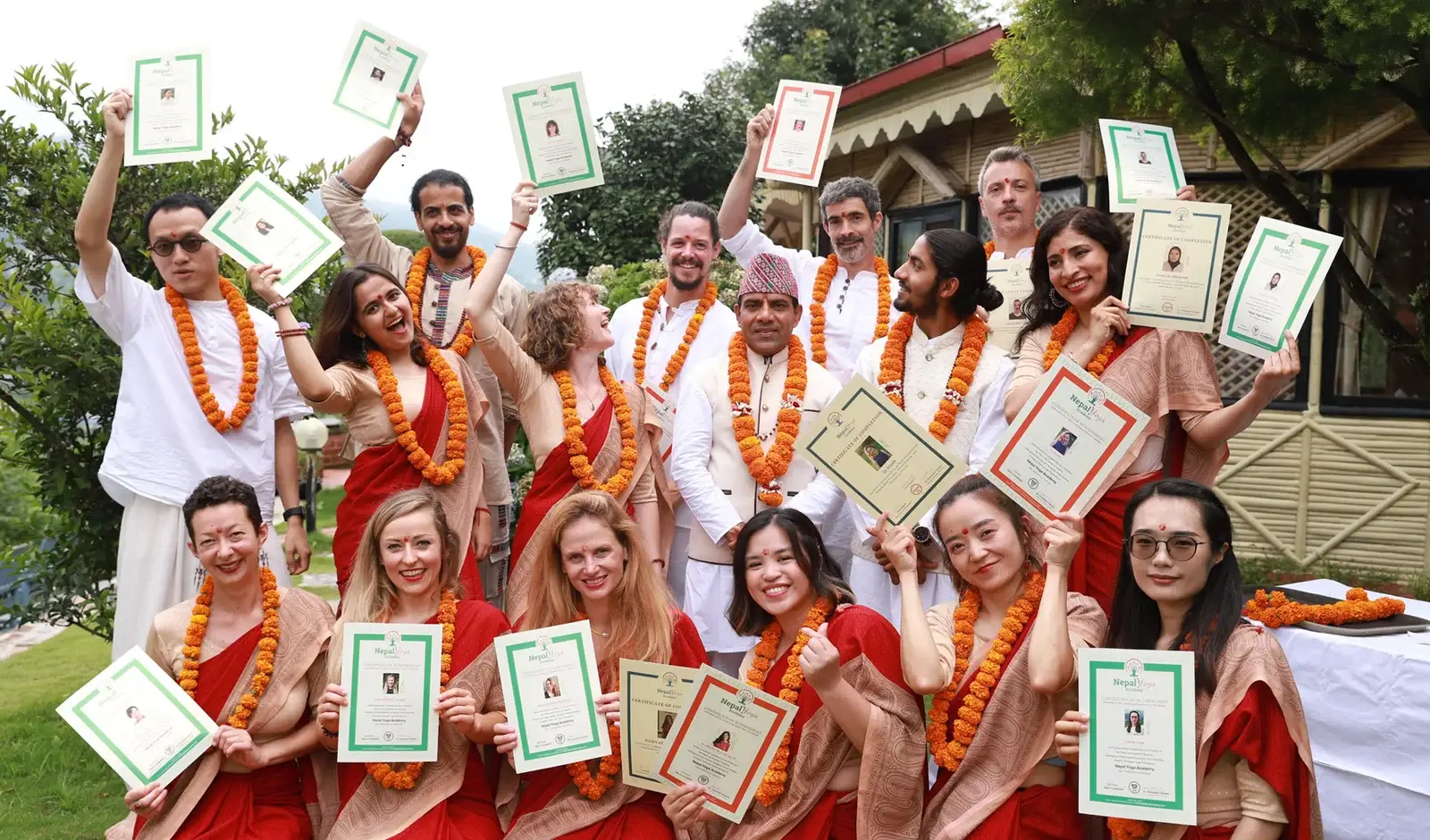
There are many different traditions and lengths of spiritual retreats available in Nepal. Ayurvedic health programs, traditional Hatha and Ashtanga yoga immersions, Tibetan Buddhist teaching retreats, intense ten-day Vipassana silent retreats, and shamanic healing techniques from the native Tamang and Gurung cultures are all available. The breadth of options is astounding.
What also makes Nepal distinctive is the quality of the teachers. Many retreat centers here are led by masters who have spent their entire lives in practice, not facilitators who did a 200-hour teacher training. The transmission of knowledge from teacher to student in the Himalayan tradition is considered sacred, and the caliber of guidance available in Nepal is genuinely rare.
Another is the human dimension. Warmth and generosity are more felt than shown in Nepali society. “Atithi Devo Bhava, the guest is God” is not a business slogan in this instance. It is a dynamic cultural value. Those who have participated in retreats on other continents often mention Nepal as the place where they felt most seen and accepted.
In actuality, Nepal is easier to reach than most people realize. Major hubs in Asia, the Middle East, and beyond are connected to Kathmandu’s Tribhuvan International Airport. Without sacrificing quality, retreat expenses, lodging, food, and teaching are typically less expensive than those for comparable programs in Bali, India, or European retreat institutions.
The location of your spiritual wellness retreat is important if you plan to commit genuine time and serious intention to it. For thousands of years, Nepal has provided room for this sort of inward labor. It is not required to be sold. The way the light falls on the mountains at dawn, the sound of temple bells borne on the early air, and the peculiar and sincere sense that you’ve reached somewhere that was always waiting for you are all examples of how it speaks for itself.
The work that happens after you return home
There isn’t enough discussion on this aspect. After spiritual retreats, people come back radiant. Be open. Moved. After that, life goes on. The mailbox. The journey. Just because you’ve changed doesn’t mean that relationships have. The true long game is figuring out how to preserve what you discovered in the quiet when you’re back in the bustle.
This procedure is called integration. It entails incorporating what you learned and experienced on retreat into everyday life. It doesn’t have to be dramatic, and it doesn’t just happen. Heroic effort is not as important as little, regular practices.
- A ten-minute morning practice sitting quietly, breathing consciously, before the phone comes on honors what you learned without requiring a major lifestyle overhaul.
- Journaling, even briefly, to keep the thread of self-inquiry alive.
- Saying no firmly and without guilt to commitments that drain you and no longer serve the life you want to build.
- Returning for another retreat once a year, or whenever the drift back into disconnection becomes noticeable. Many people who’ve been on one retreat describe the next one as inevitable. Not an addiction, but a recognition.
Final thoughts: Transformation is not a weekend workshop
A spiritual wellness retreat is not a magic fix. It’s not going to solve your problems or resolve your grief or hand you a new life on the way out. Anyone selling it that way is selling the wrong thing.
What it does offer is something rarer and more valuable: the conditions for genuine self-encounter. Time that is yours. Practices that work. Guidance from those who’ve walked the path before you. A natural environment that reminds you of your own depth. A temporary stepping out of ordinary life that makes it possible to see life and yourself within it with fresh eyes.
The retreat is not where the transformation takes place. The retreat sets the stage for your transformation. The contrast between the two is important. You do the task. You can do it honestly in the finest possible setting at the retreat.
The phrase “I came back more like myself” is frequently used by those who have participated in important spiritual retreats. Not a different person. After years of commotion, loudness, and duty, the older adult was at last allowed to breathe.
If that’s what you’re looking for and if you’re still reading this, it probably is, then the retreat you keep putting off might be exactly the right next step.