


Introduction
What is Flying Pigeon Pose?
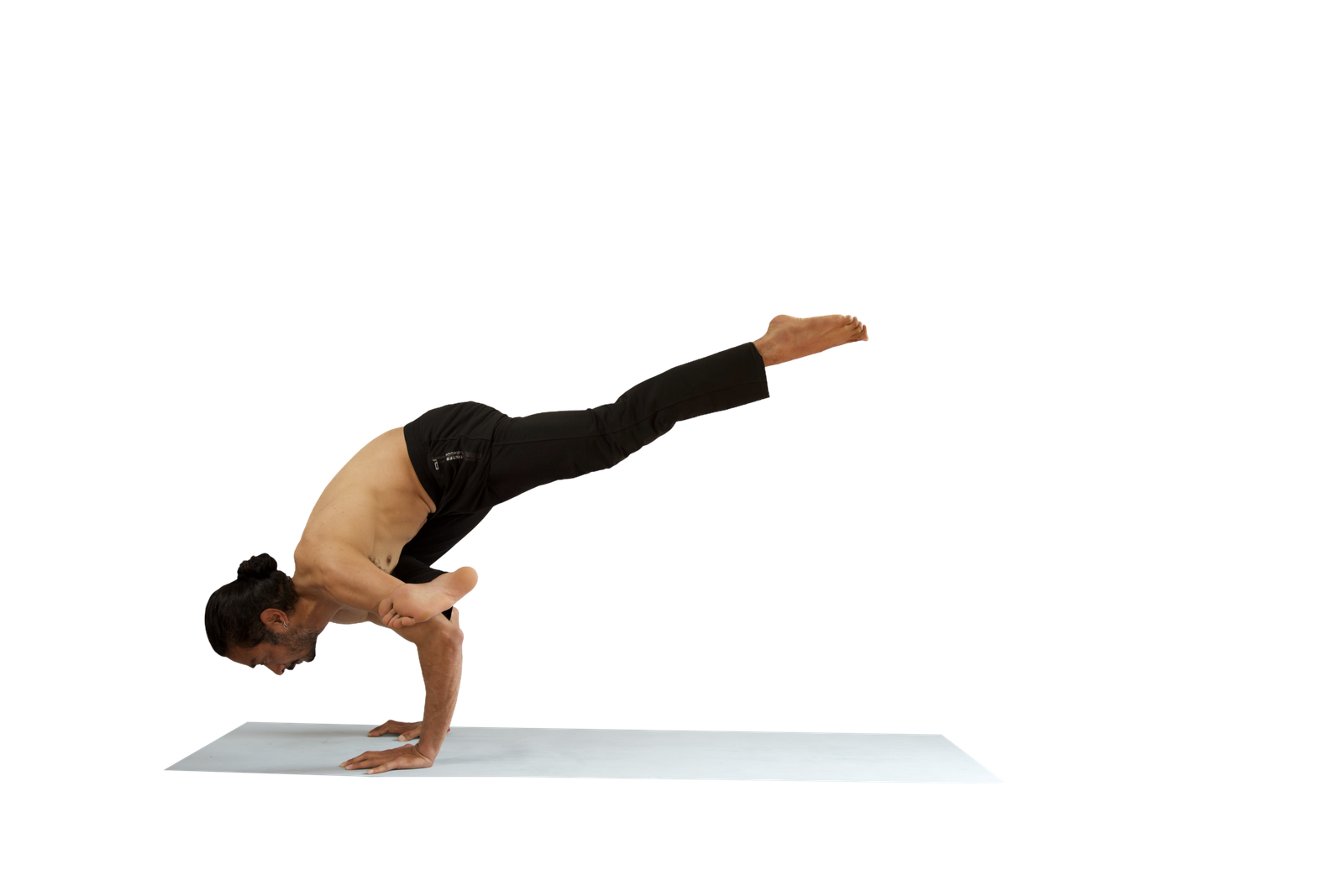
Eka Pada Galavasana or Flying Pigeon Pose is an advanced arm-balancing posture that combines strength, hip opening, and balance. This posture requires an engaged core, strong arms, stable shoulders, and flexible hips. It challenges coordination and concentration and promotes a sense of lightness and control in the body.
Getting into position
Step 1: Sit in Vajrasana. Come into a tabletop position – palms on the floor, wrists under the shoulders, knees together, feet together flat on the floor. Inhale, exhale, and relax.
Step 2: Lean forward, place the hands on the floor, and come into a squat position. Bend one leg and place the top of the foot into a half lotus position (ankle placed outside the thigh).
Step 3: Exhale. While inhaling, lengthen the spine. While exhaling, bend forward, place the opposite upper arm under the ankle and the other upper arm under the upper shin. Lift the hips up, bend farther, and place the palms on the floor under the shoulders (or slightly forward if needed for balance), keep the ankle and shin in the same place.
Step 4: Keeping the elbows parallel to each other, shift the weight onto the hands, and carefully lift the back foot off the floor (leaning forward). Straighten the back leg behind, and straighten the torso in front. Try to keep the back leg, spine, and neck as much in-line with each other as possible. Focus on a fixed point in front for balance. Hold with normal breathing for as long as comfortable.
Precautions & Benefits
Benefits of Flying Pigeon Pose
- Opens the hips. Stretches the glutes, hamstrings, and ankles.
- Strengthens the hands, arms, shoulders, neck, back, chest, abdominal muscles, glutes, hamstrings, and calf muscles.
- Enhances stability and strength in the wrists, and elbows.
- Stimulates abdominal organs and digestive system.
- Increases blood flow to the head and brain.
- Improves balance, neuromuscular coordination, and concentration.
- Improves hip mobility with active stability.
- Enhances mental focus, patience, and confidence.
Preparatory Poses for Flying Pigeon Pose
- Eka Pada Rajakapotasana (One-Legged King Pigeon Pose)
- Bakasana (Crane Pose)
- Bhujapidasana (Shoulder-Pressing Pose)
- Parivritta Utkatasana (Revolved Chair Pose)
- Malasana (Garland Pose)
- Parvatasana (Mountain Pose)
- Utthita Hasta Padangusthasana (Extended Hand-to-Big-Toe Pose)
Common Mistakes while doing Flying Pigeon Pose
- Forcing the front leg into position without enough hip flexibility.
- Not placing the shin securely on the upper arms, may cause instability.
- Not shifting the body weight forward enough onto the hands.
- Letting the elbows separate outward instead of keeping them parallel.
- Dropping the chest instead of maintaining lift and engagement.
- Looking down instead of forward, may disturb balance.
Contraindications
- Avoid if you have migraines, high blood pressure, or herniated (slipped) disc.
- Avoid if you have chronic/serious neck, wrist, elbow, shoulder, or knee problems.
- Avoid after recent abdominal surgery.
- Avoid during pregnancy.
- Be careful if you have neck, wrist, or shoulder issues; abdominal hernia; diarrhea; constipation; or get dizzy easily.
Coming out of position
Slightly relax the body. Carefully bend the back knee in toward the chest and place the foot on the floor. Balance most of the weight on the back foot; use the hand to release the front foot and come back into a squat position. Inhale, exhale, and relax. Repeat on the other side.
Final Words
Eka Pada Galavasana (Flying Pigeon Pose) integrates strength, flexibility, and focus, requiring patience and gradual progression, especially in developing hip mobility and arm strength. This posture enhances balance, confidence, and overall body coordination when practiced consistently and with proper alignment.
