



Introduction
What is Flying Horse Pose?
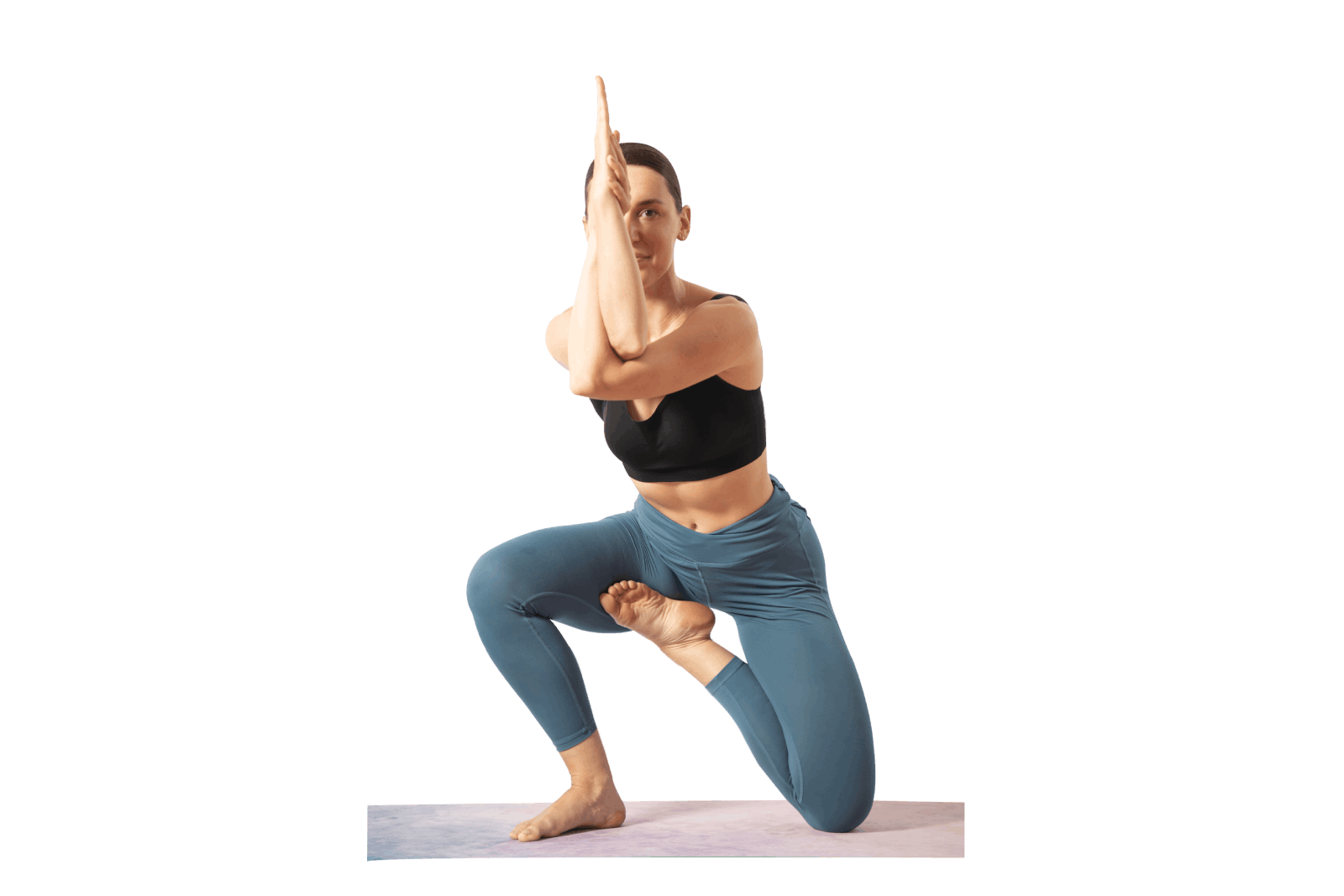
Vatayanasana (Flying Horse Pose) is a classical balancing posture that combines strength, flexibility, stability, and concentration. Inspired by the image of a horse in motion, this asana helps develop coordination, focus, and inner steadiness, while improving mobility in the hips, knees, and ankles. It is a valuable practice for experienced yoga practitioners seeking greater physical and mental discipline.
Getting into position
Getting into Position
Step 1: Shift the weight to one leg and bend the opposite leg upward. Hold the foot with both hands. Inhale. While exhaling, rotate the foot from the ankle and place the top of the foot on the opposite thigh in Half Lotus position (the ankle remains free, not resting on the thigh). Press the knee slightly down and back, and shift the hip slightly outward.
Step 2: Inhale. While exhaling, lower the body until the bent knee gently touches the floor.
To Remain Balanced for Longer
Option 1: Bring the arms forward, parallel to the floor. Hold with normal breathing for about 30 or more seconds.
Option 2: Cross the arm on the same-side as the supporting leg over the opposite arm and bend the elbows so the upper arms are parallel to the floor, palms facing each other (similar to Garudasana). Hold with normal breathing for about 30 seconds or more.
Precautions & Benefits
Benefits of Flying Horse Pose
- Opens the hips and pelvis. Stretches the arms, shoulders, back, thighs, and backs of the legs.
- Strengthens the legs and increases blood flow to the hip area.
- Reduces stiffness in the thighs.
- Improves hip mobility and external rotation.
- May help reduce pain from mild arthritis-related discomfort.
Preparatory Poses for Flying Horse Pose
- Vrikshasana (Tree Pose)
- Ardha Padmasana (Half Lotus Pose)
- Garudasana (Eagle Pose)
- Virabhadrasana II (Warrior II Pose)
- Utthita Parsvakonasana (Extended Side Angle Pose)
- Malasana (Garland Pose)
- Baddha Konasana (Bound Angle Pose)
- Gomukhasana (Cow Face Pose)
Common Mistakes while doing Flying Horse Pose
- Forcing the foot into Half Lotus without adequate hip mobility.
- Allowing the standing knee to collapse inward, reducing stability.
- Dropping too quickly toward the floor instead of lowering with control.
- Leaning excessively forward or backward, causing loss of balance.
Contraindications
- If you have chronic/serious knee problems.
- If you have a weak back or hips.
- If you have sacroiliac (SI joint) issues.
Coming out of position
Coming out of Position
Step 1: Balance the weight on the standing foot (removing weight from the bent knee). Exhale. While inhaling, activate the thigh and calf muscles and slowly raise the body. While exhaling, release the hands.
Step 2: Use the hands to release the foot and lower the leg down. Return to the starting position. Inhale, exhale, and relax. Repeat on the other side.
Final Words
Flying Horse Pose is an advanced balancing posture that strengthens the legs, improves hip mobility, and enhances concentration. It cultivates stability, coordination, and mental focus while challenging overall balance and body control.
