




Introduction
What is Firefly Pose?
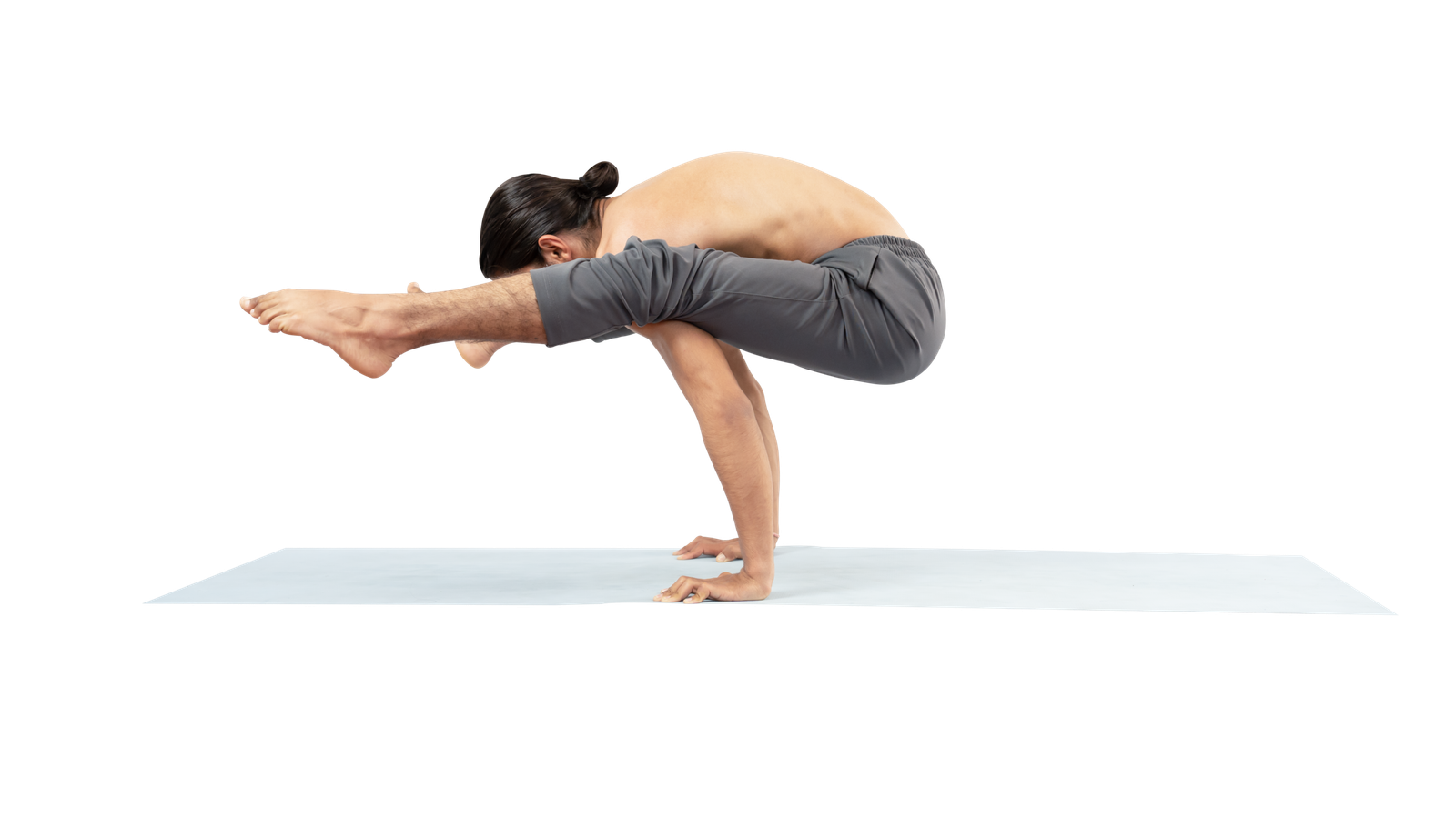
Tittibhasana or Firefly Pose is a popular advanced arm-balancing pose. It involves deep hip opening, strong engagement of the core, and stability in the shoulders and wrists. It is advisable to practice multiple preparatory poses to be ready physically as well as mentally for the advanced posture practice. This requires a combination of strength, flexibility, and coordination where the body is supported entirely on the hands. The posture helps develop both physical balance and mental stability.
Getting into position
Step 1: Stand upright with legs together, relaxed shoulders, arms by the sides. Inhale, exhale, and relax. (Alternatively, start from Vajrasana.)
Step 2: Come to a squatting position, feet shoulder-distance apart (separate more if needed). While bending forward, lift the hips and heels up, rotate the pelvis down, lower the torso between the legs, and bring the shoulders (or upper arms) underneath the backs of the knees, placing the hands on the floor outside of the ankles (reaching behind the calf muscles) for support. Keep the inner thighs as high on the arms as possible.
Step 3: While bending the elbows slightly, bring the feet closer together, pressing the thighs into the arms to avoid slipping. Lean the chest forward and walk the feet closer together. Inhale. While exhaling, balance all of the body weight on the hands and straighten the legs forward. Look forward. Hold with normal breathing for as long as comfortable.
Precautions & Benefits
Benefits of Firefly Pose
- Opens the hips. Stretches the wrists, shoulders, back, glutes, and hamstrings.
- Strengthens the hands, arms, shoulders, chest, thighs, and abdominal muscles.
- Increases blood circulation.
- Stimulates abdominal organs and digestive system.
- Improves balance and concentration.
- Enhances body awareness, mental focus, and confidence.
- Improves neuromuscular control and reaction time.
Contraindications
- Avoid If you have migraines, high blood pressure, or herniated (slipped) disc.
- Avoid If you have chronic/serious wrist, shoulder, low back, hip, or knee problems.
- Avoid If you have recent abdominal surgery.
- Avoid During Pregnancy.
- Be careful, if you have wrist, shoulder, low back, or knee issues; diarrhea; constipation; abdominal hernia; or get dizzy easily.
Postural Effects on the Body Systems
Preparatory Poses for Firefly Pose
- Malasana (Garland Pose)
- Padahastasana (Hand to Foot Pose)
- Moordhasana (Crown Based Pose)
- Baddha Konasana (Bound Angle Pose)
- Upavistha Konasana (Seated Wide-Angle Pose)
- Bakasana (Crane Pose)
- Bhujapidasana (Shoulder Pressure Pose)
- Lolasana (Pendant Pose)
- Parvatasana (Mountain Pose)
- Uttana Pristhasana (Lizard Pose)
Common Mistakes while doing Firefly Pose
- Not placing the shoulders properly under the legs, which causes instability.
- Forcing to lift the legs without understanding proper shift of the body weight onto the hands.
- Keeping the hips too low, which makes the posture difficult to balance.
- Collapsing into the shoulders instead of maintaining controlled engagement.
- Rounding the chest too much instead of keeping it slightly lifted and open.
- Looking down instead of forward, which causes imbalance.
Coming out of position
Slightly relax the body. Bend the knees and place the feet on the floor, release the arms and come back into a squatting position; then, return to the starting position. Inhale, exhale, and relax.
Tittibhasana (Firefly Pose) is a posture that combines strength, flexibility, and concentration. It becomes more accessible and stable with regular practice. Over time, this pose builds confidence, patience, and mental clarity in yoga practice.
